Women's Outerwear Buyer Job Description
Buying women's coats where silhouette leads, warmth must follow, and timing makes the margin
In women's outerwear the coat is frequently the outfit. A women's outerwear buyer therefore works closer to the fashion current than any other coat buyer: silhouette shifts — longline one winter, cropped the next — can revalue an entire rail overnight, yet the garment still has to keep its wearer warm through February. The role blends trend forecasting with genuine garment engineering, balancing the statement puffer everyone photographs against the black wool coat everyone actually lives in. This description covers how that range is read, built and defended across a fickle season.
More Buying Job Descriptions by Letter:
Reading Silhouette, Length and Colour Before the Season Turns
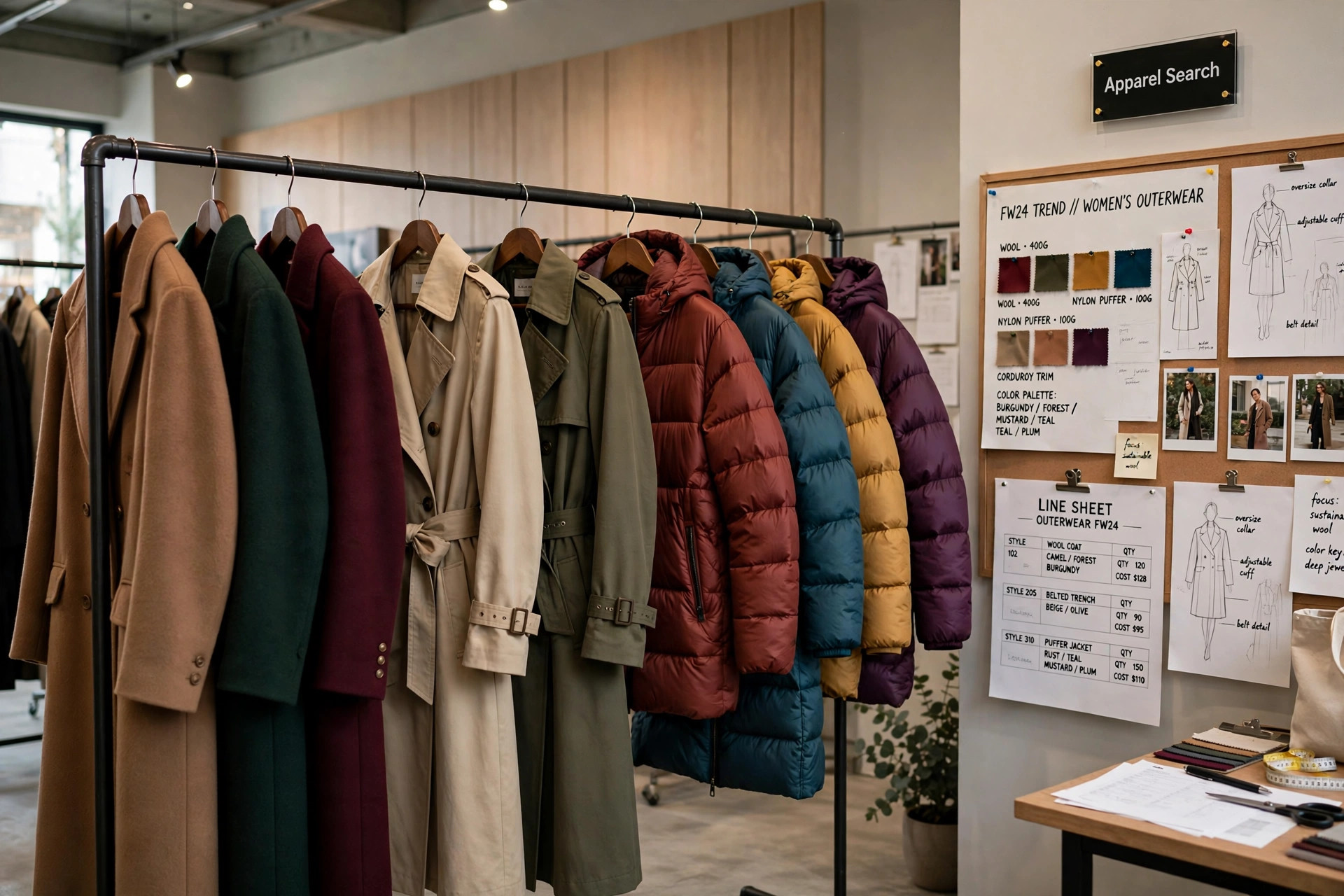
Forecasting starts a year out, at shows, street photography and fabric fairs, where the buyer tracks the proportions gaining momentum: hem lengths dropping or rising, shoulders sharpening or softening, belts returning, volume moving from body to sleeve. Those signals are converted into a range map divided between directional pieces bought shallow for image and press, and the commercial core — wrap coats, single-breasted wool styles, the trench franchise — bought at depth in the season's accepted palette.
Colour courage is calibrated by price. A scarlet or cobalt coat at an accessible ticket can be a calculated risk customers enjoy; the same bravery at investment prices strands stock, so premium lines concentrate on camel, ivory, deep green and black with one tested fashion shade. The buyer also plans how coats talk to the wider wardrobe — the knitwear colours and boot heights they will be displayed against — because a coat range photographed in isolation still has to sell in a department.
The Puffer Problem: Fashion Volume Versus Real Warmth
Padded coats now dominate casual outerwear, and they are deceptively hard to buy well. Fashion versions chase exaggerated volume and glossy finishes; performance versions compete on loft retention, shell durability and weight. The buyer audits both claims — compressing samples to watch padding recover, checking whether quilting channels leave cold seams, and verifying that cropped fashion puffers are not accidentally ticketed as winter protection.
Length strategy inside the puffer family needs its own plan: cropped for younger customers styling with high-rise trousers, longline for genuine cold and school-run practicality, gilet layers for transitional weeks. Because padded styles photograph brilliantly, they attract social-media demand spikes; the buyer holds a small reactive budget with suppliers able to remake a viral colour quickly, while refusing to chase every spike at the cost of the core wool programme.
Investment Coats, Occasion Pieces and the Rental Question
Above the everyday range sits the investment coat — the tailored, beautifully cloth'd piece a customer deliberates over for weeks. Here the buyer slows everything down: cloth provenance is documented, hand-finishing inspected, fit sessions held across several body shapes rather than a single sample size, and quantities kept intentionally lean to protect exclusivity and margin. Selling these coats is theatre supported by substance, and staff are briefed on cloth stories accordingly.
Occasion outerwear — the coat bought for a winter wedding, a race meeting, a photograph that will be kept — forms a small, high-emotion segment the buyer serves with embellished, pastel or faux-fur-trimmed styles on tight delivery windows tied to the social calendar. The growing rental and resale market is monitored rather than feared: strong resale values on well-bought coats are quoted in the buyer's own range reviews as evidence of selection quality.
Fit Across Bodies and Honest Warmth Labelling
Women's coats fail at shoulders, bust and hip in that order, so fit approval involves trying production samples on a panel of fit models spanning the size range, checking that wrap belts sit at a natural waist in every size and that longline hems do not overwhelm petite frames. Petite and curve-specific blocks are bought as engineered ranges, not graded afterthoughts, where the business serves those customers.
Warmth communication is an ethical line this buyer polices. Fashion coats with minimal insulation are described as fashion coats; the word winter is reserved for garments that earn it in fill weight and coverage. Clear internal warmth grading, shared with the online team for product pages, reduces the January returns wave that follows oversold promises — returns data the buyer reviews garment by garment each spring.
Building a Career in Women's Outerwear Buying
Most holders of this brief grew up inside womenswear, often through dresses or tailoring, where silhouette literacy and occasion dressing are learned, or through accessories roles that sharpened colour judgement. Employers test trend translation: not whether a candidate can name next season's looks, but whether they can state which of them their customer will buy, at what price and in what depth.
Next steps run toward senior womenswear buying, fashion-director and range-planning posts, or brand-side product leadership. The hybrid skill set — fashion forecasting disciplined by garment engineering and returns evidence — is rarer than either half alone, which is why strong women's outerwear buyers are seldom out of work for long.
Common Questions
How does a women's outerwear buyer balance trend and warmth?
By grading the range honestly. Directional and cropped fashion styles are bought as fashion, in shallow depth, while coats sold as winter protection must prove insulation, coverage and closure quality in sampling. Internal warmth grades are shared with store and online teams so descriptions stay truthful.
Why are investment coats bought in small quantities?
Scarcity protects both margin and credibility. A tailored coat at a premium price sells on cloth, fit and finish to a customer who deliberates; overbuying forces discounting that destroys the very value story the garment depends on.
Which experience best prepares someone for this role?
Womenswear buying in silhouette-sensitive categories such as dresses or tailoring, where trend translation and occasion dressing are daily work. Panels look for candidates who can argue depth and price for a trend, not just identify it.