Children's Outerwear Buyer Job Description
Buying coats, snowsuits and rainwear for growing children — planned by age band, bought by parents
Buying outerwear for children is a logistics puzzle wrapped around a simple truth: the wearer keeps changing size. A children's outerwear buyer plans coats, snowsuits, ski jackets and rain sets across rapid-fire age bands, knowing that a garment bought for a four-year-old is outgrown within a season or two and that every purchase decision is actually made by a parent weighing warmth, toughness and price per wear. Safety rules written specifically for young children's clothing shape what may be stocked at all. This description follows the role from age-band planning through playground-proof testing to the back-to-school rush.
More Buying Job Descriptions by Letter:
Planning by Age Band Instead of Adult Size Runs
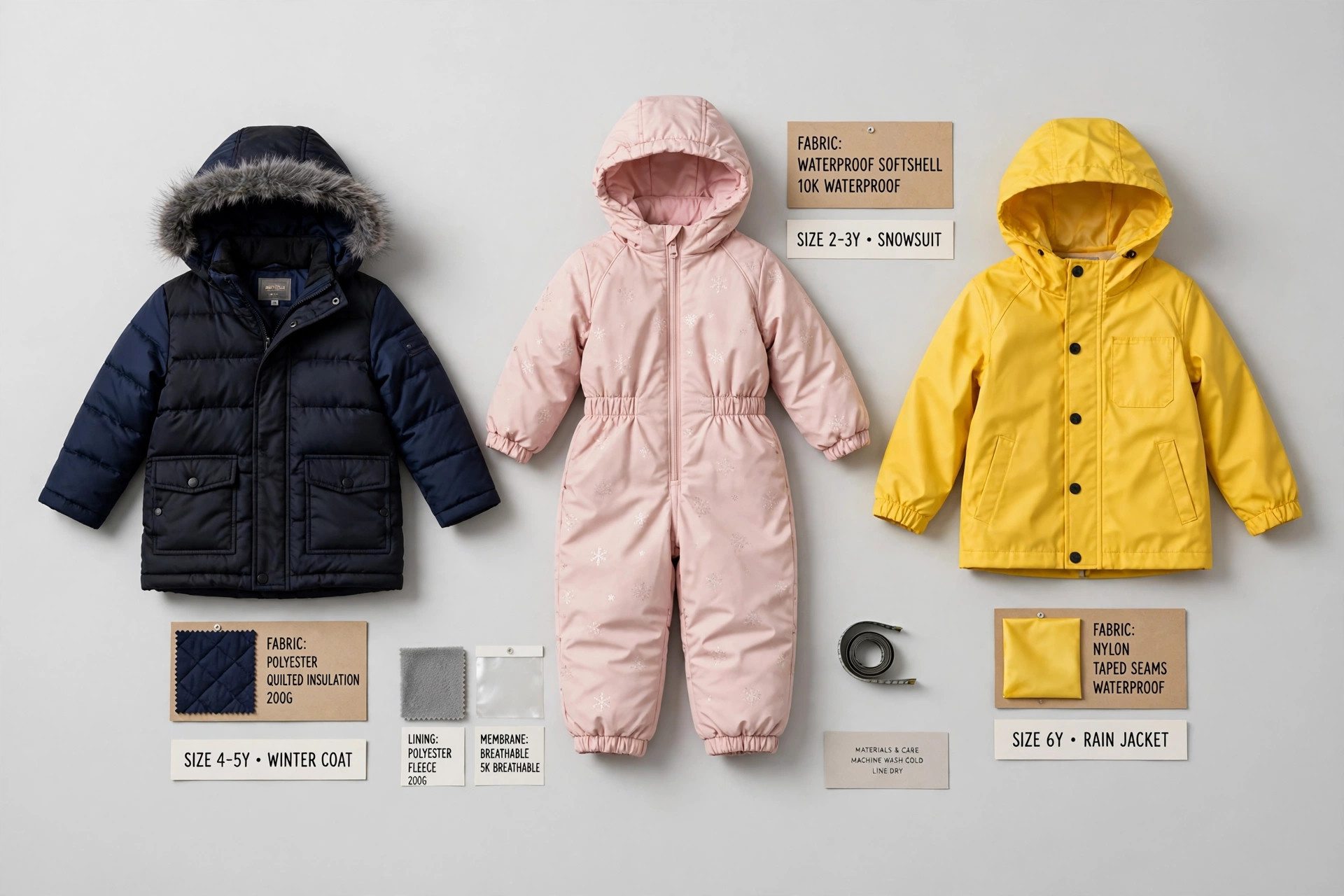
Adult size curves are useless here. The buyer forecasts in age bands — baby, toddler, younger child, older child — each with its own growth velocity and its own garment logic. Infant outerwear means all-in-one snowsuits and pram coats judged on ease of dressing; toddler ranges need room for nappies and constant crawling abrasion at the knee; school-age bands split into everyday coats that survive daily wear and smarter styles kept for occasions.
Quantities lean on birth-rate data, school intake numbers and last year's sell-through per band rather than fashion instinct alone. Because children cannot wait for a reorder when a cold week lands, opening stock depth in the core school-coat styles is deliberately generous, while novelty ski prints and fashion-led pieces for older children are bought shallower and treated as the expendable layer of the plan.
Safety, Warmth and Washability as Buying Criteria
Every sample passes checks an adult buyer never performs. Cord and drawstring placements are verified against the safety standards for young children's garments, hoods are assessed for snagging risk, and small components — toggles, zip pulls, decorative buttons — are pull-tested because they will be chewed, twisted and yanked. Flame behaviour of fabrics and the security of reflective trims intended to keep children visible on dark school runs are reviewed with test certificates, not taken on a supplier's word.
Practical performance is trialled with equal seriousness. Parents wash these garments constantly, so colourfastness and insulation loft after repeated laundering are sampled before bulk orders; a coat whose padding flattens after three washes fails the brief regardless of its ticket price. Waterproof claims on rain sets are checked against seam construction, and reinforced panels at knees, cuffs and hems are specified for the age bands that destroy clothing fastest.
Selling to Parents: Value, Hand-Me-Down Life and Trust
The customer reading the ticket is calculating cost across winters and often across siblings. Adjustable cuffs that let out as arms grow, detachable hoods, name-label panels and unisex colourways in the youngest bands all raise a garment's perceived value because they extend its working life. The buyer briefs suppliers on these features explicitly and features them in product information, knowing parents actively hunt for them.
Pricing psychology differs from adult departments: there is a firm ceiling most families accept for a garment with a two-season life, so the buyer engineers ranges backwards from that ceiling, choosing insulation and shell qualities that deliver genuine warmth inside it. Trust, once earned with a coat that lasted, transfers to the retailer's whole children's department — which makes complaint and returns patterns in this category a strategic metric, reviewed monthly rather than filed away.
The School Calendar and Winter Peaks
Trading rhythm is set by term dates. The year's largest outerwear moment is the back-to-school window in late summer, when the everyday coat is bought alongside uniforms; a second peak follows the first genuinely cold weekend, when growth spurts are discovered and last year's coat no longer fastens. The buyer aligns delivery deadlines, promotional support and stock cover to those two cliffs, holding contingency budget for emergency repeats of the plain school styles that sell out first.
Holiday and ski ranges form a third, narrower season, bought in modest depth for families travelling to snow. After Christmas, remaining heavy stock is cleared decisively — children's sizes do not store well as an investment, since next year's customers have literally grown into different bands — and the lessons file for each age band is updated while the season's evidence is fresh.
Experience That Fits This Specialism
Recruiters look for buyers formed inside childrenswear rather than rotated in from adult departments, because age-band forecasting, the safety framework and parent purchasing behaviour form a body of knowledge that takes seasons to absorb. Assistant buying on children's ranges, or retail experience in a children's department watching parents decide at the fixture, are the recognised apprenticeships.
Advancement keeps the specialism and widens it: responsibility for the full children's outerwear and clothing offer, senior childrenswear buying, or divisional roles over children's departments. A minority of buyers cross into product development for children's brands, where their command of safety requirements and durability testing is scarce and valued.
Common Questions
Why are children's coats planned in age bands?
Because growth, not fashion, drives replacement. A child's size changes on a roughly predictable schedule, so stock is forecast by age group — baby, toddler, younger and older child — with different features, durability needs and price expectations in each band.
What safety checks apply to children's outerwear?
Drawstrings and cords are assessed against the rules for young children's clothing, small parts such as toggles and zip pulls are pull-tested, and fabric flammability and reflective-trim performance are verified from test reports before orders are confirmed.
When is the busiest buying and selling period?
Selling peaks at back-to-school in late summer and again at the first cold snap, when outgrown coats are replaced urgently. Orders for those peaks are placed many months earlier, with contingency held for fast repeats of plain school styles.