Trousers Buyer Job Description
Buying trousers and pants — waist and leg sizing, fit blocks and fabrics from tailoring to chinos
A trousers buyer selects the tailored trousers, dress pants, chinos and casual trousers a store sells — a category defined by one unforgiving fact: trousers are the garment where fit is measured in two dimensions at once. Waist size crossed with leg length creates the widest size matrix in most departments, rise and seat fit decide comfort within minutes of trying on, and customers return to the exact block and size that worked before. Trousers buyers are often recruited and searched for under the wider bottoms buyer title, since trousers sit inside the bottoms category alongside skirts and shorts. This page explains the trousers buyer's duties, sizing discipline and career routes.
More Buying Job Descriptions by Letter:
What a Trousers Buyer Does
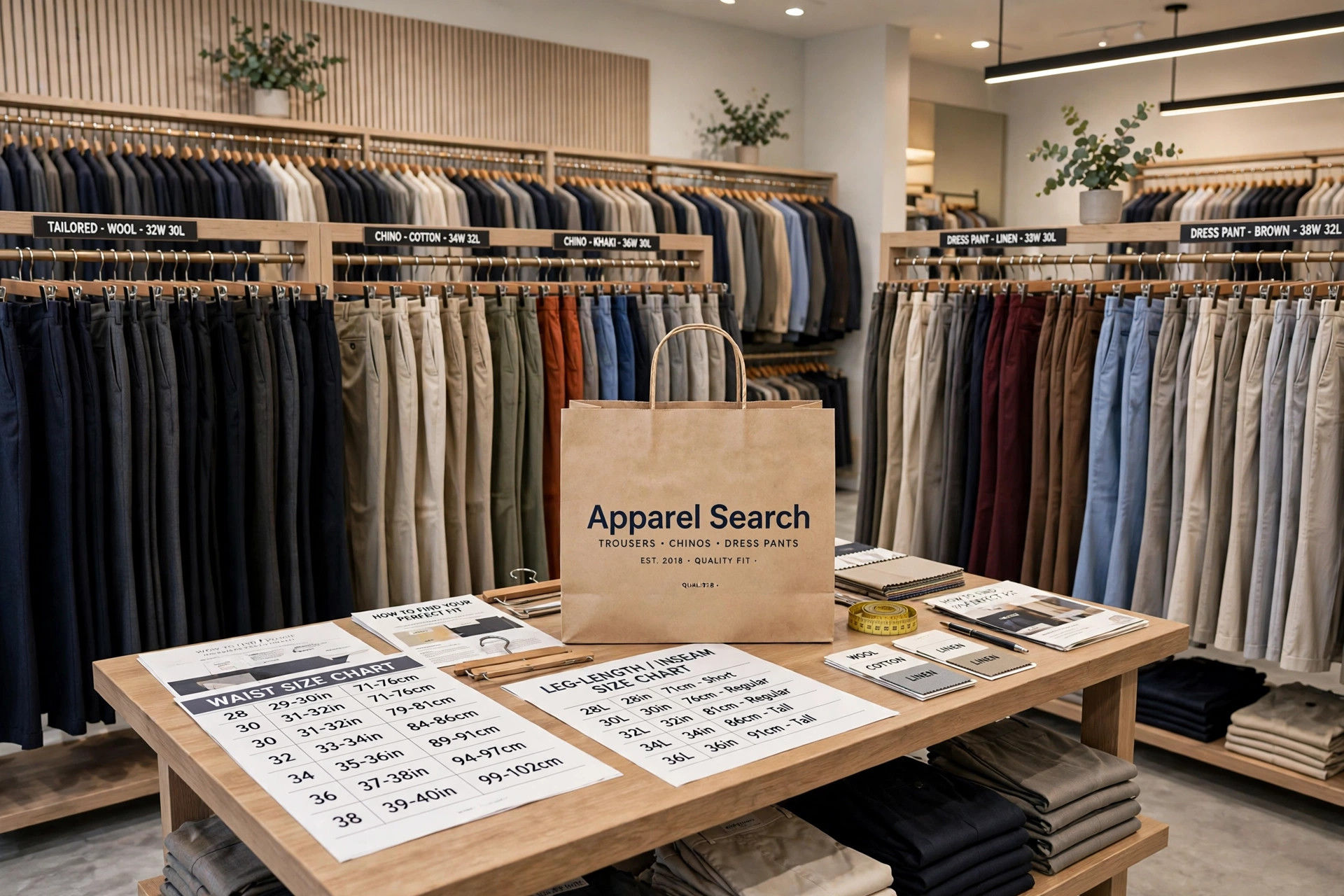
The trousers buyer plans the range across its distinct families: formal tailored trousers that pair with the suiting department, smart dress pants, chinos and five-pocket casual trousers, and seasonal styles in linen, cord or flannel. Each family's plan starts from sales history analysed by waist size, leg length, fit and fabric — trouser data is detailed enough to show precisely which size combinations earn their stock and which lengths tie up money in the extremes. The buyer edits vendor ranges and develops own-label styles, fitting every sample on the department's blocks and checking rise, seat, thigh and hem behaviour seated as well as standing, because trousers are worn sitting down.
Ordering is where the category earns its complexity. A single trouser style in four colours, ten waist sizes and three leg lengths is a hundred and twenty stock-keeping combinations before depth is decided, and the buyer sets depth waist by waist and length by length, defending the core combinations where volume concentrates. Deliveries are phased to keep those core sizes continuously available — a trouser customer who cannot find a 34 waist in a regular leg buys a competitor's block and may not return. In season, the buyer trades on size-level evidence: rebalancing lengths between stores, repeating proven fits in new fabrics, and marking down genuinely slow fits rather than blanketing the category in promotions.
Waist, Leg and the Fit Block
The waist-and-leg matrix is the trousers buyer's daily arithmetic. Unlike a top, which fits or nearly fits, a trouser must be right twice: around the waist and to the correct leg length for the customer's height and shoe. The buyer therefore plans unfinished versus pre-hemmed lengths, alteration services where the store offers them, and the short, regular and long proportions each fit carries. Size availability is a promise in this category in a way it is not elsewhere — running out of middle waists or regular legs does not just lose a sale, it breaks the customer's trust in the block.
Fit blocks carry the same weight. Slim, tailored and classic blocks each define rise, seat ease, thigh width and leg taper, and customers identify their block by name and return to it across fabrics and seasons. The buyer guards block integrity through vendor changes and cost work, fits new fabrics on the proven block before approving them, and reads returns data at fit level: trousers come back for fit more than any other reason, and a rising return rate on one block is product evidence, not noise. Fabric knowledge supports the block — how a flannel drapes, a chino twill softens, a stretch blend recovers at the knee — because the same block in a different cloth is, in wear, a different trouser.
Skills and Abilities the Role Requires
Analytical precision is the trousers buyer's defining skill. Size-matrix planning, open-to-buy control across hundreds of combinations per style, and length- and waist-level trading all punish approximation, and the buyer must be able to see a size problem forming in the data weeks before it becomes empty rails in the core sizes. That numeracy sits on the standard buying toolkit — range planning, costing, margin and markdown management, vendor negotiation — applied with unusual patience, because trouser bestsellers are built over seasons of fit trust rather than single-season fashion heat.
Product judgement is tactile and specific: assessing waistband construction and internal finishing, pocketing quality, fly and closure hardware, crease retention and fabric recovery, and predicting how each will behave after repeated washing and pressing. The buyer also works closely with the tailoring and menswear teams where formal trousers complete suits, with womenswear counterparts where the store runs parallel ranges, and with store colleagues whose fitting rooms generate the waist, length and rise feedback that sharpens the next buy. A trousers buyer who visits fitting rooms learns things no sales report contains.
Qualifications, Training and Career Path
Trousers buyers typically develop from assistant buyer roles in menswear, womenswear bottoms or tailoring departments, where the waist-and-leg size systems and block disciplines are learned on live ranges. Because the desk is frequently grouped under bottoms buying, candidates with broader bottoms experience — trousers, skirts and shorts — are strong contenders, and fashion buying or business qualifications support entry at the assistant stages. Employers promoting to the trousers desk look for size-level trading results and fit judgement demonstrated on real ranges.
From trousers buyer, the path runs to senior buyer over bottoms or a full menswear or womenswear division, and on to divisional merchandise management. The size-matrix and continuity expertise transfers directly to other fit-critical categories — denim above all, where waist and leg planning is identical — and into own-label product development for bottoms ranges. It is a specialism where competence is quietly provable: a trouser department with high core-size availability and low fit returns is a buyer's signature, visible in the numbers every week.
Common Questions
Is a trousers buyer the same as a bottoms buyer?
Trousers sit inside the wider bottoms category, which also covers skirts and shorts, and trouser roles are often advertised and searched as bottoms buyer posts. A dedicated trousers buyer specialises in the trouser range itself — its waist-and-leg sizing, fit blocks and fabrics.
Why do trousers need so many size combinations?
Because fit is two-dimensional: waist size crossed with leg length. One style in several colours can exceed a hundred stock-keeping combinations, and the buyer must set depth for each, defending the core waist and length combinations customers buy most.
What is a fit block in trousers buying?
The proven pattern proportions — rise, seat, thigh and taper — from which a trouser style is made. Customers return to blocks that fit them, so buyers guard block consistency across fabrics and seasons and treat returns at fit level as product evidence.