Design Illustrator Job Description
Drawing the fashion idea — croquis, presentation sketches and CAD flats that sell a design before it is made
A design illustrator turns a designer's idea into a picture the whole business can judge. Before a garment is patterned, costed or sold, it exists as an illustration: a croquis sketch that captures silhouette and attitude, a presentation drawing that shows colour, fabric and styling, or a precise flat that shows exactly how the piece is constructed. Retail buyers commit to ranges from these drawings, factories quote from them, and marketing teams preview collections with them, so the illustrator's line carries real commercial weight. This page explains what design illustrators do day to day, the drawing and software skills the role demands, and how it differs from the neighbouring fashion artist and CAD roles.
More Design Job Descriptions by Letter:
What a Design Illustrator Does
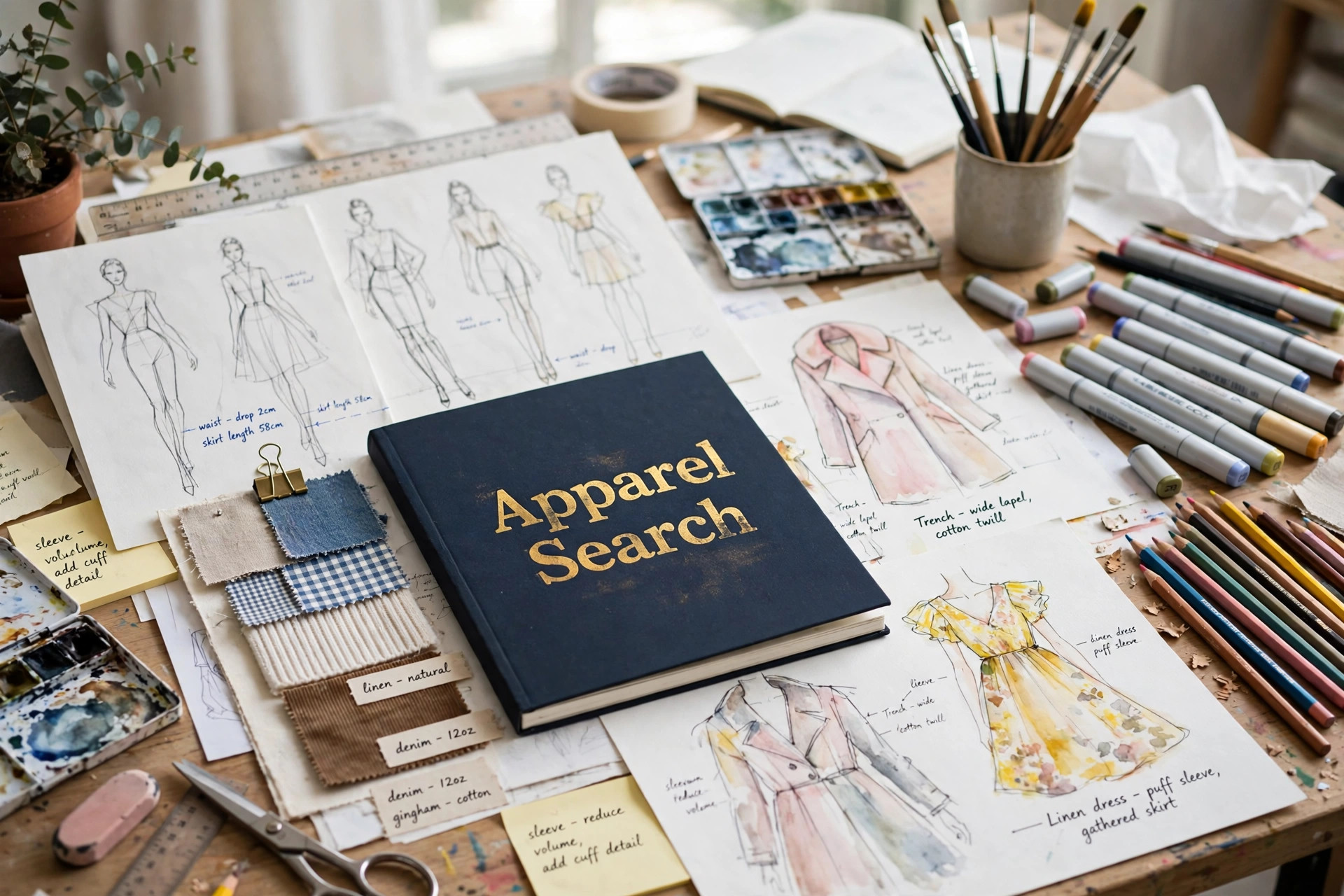
The working week follows the collection calendar. At the start of a season the illustrator sketches from the designer's direction — rough croquis exploring proportion, neckline, sleeve and length — then develops the chosen ideas into clean, coloured presentation illustrations that show each garment as it is meant to be worn, with fabric behaviour, print placement and styling indicated. Those drawings anchor range reviews and buyer presentations, where a collection that reads well on the page is far easier to sell in than one described in words. Accuracy matters as much as flair: a sleeve drawn fuller than the pattern will make, or a print shown at the wrong scale, becomes a costing or production problem later.
Alongside presentation work, the illustrator produces the precise drawings production depends on. Technical flats — front, back and detail views drawn to proportion, with seams, stitching, fastenings and trims in place — are prepared by hand or in vector software and passed to pattern cutters and factories, often as part of the specification pack. Line sheets and range boards assemble the finished illustrations into the documents sales teams and agents work from, and the illustrator updates them through the season as styles are dropped, recoloured or added, keeping every version of the range visually consistent.
Hand Drawing, Colour and CAD
Hand drawing remains the foundation. Employers look for a fast, confident line, a real understanding of the fashion figure and how cloth hangs on a body in movement, and fluent rendering of fabric — the difference between chiffon, denim and knit has to be visible in the drawing. Colour work is equally practical: matching illustration colour to fabric standards and dye references, building colourways of the same style for different markets, and preparing artwork that printers and mills can follow. An illustrator who can only draw beautifully but cannot hold colour accuracy across a range will struggle in a commercial studio.
Digital tools extend rather than replace that craft. Most studios now expect fluency in vector illustration software for flats and repeat prints, raster tools for rendering and presentation boards, and increasingly CAD libraries where approved blocks, trims and print motifs are stored and reused. The illustrator maintains those libraries, adapts hand sketches into clean digital artwork, and prepares files to the exact formats factories and printers request. Speed under deadline is part of the skill set: when a range review moves, redraws are needed the same day, and the illustrator who can revise a board accurately in hours is the one the design team relies on.
Skills, Qualifications and Working Life
The role suits someone who draws constantly and takes criticism of drawings constructively, because illustration in a design studio is a service to other people's decisions. Designers will redirect a silhouette mid-sketch, merchandisers will ask for a style in six more colourways, and sales teams will want last season's best seller redrawn in this season's print — all to deadlines set by the collection calendar. Organisation is the quiet requirement underneath: dozens of styles, each in several views and colourways, versioned correctly and findable by the whole team. A good eye for fashion proportion and current styling keeps the work commercial rather than merely decorative.
Most design illustrators train in fashion design, fashion illustration, textile design or a related art discipline, and they are hired on portfolio above all — a portfolio that shows croquis, finished presentation illustration and accurate flats carries more weight than any certificate. Many start as design assistants or junior illustrators inside a brand's studio, learning the house figure and file standards, and freelance illustrators build parallel careers supplying several brands at once, which demands the same skills plus the discipline of running a small business.
Career Path
From design illustrator, the established routes run in three directions. The studio route leads to senior illustrator and then to design roles themselves, since illustrators who consistently draw strong, commercial ideas are often invited to originate them. The technical route leads toward CAD design and print design, where digital artwork, repeats and colour work become the whole job. The independent route leads to freelance and agency illustration, including editorial and advertising work beyond the clothing trade. In every direction the portfolio is the currency: illustrators who keep drawing, keep it current and keep it commercial rarely lack work.
The role also connects directly to the wider design team this directory describes. Illustrators work daily beside the designer who originates the range, the CAD specialists who digitise it, and the artists who create its prints — which is why the illustrator's chair is one of the best observation posts in a design studio for anyone planning a longer career in fashion design.
Common Questions
What is the difference between a design illustrator and a fashion designer?
The designer originates the garment — its concept, silhouette, fabric and details — and answers for the range commercially. The design illustrator specialises in picturing garments: croquis, presentation illustrations and technical flats that communicate the designer's ideas to buyers, pattern cutters and factories. In small studios one person may do both, but in larger design teams they are distinct roles with distinct portfolios.
Do design illustrators still draw by hand?
Yes — hand croquis remain the fastest way to explore an idea, and employers still test hand drawing at interview. Most studios then finish work digitally, using vector software for flats and prints and raster tools for rendering and boards, so the modern illustrator is expected to be fluent in both rather than choosing one.
What should a design illustrator's portfolio show?
Three things: fast, expressive croquis that show fashion proportion and fabric behaviour; finished, coloured presentation illustrations of complete garments and outfits; and accurate technical flats — front, back and detail views — that a pattern cutter could work from. Colourway work and print repeats strengthen an application further.