Young Men's Outerwear Designer Job Description
Outerwear for the young men's market — street-influenced jackets, bombers and parkas at accessible prices
A young men's outerwear designer designs jackets and coats for the young men's market: bombers, hooded parkas, puffers, utility and workwear-influenced jackets, and lightweight layers bought as much for identity as for weather. This customer adopts styles early, reads branding and detail fluently, and shops at prices that demand the same engineering discipline as the juniors market across the aisle. The role combines the outerwear designer's technical base with a street-level sense of what young men are actually wearing this season. This page explains the work and the route into it.
More Design Job Descriptions by Letter:
What a Young Men's Outerwear Designer Does
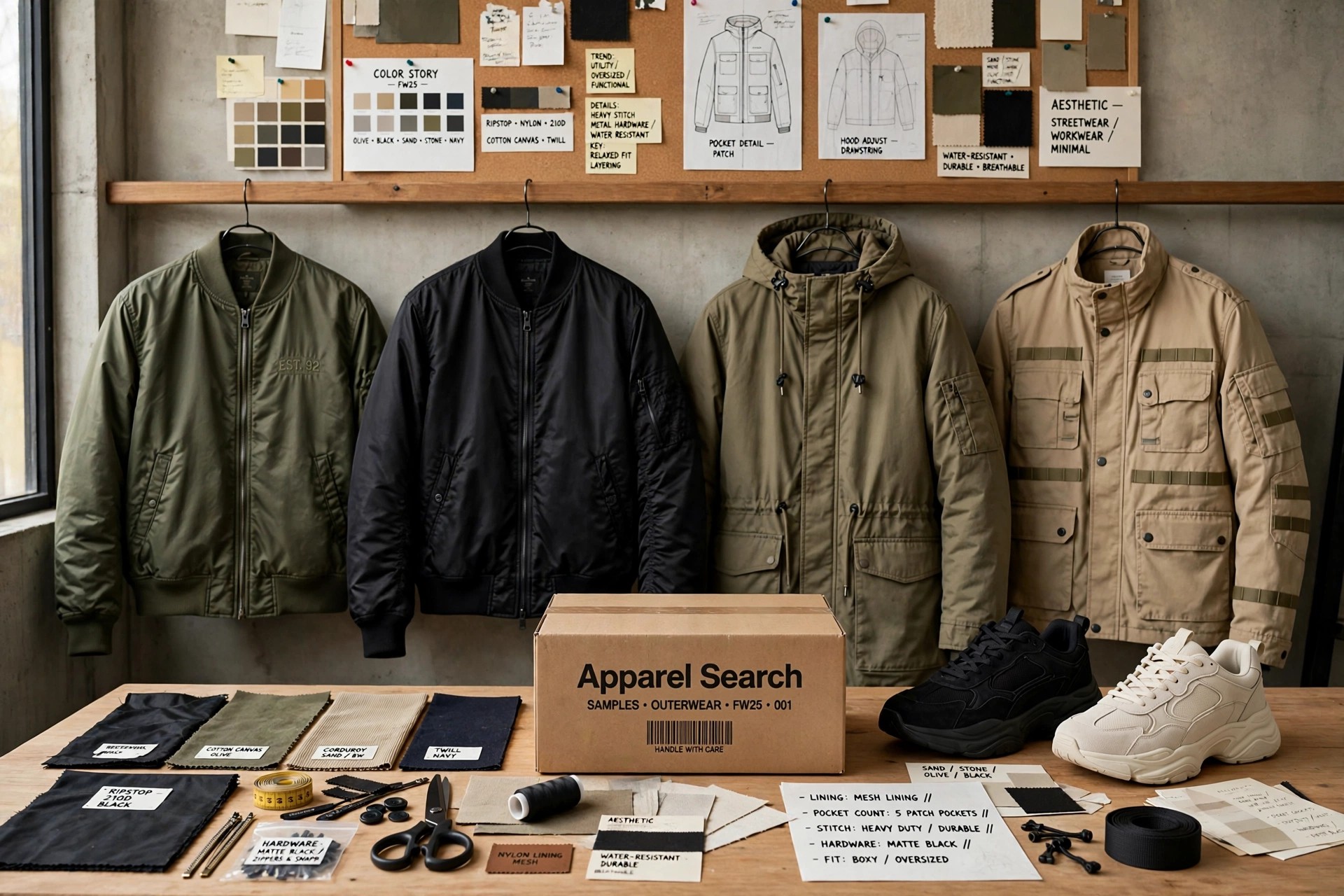
Range building starts from the culture as much as the catwalk: music, skate and street scenes, sport and gaming aesthetics, and the vintage and workwear revivals that cycle through young men's dressing. The designer turns those references into a jacket range with clear tiers — the hero branded puffer, the everyday bomber or coach jacket, the waterproof for festivals and travel, the smart-casual layer — sketching silhouettes and specifying fabrics, trims and graphic or branding applications for each. Graphics, badges, taping and logo placements are designed as part of the garment, not pasted on afterwards, because this customer reads inauthentic branding instantly.
Development moves at young-fashion speed while keeping outerwear's functional promises. Samples are fitted for the young men's block — closer and shorter than the classic men's fit, with its own grading — and checked for the category's practical tests: hood and pocket function, zip quality, warmth honestly matched to the style's purpose, and construction robust enough for daily, careless wear. The designer works with suppliers accustomed to short runs and quick repeats, approving pre-production samples against a calendar built around drops and seasonal moments rather than a single winter launch.
Street Influence, Branding and the Young Men's Customer
Cultural fluency is the specialism's currency. The young men's designer follows the scenes the customer follows, distinguishes a durable shift — a silhouette moving from niche to mainstream — from a week's noise, and times the range to meet demand as it crests. Collaboration and archive references, colour stories drawn from sport and streetwear, and fabric choices with a technical or utilitarian flavour recur because they speak this market's language; the designer who uses them knowingly, rather than decoratively, builds ranges the customer trusts.
Price and peer visibility shape the engineering. Young men's outerwear is compared in group chats and on resale platforms as much as in stores, so the designer costs from the target price backwards, spending where the customer can see and feel it — shell fabric, zip, branding execution — and simplifying where he cannot. Durability is part of the value story: jackets are worn daily, washed hard and sometimes resold, and construction that survives that life protects the brand's reputation with exactly the audience most likely to broadcast a failure.
Skills and Abilities the Role Requires
The role asks for the outerwear designer's full technical base — specification, fit, fabrics, hardware, costing — plus graphic and branding literacy unusual in coat departments: placing and scaling logos and artwork, specifying embroidery, print and badge applications, and judging when restraint beats decoration. Trend research skill here is evidence work — sales data, search and social signals, competitor ranges — weighed quickly and converted into product decisions.
Pace and communication complete the profile. Young men's ranges overlap and react; the designer keeps many styles moving with suppliers across time zones, writes tech packs that survive fast sampling, and presents range thinking to buyers in the market's own visual language. An instinct for fit — how this customer wants a jacket to sit this year, and how that differs from the classic men's block — is learned on fit sessions and sales floors and is one of the first things employers probe at interview.
Qualifications, Training and Career Path
Designers here usually train in fashion design or menswear and enter through assistant designer roles in young men's, streetwear-influenced or high-street menswear teams. Portfolios that open doors show jacket ranges with branding and graphics integrated, developed to costed products, plus evidence of genuine engagement with the market's culture — research that went somewhere, not mood boards for their own sake.
Progression runs to designer and senior designer within young men's and street-influenced categories, and the skills travel well: into men's outerwear generally, carrying speed and branding fluency with them; into sportswear and outdoor lifestyle ranges, where the same customer buys; or toward design management across young-fashion menswear. It is an early-responsibility category — designers who read the market well are trusted with ranges young, and their track records show it quickly.
Common Questions
What is young men's outerwear?
Jackets and coats for the young men's market — bombers, hooded parkas, puffers, utility jackets and layers — designed with street, sport and music influences, integrated branding and graphics, and engineered to accessible price points.
How does young men's outerwear design differ from men's outerwear design?
Fit, pace and culture. Fits are closer and shorter on a distinct block, ranges react in drops rather than one long season, and branding, graphics and scene references carry commercial weight that the classic men's coat department gives to cloth and longevity instead.
How do you become a young men's outerwear designer?
Train in fashion or menswear design, build a portfolio of jacket ranges with branding integrated and products costed, and enter through assistant roles in young men's or street-influenced teams, where fit sessions and fast supplier development teach the market.