Studio Manager Job Description
Running a fashion studio's operations — schedules, samples, shoots and people in photo and design studios that feed retail and e-commerce
A studio manager runs the operations of a fashion studio — the photo studio or design studio whose daily output a retailer, brand or agency depends on. In an e-commerce photo studio that output is product imagery: hundreds of garments photographed, styled and delivered to websites on relentless schedules. In a design studio it is the samples, fittings and creative work the studio exists to produce. Either way, creative talent alone does not keep such a place running: samples must arrive and be tracked, shoots must be scheduled and staffed, budgets and equipment must be managed, and deadlines must be met every single day. That operating system is the studio manager. This page explains the role.
More Design Job Descriptions by Letter:
What a Studio Manager Does
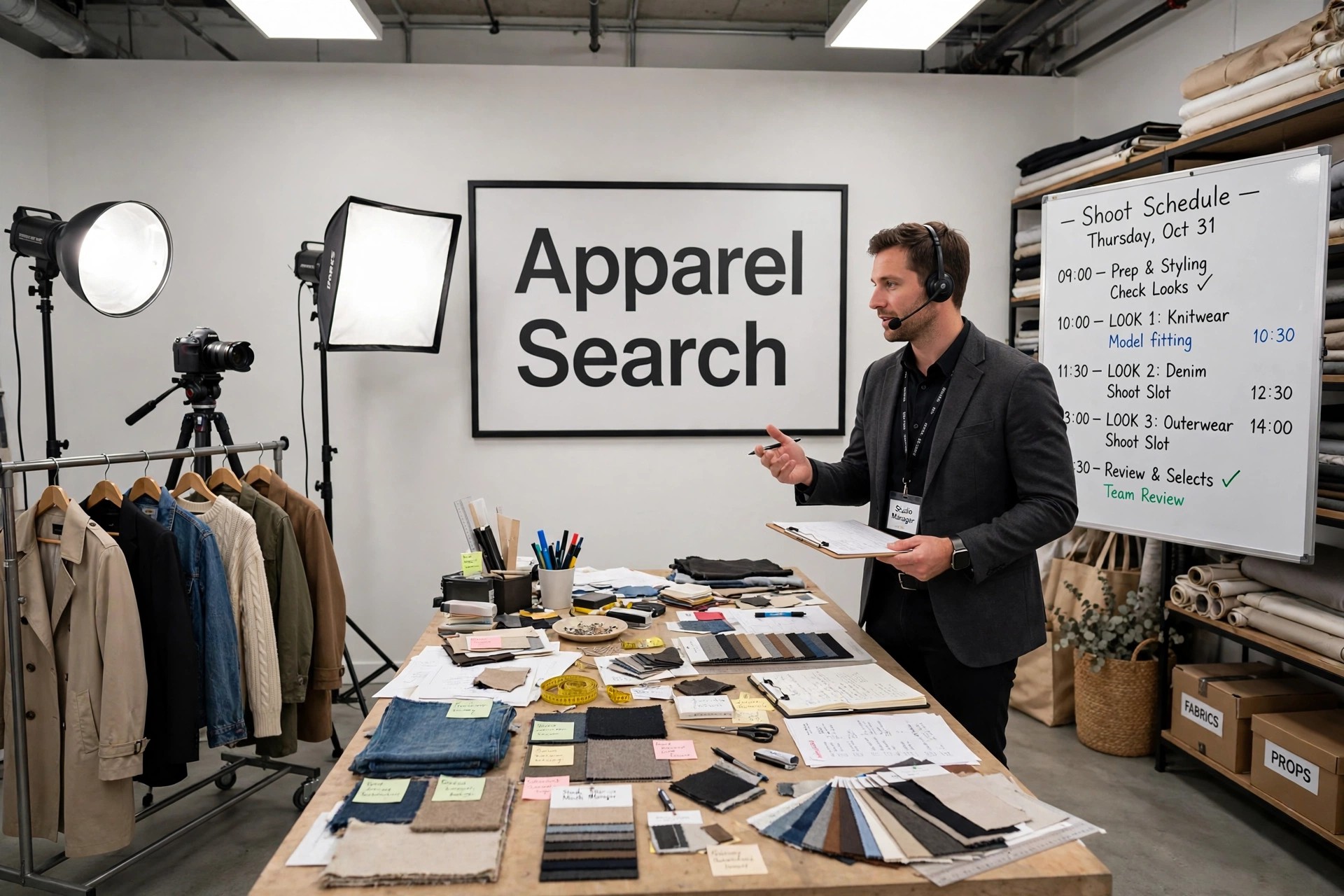
The manager owns the studio's calendar and its throughput. Incoming product — for a photo studio, the season's samples in their thousands — is booked in, prioritised against website launch dates and marketing campaigns, and scheduled across sets, photographers, stylists and models so that each day's capacity matches the queue. The studio manager plans who shoots what and when, books freelance photographers, stylists, hair and make-up artists and models as volume demands, and keeps a live view of work in progress: which products are photographed, which are in retouch, which are stuck awaiting a missing sample or a decision, and what will actually be delivered today.
Operations management fills the rest of the desk. The manager controls the studio budget — staff and freelance costs, equipment hire and purchase, studio supplies — maintains cameras, lighting, set materials and computer systems with the team, and enforces the unglamorous disciplines that keep a studio safe and legal: equipment checks, set safety, image and sample security, and tidy sample storage with an audit trail, because a lost sample can delay a product launch and a lost image file is a day's work gone. Reporting closes the loop: throughput, cost per image or per project, and missed-deadline causes go to management in numbers the manager can stand behind.
Samples, Shoots and the Daily Rhythm of a Studio
A fashion studio runs on flow, and the manager's craft is keeping that flow unblocked. Samples arrive from warehouses, suppliers and design teams in uneven waves; the manager smooths them into a steady shooting programme, sequences urgent campaign work ahead of routine product photography without starving the routine queue, and handles the day's inevitable disruptions — a photographer ill, a set light failed, a priority sample that must be found, shot and retouched by evening — by replanning calmly rather than by hoping. Quality standards are policed from this desk too: image consistency across photographers and days, styling that matches the brand's guide, and retouch standards that show garments truthfully.
The work environment is the studio floor itself: an early-starting, deadline-dense place where creative and logistics staff work side by side and where the manager is the person everyone finds when something is wrong. It mixes desk work — schedules, budgets, booking systems, asset management software — with constant floor presence: checking sets, chasing samples, settling the small frictions between teams before they cost a day. Peak seasons bring extended shoots and weekend working in some operations. The satisfaction is visible and daily: a studio that ships its full schedule, on brand and on budget, with a team that would work for its manager again next season.
Skills and Abilities the Role Requires
Organisation at scale is the headline skill: hundreds of items, dozens of people and several overlapping deadlines scheduled without collision, in systems — booking, tracking and digital asset tools — that the manager runs fluently and keeps truthful. That rests on a real understanding of the studio's crafts: the manager need not be the best photographer in the building, but must know what a shoot involves well enough to schedule it honestly, judge its output, and spot when a process, not a person, is causing delay.
People and money skills complete the profile. Studio teams mix staff and freelancers with strong creative temperaments; the manager recruits, books, briefs and motivates them, handles performance problems fairly, and builds the reliable freelance bench every busy studio depends on. Budget discipline is equally tested — cost per image is a number this desk owns — and negotiation with agencies, equipment suppliers and freelance day rates is routine. Calm authority under daily pressure, clear communication up to management and down to the newest studio assistant, and a genuine liking for creative environments are what separate managers whose studios run well from administrators whose studios merely run.
Qualifications, Training and Career Path
Studio managers usually rise from inside studio operations: studio coordinator, sample or production assistant, shoot producer or senior studio assistant posts teach the flow, the systems and the people, and promotion follows a record of schedules met and problems solved. Photography, fashion communication or business qualifications all appear in the role's backgrounds; what employers actually test is operational evidence — volumes managed, budgets held, systems used — and references from creative teams who have worked under the candidate's organisation.
Progression leads to senior studio management across multiple studios or sites, head of studio or content operations roles in large retailers and brands, and production management in agencies. The skills transfer widely: any operation that turns creative work into scheduled, budgeted, high-volume output — content factories, catalogue production, media studios — runs on the studio manager's disciplines. In fashion's image-hungry economy, where every product needs photographs before it can sell at all, the manager who keeps the studio shipping is quietly one of the most commercial people in the business.
Common Questions
What kind of studio does a fashion studio manager run?
Most often a photography studio producing product and campaign imagery for retail and e-commerce, or a design studio supporting sample and creative work. In both, the manager owns scheduling, sample flow, staffing, budgets, equipment and delivery.
Does a studio manager need to be a photographer?
Not the studio's best, but photographically literate: enough craft understanding to schedule shoots realistically, judge image quality and styling consistency, brief photographers and stylists, and diagnose whether delays come from process or performance.
How do you become a studio manager?
Work up through studio operations — coordinator, sample or production assistant, shoot producer roles — building scheduling, systems, budget and team experience, and earn promotion on a record of schedules delivered and problems solved calmly.