Material Handler Job Description
Moving the fashion industry's physical stock — fabric rolls, trims and garments received, stored, picked and shipped safely
A material handler moves the physical stock a fashion business runs on. In apparel warehouses, distribution centres and garment factories, handlers receive deliveries of fabric rolls, trims and finished garments, move them to storage, keep them findable, and pick and pack them again for production lines or customer orders. Nothing in the industry moves itself: the styles a buyer ordered and a factory sewed reach a store only because handlers unloaded, counted, shelved, retrieved and loaded them accurately at every stage. It is physical, systematic work, and the foundation on which warehouse accuracy is built.
More Miscellaneous Job Descriptions by Letter:
What a Material Handler Does
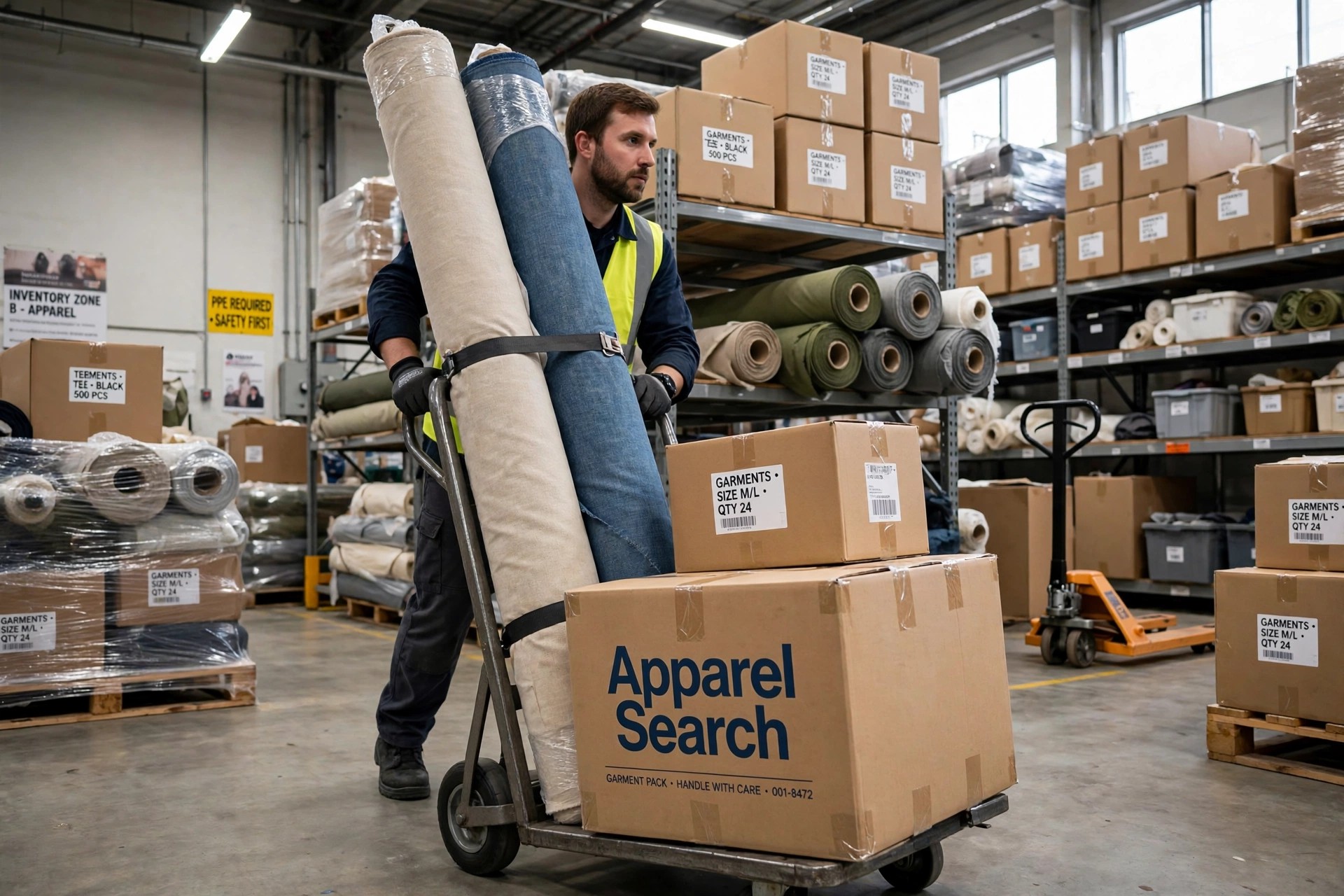
Receiving is the start of the flow. Handlers unload vehicles, check cartons and rolls against delivery documents, count and report damage or shortage, label stock with its style, colour, size or lot identity, and put it away in the location the warehouse system assigns. Fabric requires its own care: rolls are heavy, damage easily at the ends, and must be stored so a shade or quality problem is spotted at receipt, not at the cutting table.
Issuing and dispatch complete the cycle. In a factory, handlers deliver fabric, linings, trims and components to cutting and sewing sections in the quantities production requires, and return remnants to stock correctly. In a distribution centre, they pick garments for store and online orders, pack them to the standard the receiver expects, and load outbound vehicles in route order. Each movement is recorded — by scanner, ticket or system entry — because the stock record is only as true as the last handler's accuracy. Handlers also take part in the stock counts that test that truth: cycle counts of sections through the year and full counts at period ends, recounting discrepancies on the spot so that errors are traced to a movement, not merely written off.
Equipment, Conveyors and Safe Working
Material handling equipment does the heavy work, and handlers are trained and authorised for what they use: hand trucks and pallet jacks for everyday movement, conveyors that carry cartons between warehouse zones, and — where the role requires it and certification is held — forklifts and reach trucks for racked storage. Equipment is checked before use, defects are reported rather than worked around, and pedestrian routes, stacking heights and load limits are observed as rules, not suggestions.
Safety is the role's standing discipline, because warehouses combine heavy loads, moving vehicles and repetitive lifting. Handlers are trained in manual handling technique, wear the protective equipment provided, keep aisles and exits clear, and report hazards and near misses. Accuracy has a safety twin: a mislabelled roll or a carton in the wrong location creates the hurried searching and improvisation in which accidents happen, so careful handlers are safe handlers.
Skills and Abilities the Role Requires
Physical capability comes first and is stated honestly: the work involves standing and walking for whole shifts, lifting and carrying cartons and rolls within safe limits, and working at the pace a dispatch schedule sets. Reliability and stamina matter as much as strength — warehouse teams are staffed to a plan, and peak season volumes do not wait for absentees.
Accuracy is the skill that separates good handlers. Counting carefully, reading style, colour and size codes without transposing them, scanning every movement, and noticing when a label and its contents disagree are the habits that keep a warehouse's records true. Basic numeracy and comfort with handheld scanners and warehouse systems are expected; teamwork and clear communication with supervisors, drivers and production staff complete the profile.
Qualifications, Training and Career Path
Material handling is an entry route into logistics and production: most employers ask for a secondary-school education, train handlers on the job in their systems, equipment and safety procedures, and value warehouse, factory or delivery experience where it exists. Forklift and equipment certification, where the employer supports it, widens the work a handler can be assigned and is a recognised step up in pay and responsibility.
Progression runs to senior handler and team leader roles, inventory control and stock auditing, goods-in and dispatch supervision, and warehouse shift management. Handlers also move into production coordination and logistics planning, carrying a ground-level understanding of how stock really moves. The role suits people who like tangible results: at the end of a shift, the work is visible — received, shelved, picked and shipped, and counted right.
Common Questions
What does a material handler do in an apparel warehouse?
They receive, check and store fabric rolls, trims and garments, record every movement in the warehouse system, pick and pack stock for production or customer orders, and load outbound vehicles — using hand trucks, conveyors and, where certified, forklifts.
Is material handling an entry-level job?
Yes. Employers usually train handlers on the job in systems, equipment and safety. Physical capability, accuracy and reliability are the main requirements, and equipment certification can be earned in post.
What is the difference between a material handler and a warehouse manager?
Handlers move and record the stock itself. Warehouse managers plan the operation — staffing, layout, schedules and performance — and supervise the teams, including handlers, who carry the plan out.
More to Explore
- Fashion Employment Agencies
- Employment Search Engines
- Fashion Job Description Directory
- Fashion Directory
- Fashion Industry News
- Fashion Schools and Education
- Fashion Careers
- Apparel Industry Links
- Material Handling Equipment
- Conveyors
- Clothing Warehouses
- Warehousing Definition
- Transportation Directory