Materials Development Job Description
Creating the fabrics clothing is made from — sourcing, specifying and testing new materials with mills and suppliers
Materials development is the work of creating and sourcing the fabrics and materials a clothing range is made from. A materials development specialist (sometimes titled materials developer or fabric developer) takes a design team's intent — a hand feel, a drape, a performance property, a price — and turns it into a real, testable, buyable fabric: briefed to mills and suppliers, sampled, coloured through lab dips, tested against specifications, costed, and finally approved for production. Every garment begins as a material decision, and this role owns those decisions between the designer's idea and the factory's order.
More Miscellaneous Job Descriptions by Letter:
What Materials Development Involves
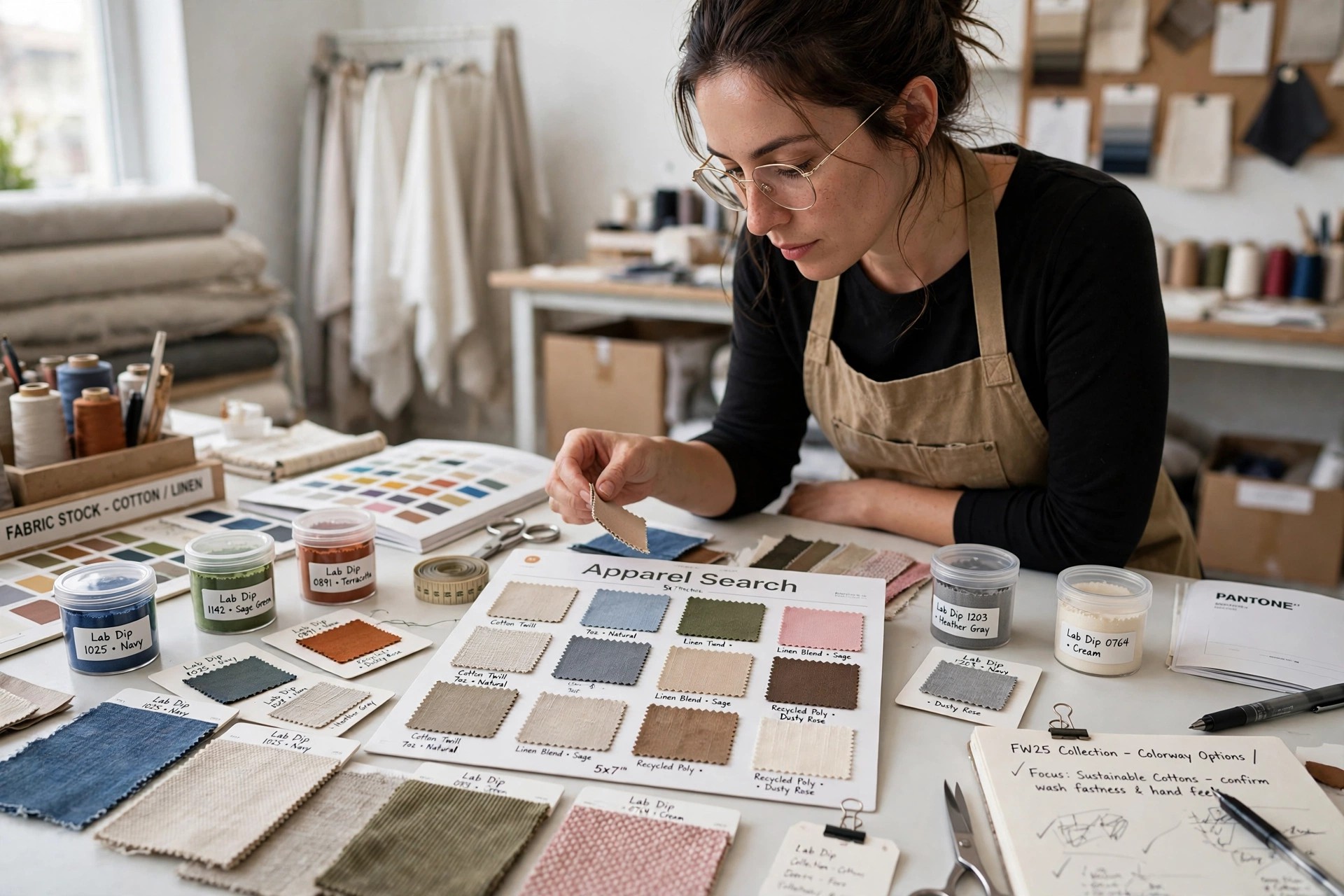
Development starts with the brief and the search. For each season, designers and product teams describe the fabrics they need — fibre, weight, weave or knit, finish, colour and cost target — and the developer sources options from mills and fabric suppliers, attends fabric fairs and mill appointments, and maintains a library of swatches and headers that future ranges draw on. Existing proven fabrics are re-coloured or re-finished where they serve; genuinely new materials are commissioned where the range needs something the market does not already offer.
Each candidate material is then developed toward production readiness. The developer issues specifications covering construction, composition, weight, width, colour standards and performance requirements, and drives the sampling loop: ordering sample yardage, reviewing it with design and garment technicians, requesting corrections, and repeating until the fabric on the table matches the fabric in the specification. Only approved materials are released for costing and bulk ordering, with their full test and approval record attached.
Lab Dips, Testing and Quality Standards
Colour is the most visible development loop. Mills submit lab dips — small dyed samples — for each colour of a fabric, and the developer assesses them against the colour standard under controlled lighting, approving, commenting or rejecting with precise instructions. Print strike-offs and finish handlooms go through the same discipline. Colour approval is skilled judgement: a dip that passes in one light and fails in another will produce garments a store cannot sell beside each other.
Testing gives the role its technical spine. Fabrics are tested, in-house or by laboratories, for the properties their garments will be judged on: shrinkage, colourfastness to washing, rubbing and light, pilling, strength, stretch and recovery, and compliance with the chemical and safety rules of the markets the clothing will be sold in. The developer sets the pass standards with the technical team, reads the reports, and decides — retest, adjust the finish, or drop the material — before problems become bulk fabric. Failed results are negotiated, not just filed: the developer works with the mill on the finish or construction change that brings the fabric inside standard.
Skills and Abilities the Role Requires
Textile knowledge is the foundation: fibres and yarns, woven and knitted constructions, dyeing and finishing, and how each choice changes a fabric's hand, performance and price. Colour vision and colour judgement are tested in the work daily. Just as important is specification discipline — writing requirements so exactly that a mill on another continent produces the same fabric twice, and keeping development records that let any colleague trace why a material was approved.
Commercial and collaborative skills complete the profile. Developers negotiate with mills on price, minimum order quantities and lead times, and balance design ambition against cost and production reality — a beautiful fabric that cannot be made at the target price, in the required quantity, on the season's calendar, is a failed development. The role works between design, garment technology, buying and suppliers, translating each side's language to the others.
Qualifications, Training and Career Path
The usual foundations are a degree or diploma in textiles, textile technology, fashion fabrics or a related subject, or progression from fabric sourcing, garment technology or quality roles where materials knowledge was built in practice. Employers train developers in their specification systems, testing standards and supplier base; knowledge of sustainability standards and fibre certifications is increasingly expected as ranges carry environmental claims that development must substantiate.
Careers progress to senior materials developer and materials manager, owning a category's or a whole company's fabric strategy and mill relationships, and outward into sourcing management, garment technology leadership and product development direction. Specialists also build deep niches — performance fabrics, denim, knitwear, sustainable materials — where their mill knowledge becomes the company's competitive edge. It suits people who think a garment's success is decided before the first seam is sewn.
Common Questions
What does a materials development specialist do?
They develop and source the fabrics and materials for clothing ranges: briefing mills, sourcing options, writing specifications, approving lab dips and samples, arranging performance and compliance testing, and releasing approved, costed materials for production.
How is materials development different from material handling?
Completely different work. Materials development creates and approves the fabrics themselves, working with mills on specifications, colour and testing. Material handling is warehouse work — receiving, moving, storing and dispatching physical stock.
What should I study for materials development?
Textiles, textile technology or fashion fabric subjects are the direct route. Experience in fabric sourcing, garment technology or quality assurance also leads in, provided the textile knowledge — fibres, constructions, dyeing and testing — is genuinely built.