Fabric Specialist Job Description
The fabric authority inside a brand or mill — deep cloth expertise applied across ranges, suppliers and problems
A fabric specialist is the person an organisation turns to when the question is cloth itself. Titles vary — fabric specialist, fabric expert, textiles specialist, fabric librarian in the library-owning version of the role — but the substance is consistent: encyclopaedic, practical knowledge of fabrics, applied wherever decisions are made. Designers consult the specialist before choosing a cloth, buyers consult them before committing a season's yardage, production teams consult them when a fabric misbehaves, and customers' quality complaints often end on their desk. Unlike the fabric developer, who creates specified new cloth with mills, the specialist's value is breadth: knowing the whole landscape of available fabrics and matching the right one to each brief.
More Production Job Descriptions by Letter:
Knowing Fabric Across a Whole Range
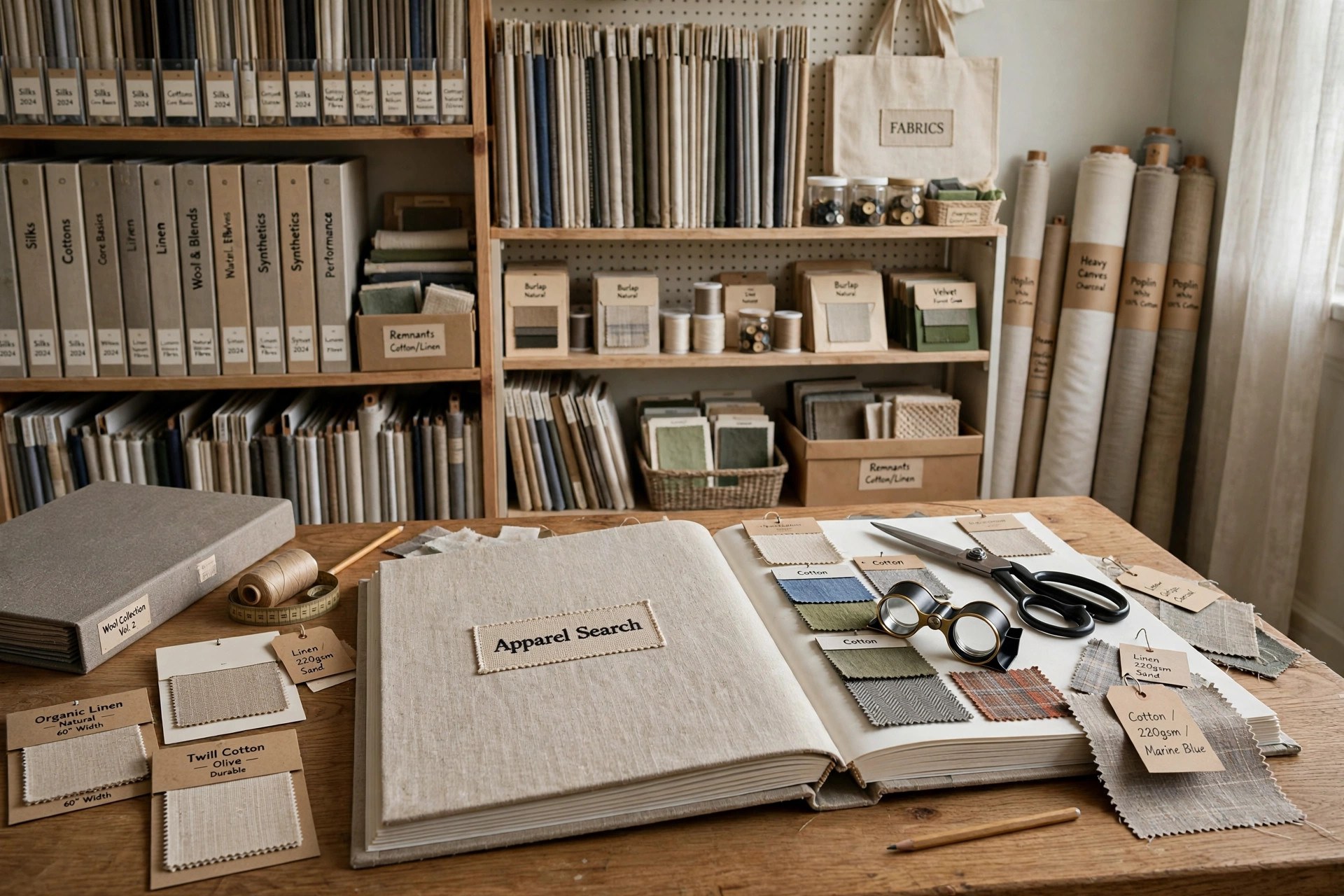
The specialist maintains the working knowledge — and often the physical library — of every fabric a business uses or might use: fibre compositions, constructions, weights, finishes, costs, lead times, minimums, test histories and the mills behind them. When a designer describes an effect, the specialist produces real cloth that achieves it within the price and calendar the range allows, and warns early when the imagined fabric does not exist at the imagined price. That translation between creative language and textile reality is the role's daily centre.
Season by season, the specialist reviews the fabric base: which cloths performed, which drew returns for pilling, fading or shrinkage, which suppliers delivered late or inconsistently. Consolidating a range onto fewer, better-performing base fabrics — so-called fabric platforming — is classic specialist work with an outsized effect on cost and quality, because every garment built on a proven cloth inherits its reliability.
Advising Designers, Buyers and Production Teams
Advisory work runs in every direction. To design: which fabrics will drape, photograph, wash and wear as the garment demands, and what is new — a recycled yarn, a finish, a construction — worth trialling. To buying and sourcing: which mills can supply a fabric to standard at volume, what a fair price looks like, and where a cheaper substitute is genuinely equivalent versus quietly inferior. To production and quality teams: why a fabric is sewing badly, shrinking unevenly or failing a test, and whether the fix belongs with the fabric, the garment construction or the care instructions.
Specialists also set and police standards. They write or maintain the fabric manual — the constructions, tolerances and test requirements a supplier must meet — evaluate new mills' sample yardage, and approve or reject substitutions when a planned fabric falls through. In customer-facing businesses they may train store and service teams on fabric properties, turning 'why did this pill?' from a complaint into an answered question about fibre length and abrasion.
The specialist's judgment is most visible when something must be substituted at speed. A mill fails, a fabric is discontinued mid-season, a price moves beyond the range's margin: the business needs an alternative cloth that preserves the garment's look, hand and performance, sourced from a supplier who can actually deliver. Specialists who maintain a mental shortlist of equivalents for every critical base fabric — and honest notes on where each equivalent falls short — turn a potential range crisis into a two-day problem.
Skills and Experience the Role Requires
The foundation is identification skill: naming a fabric's fibre, construction and finish from a swatch, by hand and eye, quickly and correctly — the party trick that is actually the job. Beneath it sits structured knowledge of testing and standards, of how fabrics behave in garment manufacture and in wear, and of the global mill landscape by specialism and price tier. Specialists keep current deliberately: mill visits, trade fairs, fibre producers' launches and the returns data of their own ranges.
Influence is the other half of the skill set. A specialist rarely owns the final decision — designers choose, buyers commit, factories produce — so the role works through credibility: being right often enough, early enough, that advice is sought before decisions harden. Clear written standards, honest cost-benefit explanations and a library organised so anyone can find a fabric unaided multiply the specialist's reach beyond the hours they can personally advise.
Training, Qualifications and Career Path
Specialists are made by years around fabric rather than by a single course, though textiles, fashion buying and garment technology education all provide foundations. Typical routes run through fabric technician, fabric developer, fabric librarian, quality or product-development roles — anywhere that accumulates swatch-level knowledge across many fabrics rather than deep knowledge of a few. Employers hiring a specialist are buying proven judgment and usually test it directly with fabric identification and problem-solving exercises.
Senior specialists head fabric departments, own fabric strategy for large brands, or consult independently to mills, retailers and start-ups that need expertise without a full-time hire. The role also feeds naturally into sustainability leadership — fabric choice decides most of a garment's footprint, and specialists hold the fibre and certification knowledge those programmes run on — and into fabric sourcing management, where breadth of mill knowledge converts directly into negotiating strength.
Common Questions
What is the difference between a fabric specialist and a fabric developer?
A developer creates and specifies new fabric with a mill, engineering a cloth to a brief. A specialist commands the whole field of existing fabrics — selecting, advising, setting standards and solving problems across a range. Large fabric teams employ both; smaller businesses often combine them in one experienced hire.
What does a fabric library do, and who runs it?
A fabric library is the organised collection of approved and reference fabrics — headers, standards, costs, test results — that designers and buyers build ranges from. Specialists (or fabric librarians working with them) run it, keeping standards current and removing cloth that is discontinued or has failed in production.
Can a fabric specialist work freelance?
Yes — consultancy is a well-established pattern. Mills hire specialists to position new cloth, brands hire them for a season's fabric strategy or a quality investigation, and start-ups hire them to build a first fabric base. The work sells accumulated judgment by the project.
More to Explore
Fabric Resources
References & Further Reading
More Job Description Categories
- Buying Job Descriptions
- Design Job Descriptions
- Marketing & PR Job Descriptions
- Miscellaneous Job Descriptions
- Planning & Allocation Job Descriptions
- Production & Sourcing Job Descriptions (current)
- Sales & Selling Job Descriptions
- Transportation & Warehouse Job Descriptions