Fabric Finishes
A finish is everything done to a fabric after weaving or knitting to give it its final hand, look and performance. This page explains the finish types Apparel Search lists - from brushing and calendering to wicking and wrinkle-free treatments - and what each one does to the cloth.
Shop Fabric Now
Shop Fabric on Amazon Shop Fabric on eBayThe Amazon and eBay links on this page are affiliate links. If you make a purchase through them, Apparel Search may earn a commission.
The Finish Types This Directory Lists
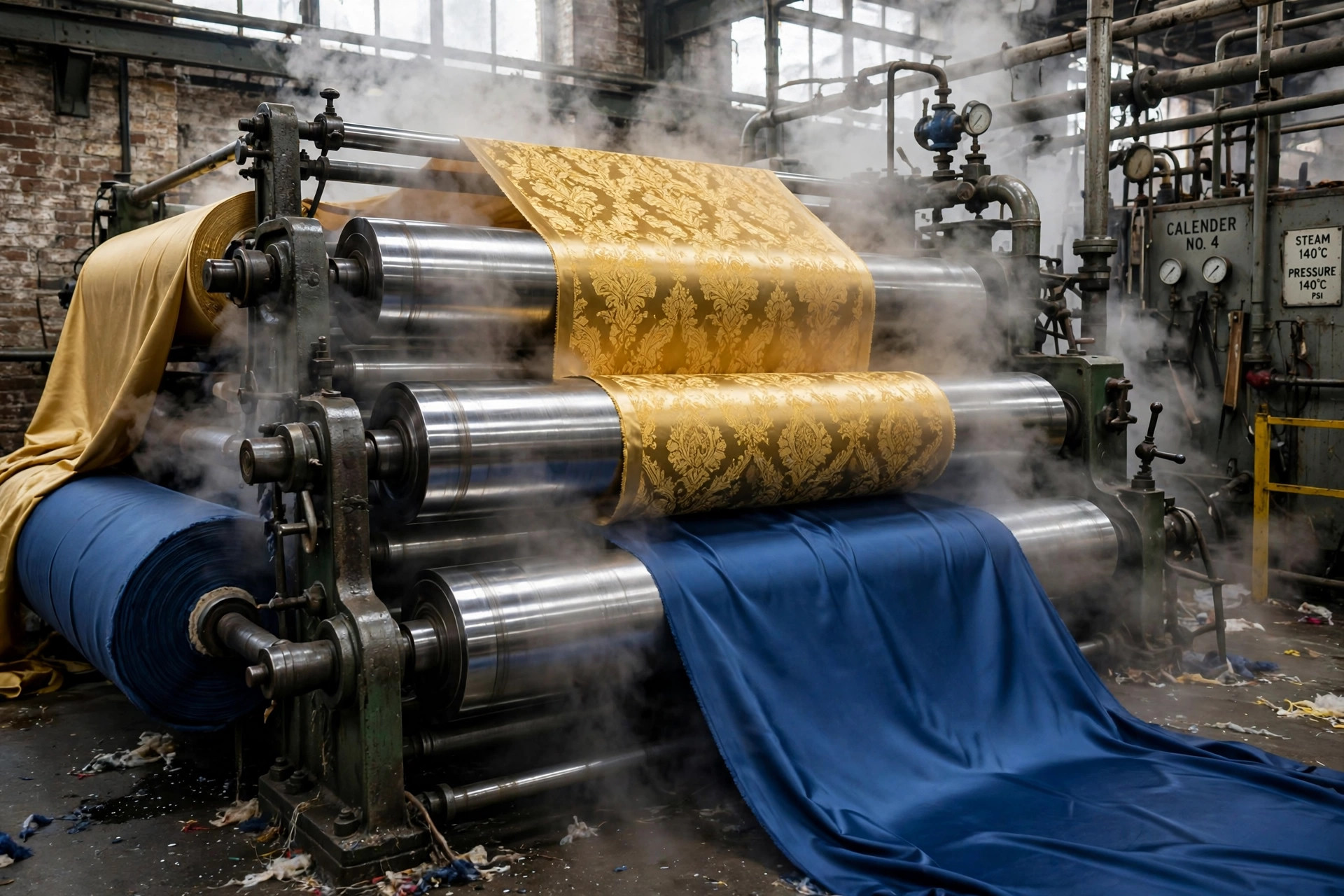
The finishes listed here are: Brushed, Calendered, Chintz, Easy Care, Fire Resistant, Mercerised, Microsanded, Paper Touch, Peach, Rubberized, Sanforised, Soil Release, Stain Proof (Teflon), Teflon Coated, Water Repellent, Water Resistance, Wicking and Wrinkle Free. Read as a list it looks miscellaneous, but the finishes fall into three families. Mechanical finishes change the cloth physically, with rollers, brushes, abrasives and heat: brushing raises a nap, calendering presses the surface smooth and sometimes lustrous under heated rollers, microsanding and the peach and paper-touch finishes abrade or treat the surface to a fine, dry, suede-like hand, and sanforised cloth is mechanically pre-shrunk so garments keep their size. Chintz is the decorative member of the family - a glazed, often printed cotton whose shine comes from its calendered, resin-treated surface.
Chemical finishes change what the fibers themselves do. Mercerising treats cotton under tension with caustic soda, swelling the fibers so the cloth takes dye deeper, gains strength and acquires its characteristic soft lustre - much of the quality difference between two otherwise identical cotton fabrics is mercerising. Easy-care and wrinkle-free finishes crosslink cellulose fibers so cloth recovers from creasing and needs little ironing. Soil-release finishes make fibers shed oily stains in the wash, stain-proof and Teflon-branded coatings put a fluoropolymer barrier on the surface so liquids bead instead of soaking in, rubberized finishes coat cloth for waterproof flexibility, and fire-resistant finishes either treat the surface or are built into inherently resistant fibers - the subject of this section's Flame Retardant Fabric directory.
Performance Finishes and How to Specify Them
The performance family is sold on test results. Water-repellent finishes make droplets bead and roll off while the cloth stays breathable; water resistance is a stronger claim, measured by the water pressure a fabric withstands before leaking, and a fully waterproof cloth is a different construction again - the waterproof fabric pages in this section cover that construction. Wicking finishes move liquid sweat along the fibers to the fabric's outer face so it can evaporate, and they are specified by drying-rate and moisture-management tests rather than by hand feel. Every finish on the list shares two specification rules: it must be tested on the actual cloth after washing, because many finishes fade across the first laundry cycles, and its cost must be weighed against what it changes - a finish the customer cannot feel, see or measure in use adds price without adding value.
Finishing is a trade of its own inside the textile industry. Mills weave greige cloth; specialist finishers - the contractors this page links to - apply the chemical and mechanical processes, and the machinery directory linked below covers the stenters, calenders, sanforisers and coating lines the work runs on. If you have educational details regarding any of these finishes, please let Apparel Search know and the information can be added so that viewers can learn more about the finishing processes relevant to textiles. Readers sourcing the cloths themselves should continue to the Fabric Mill Directory, and the fabric categories throughout this section each describe the finishes their cloth typically carries, from the brushed nap of Flannel to the raised pile of Fleece.
Using This Page
Use the finish list as a checklist when specifying or buying fabric. Name the finish in the purchase specification rather than assuming it - 'cotton poplin' from two mills can be a stiff, papery cloth from one and a soft, peach-touch cloth from the other purely through finishing. Ask whether the finish is durable to washing or a dressing that will leave in the first laundry, ask for the test method behind any performance claim, and handle a finished sample after a wash before approving bulk. The two trade links for this section - fabric finishing machinery and fabric finishing contractors - are in the directory menu below, alongside the full fabric section A-Z. Thank you for using Apparel Search to learn about textile finishing.
Common Questions
What is a fabric finish?
Everything done to a fabric after weaving or knitting to give it its final hand, appearance and performance: mechanical treatments such as brushing, calendering and sanforising, chemical treatments such as mercerising and wrinkle-free resin finishes, and performance treatments such as water repellency and wicking.
What is the difference between water repellent and water resistant fabric?
A water-repellent finish makes droplets bead and roll off a breathable cloth. Water resistance is a measured claim - the water pressure the fabric withstands before leaking - and sits between repellency and a fully waterproof construction. The claim should always name its test method.
Which finishes are on the Apparel Search fabric finishes list?
Brushed, Calendered, Chintz, Easy Care, Fire Resistant, Mercerised, Microsanded, Paper Touch, Peach, Rubberized, Sanforised, Soil Release, Stain Proof (Teflon), Teflon Coated, Water Repellent, Water Resistance, Wicking and Wrinkle Free.
More to Explore - The Full Fabric Directory A-Z
- Fabric Scents & Aromas
- Fabric Finishes
- Fabric Mills Directory Page 2
- Fabric Mills Directory Page 3
- Fabric Mills Directory Page 4
- Fabric Mills Directory Page 5
- Fiberglass Fabric
- Fil-a-Fils Fabric
- Filter Cloth Mills
- Flame Retardant Fabric
- Flannel Fabric Mills
- Fleece Fabric
- Flock
- French Terry Fabric Mills
- Electromagnetic Shielding Fabrics
- Embroidered Fabric
- Gabardine Fabric Mills
- Gauze Fabric Mills
- Georgette Fabric Mills
- Gingham Fabric
- Greige Fabric
- Fabric Mills - Fabric Section Hub
- Fabric Finishing Machinery
- Fabric Finishing Contractors
Looking for Fabric Mills and Suppliers?
Return to the Fabric Directory hub for the full fabric section, or browse the Fabric Manufacturers Directory page for the wider mill trade.