Dance Shoe Factory Directory
Manufacturers of pointe shoes, ballet slippers, tap, jazz and ballroom shoes.
Dance shoes are performance equipment disguised as footwear: pointe shoes that support a dancer’s full weight on the toes, slippers that must feel like socks with soles, tap shoes that are also percussion instruments, and ballroom shoes balanced on precise heels. This factory directory covers the manufacturers of those products and the wider footwear factory categories around them.
One maker’s story explains the whole category, and it is carried in the listing below: Bloch began with handmade pointe shoes in 1932 and built its range by listening to dancers. Dance shoe factories still work that way, developing product with professional dancers and teachers rather than from trend forecasts.
Dance Shoe Resources
How Dance Shoes Are Made
The wider range explains why dance shoe factories organize by discipline. Ballet needs pointe shoes and slippers; ballroom and Latin need heeled shoes with suede soles and flexible shanks, in standard and Latin heel heights; tap needs taps fitted and tuned; jazz needs a light, split-sole shoe that points like a slipper and grips like a sneaker; character and folk dance need low-heeled, strapped shoes that survive ensemble work. Each discipline fits differently, is sold through dance retailers who fit by hand, and is replaced on a performer’s schedule rather than a fashion season, so factories run fitting-led size and width ranges that ordinary shoe factories would find uneconomic.
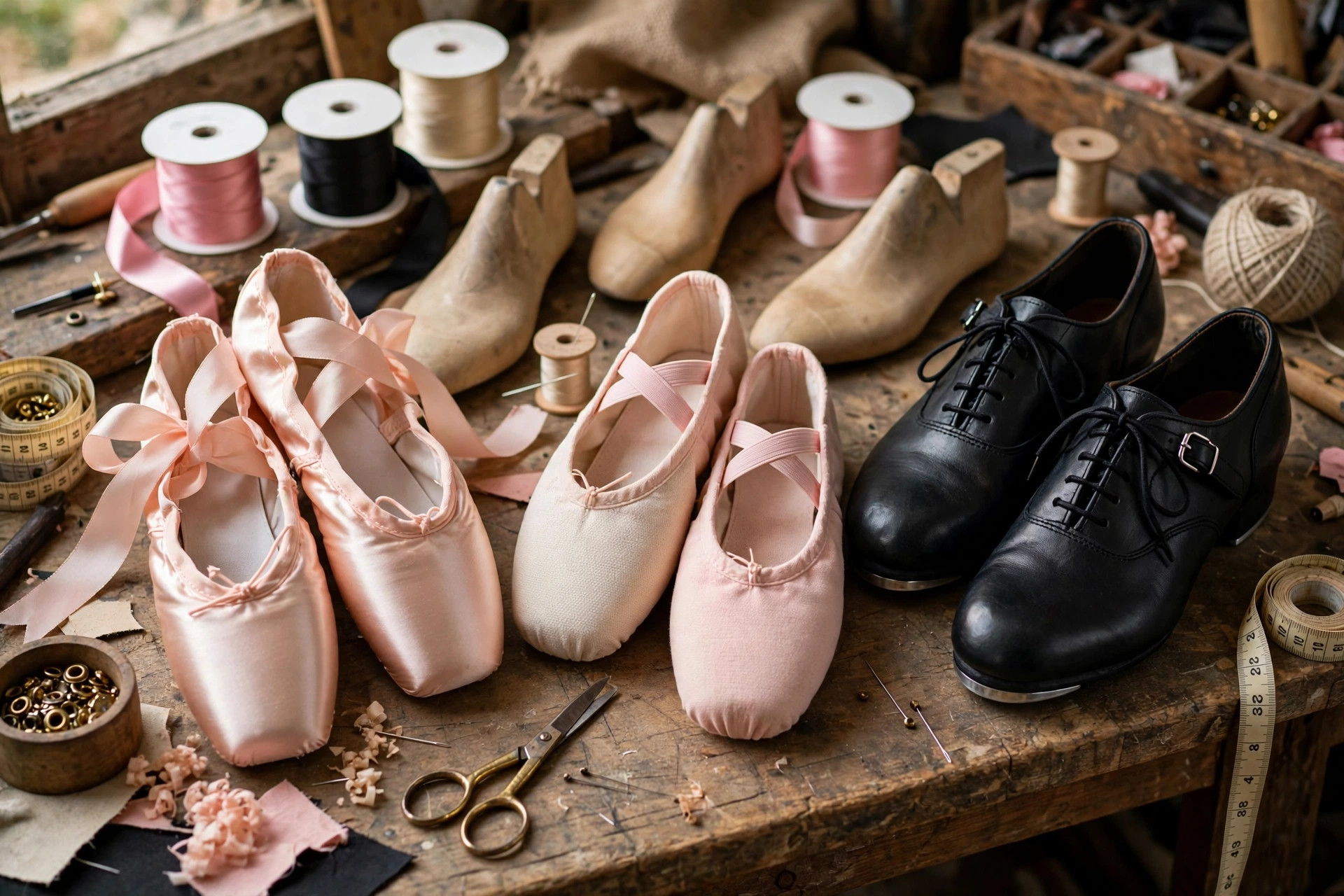
A pointe shoe is built around a box, the hardened toe cup traditionally formed from layers of fabric, paper and paste over a last, with a shank of leather or board inside the sole that the dancer breaks in to her own foot. The satin upper is pleated under the box by hand, which is why pointe shoes are still substantially handmade and why makers employ experienced craftspeople for the final forming. Ballet slippers are simpler, soft leather or canvas with a split or full suede sole, but their fit tolerance is tight because the shoe must move with the foot. Tap shoes add metal taps fixed to toe and heel, tuned by the tightness of their screws, and ballroom shoes use suede soles, flexible shanks and heel shapes standardized for the floor.
Dance Shoe Manufacturer Listings
Bloch
Bloch’s philosophy of listening to dancers is still as strong today as it was when Jacob Bloch made his first pair of pointe shoes in 1932. Russian born, Jacob arrived in Australia in 1931 at the height of the Great Depression and began making shoes by hand in the workshop where he lived. Today Jacob’s family is still listening to dancers: they work with professionals, says David Wilkenfeld, Jacob’s grandson, who is Managing Director of Bloch International. The most important part of the design phase is combining both function and aesthetic to meet the dancer’s needs. In addition to shoes, Bloch makes a comprehensive range of dance apparel and accessories designed specifically for dancers, and working with dancers is an essential part of designing garments that will perform well, enhance movement and feel great.
Photos

Footwear Resources and Definitions
- Shoe Components
- Shoe Covers / Rubbers
- Shoe Making Equipment
- Lacing Techniques
- Footwear Associations
- Shoe Wholesaler
- Women's Shoe Stores
- Men's Shoe Stores
- Wholesale Women's Shoes
- Shoe Information
- Footwear Definitions
- Clog Definition
- Slipper Definition
- Geta Definition
- Boot Definition
- Shoe Fetish Definition
- Grommet Definition
- Aglet Definition
More Footwear Factory Categories
Common Questions
Why are pointe shoes still handmade?
The box that supports the dancer is formed by pleating satin over layers of fabric and paste on a last, and the shaping is judged by hand and eye. Each maker’s hand influences fit, and dancers are loyal to individual makers for exactly that reason, so the craft stage has resisted automation.
What is the difference between a pointe shoe and a ballet slipper?
A slipper is a soft shoe of leather or canvas with a suede sole, worn for class and most performance. A pointe shoe has a hardened box at the toe and a supporting shank that let a trained dancer stand on the tips of the toes; it is specialist equipment fitted individually.
What should a retailer ask a dance shoe factory?
Ask about the fitting range: widths, shank strengths and box shapes matter more than headline sizes in dance. Also ask which products are developed with professional dancers, since fit feedback from working dancers is the category’s real research and development.