Canvas Shoe Factory Directory
Factories making canvas shoes and vulcanized canvas sneakers.
Canvas shoes are the simplest footwear construction that is still a real shoe: a textile upper lasted over a form and bonded to a rubber sole, most famously by vulcanization. This directory covers canvas shoe factories and places them inside the wider footwear factory directory, whose categories and resources fill most of this page.
Canvas is also a material story. The definitions section explains canvas itself, linked below, and buyers coming from apparel will find the category familiar: the upper is a garment textile, cut and sewn much like clothing, and the shoemaking begins only when that sewn upper meets the sole unit.
Canvas Shoe Resources
How Canvas Shoes Are Made
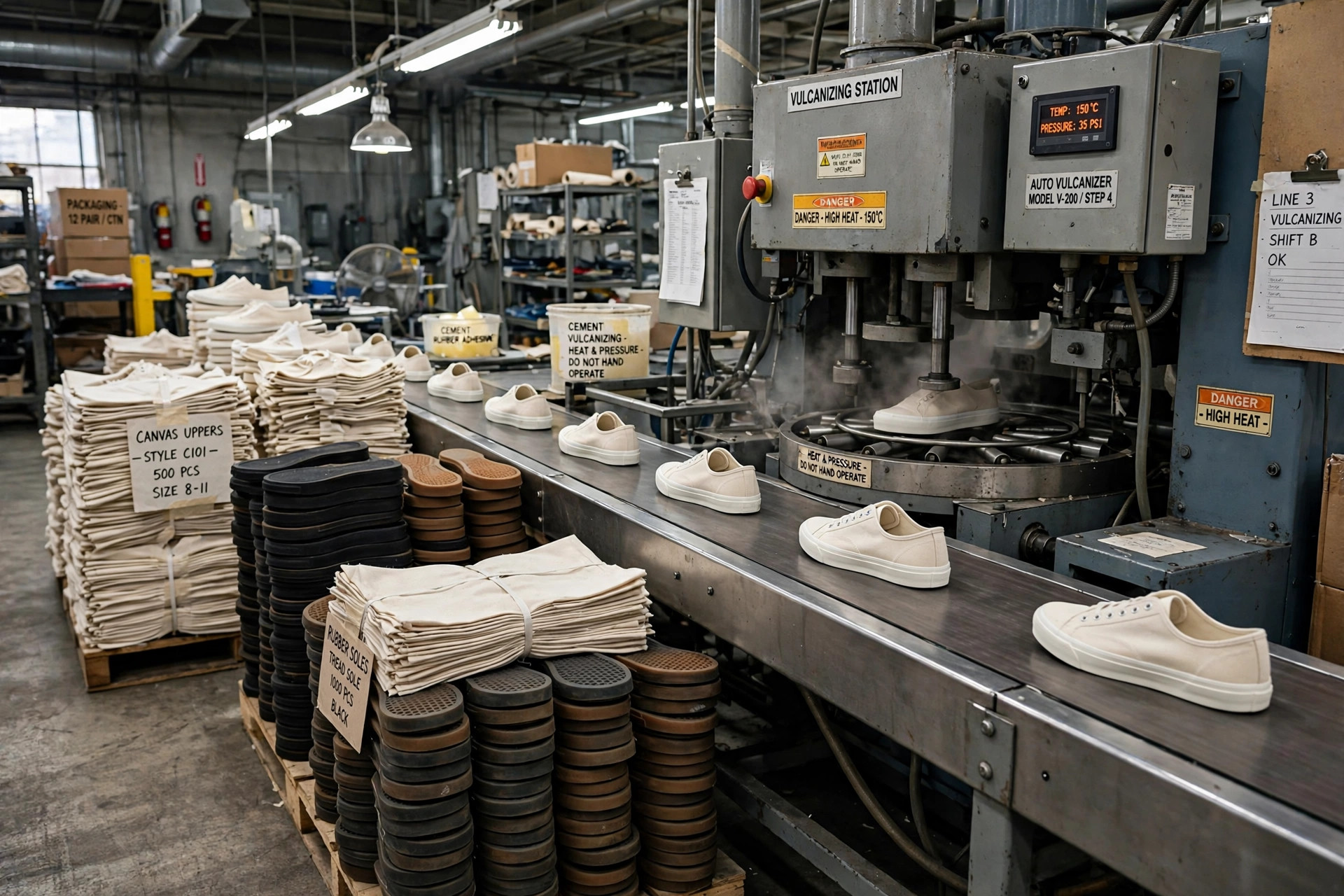
Production starts in the cutting room, where canvas uppers are die-cut in pairs and the quarters, vamps and collars are stitched together with the eyelet stays reinforced, because the lacing takes the strain of the shoe. The sewn upper is lasted, pulled over a foot-shaped form so it takes the shoe’s shape, and the rubber sole unit is attached. In vulcanized construction the assembled shoe, with its foxing tape wrapped around the join, is baked in an autoclave so the rubber cures and bonds as one piece, giving the classic sneaker its flexible, durable sole edge. Cemented construction skips the oven and glues a pre-cured sole, which suits lighter fashion canvas shoes. Finishing is lacing, pairing, inspection and boxing, with the insole and sock lining added last.
Canvas, Soles and the Wider Market
Canvas itself is a plain-weave cotton fabric, traditionally heavy, though modern canvas shoes use a range of weights and blends, including recycled and organic cotton for sustainability-led lines. The sole decides the shoe’s character as much as the upper: natural rubber gives grip and flex at a higher price, while synthetic rubber and cupsole units serve volume programs. Canvas shoes anchor several markets at once: fashion sneakers, where color range and price drive the buy; work and service shoes with slip-resistant soles; martial arts and dance-adjacent training shoes; and promotional footwear printed with artwork, which is why printers as well as shoe factories appear in this supply chain. A buyer developing a canvas line should decide early whether the program is a fashion program, bought on color and silhouette, or a utility program bought on sole performance, because the factory shortlist differs.
Finding the Right Footwear Factory
Footwear factories specialize hard by construction: a plant tooled for vulcanized canvas sneakers is not automatically able to make leather boots or moulded PVC boots, which is why the footwear directory below is divided into so many categories. When approaching a canvas shoe factory, specify the construction, the sole material, whether you need your own last shape or will use the factory’s, and the size run, including whether the program is men’s, women’s or children’s, since each needs its own lasts and cutting dies. The categories below cover the neighboring specialties, and the resources section adds components, equipment and associations for buyers building a wider footwear program.
Footwear Resources and Definitions
- Shoe Components
- Shoe Covers / Rubbers
- Shoe Making Equipment
- Lacing Techniques
- Footwear Associations
- Shoe Wholesaler
- Women's Shoe Stores
- Men's Shoe Stores
- Wholesale Women's Shoes
- Shoe Information
- Footwear Definitions
- Clog Definition
- Slipper Definition
- Geta Definition
- Boot Definition
- Shoe Fetish Definition
- Grommet Definition
- Aglet Definition
Footwear Factory Categories
Common Questions
What is vulcanization in canvas shoe making?
Vulcanization is the curing process that bonds a canvas shoe’s rubber sole and foxing tape to the upper in a heated autoclave. The rubber cures as one piece around the shoe, producing the flexible, durable edge seen on classic canvas sneakers.
What information does a canvas shoe factory need for a quotation?
The construction type, sole material, size run and which market it serves, expected quantity, and whether the factory supplies the lasts or the buyer provides a custom last shape. Canvas weight and color range complete the specification.
Why is the footwear directory split into so many factory categories?
Because footwear constructions do not transfer: vulcanized canvas, moulded PVC boots, leather winter boots and dance shoes each need different machinery, molds and skills. The category split lets a buyer reach factories tooled for the exact product.