Winter Boots Factory Directory
Factories manufacturing winter boots, snow boots and cold weather boots.
This section of the footwear factory directory contains listings of shoe factories that manufacture winter boots, snow boots and cold weather boots: footwear built around insulation, waterproofing and grip rather than fashion alone. If you live in a cold weather climate, or plan to visit a location that is cold, there is nothing better than a warm and cozy pair of winter boots, and the factories below are where those boots begin.
The education links at the top of this page are worth using first: footwear terminology, winter footwear terminology, snow boot product information and the types of shoes guide will help a buyer specify temperature ratings, insulation and sole requirements in the trade’s own language.
Winter Footwear Education
Choosing a Winter Boot Factory
Winter boot production splits between moulded specialists, like the listing below, whose rubber and PVC boot plants add insulated and slush boot lines, and leather boot factories that stitch insulated uppers to cemented or welted soles. The products overlap in the store but not on the production floor, so the first sourcing question is construction. The second is verification: ask how the temperature rating was arrived at, what insulation weight is used and where, and whether the waterproof claim covers the whole boot or only the rubber lower. The third is the size and width program, since winter boots are worn over heavy socks and a narrow last fails in this category even when the insulation is excellent.
Buyers for work and safety markets add two more checks: slip resistance test results on ice or oily surfaces, and whether the model is certified as safety footwear where a toe cap is fitted. Retail buyers should also confirm the liner story, because a replaceable liner is a selling point they will want in writing.
How Winter Boots Are Made
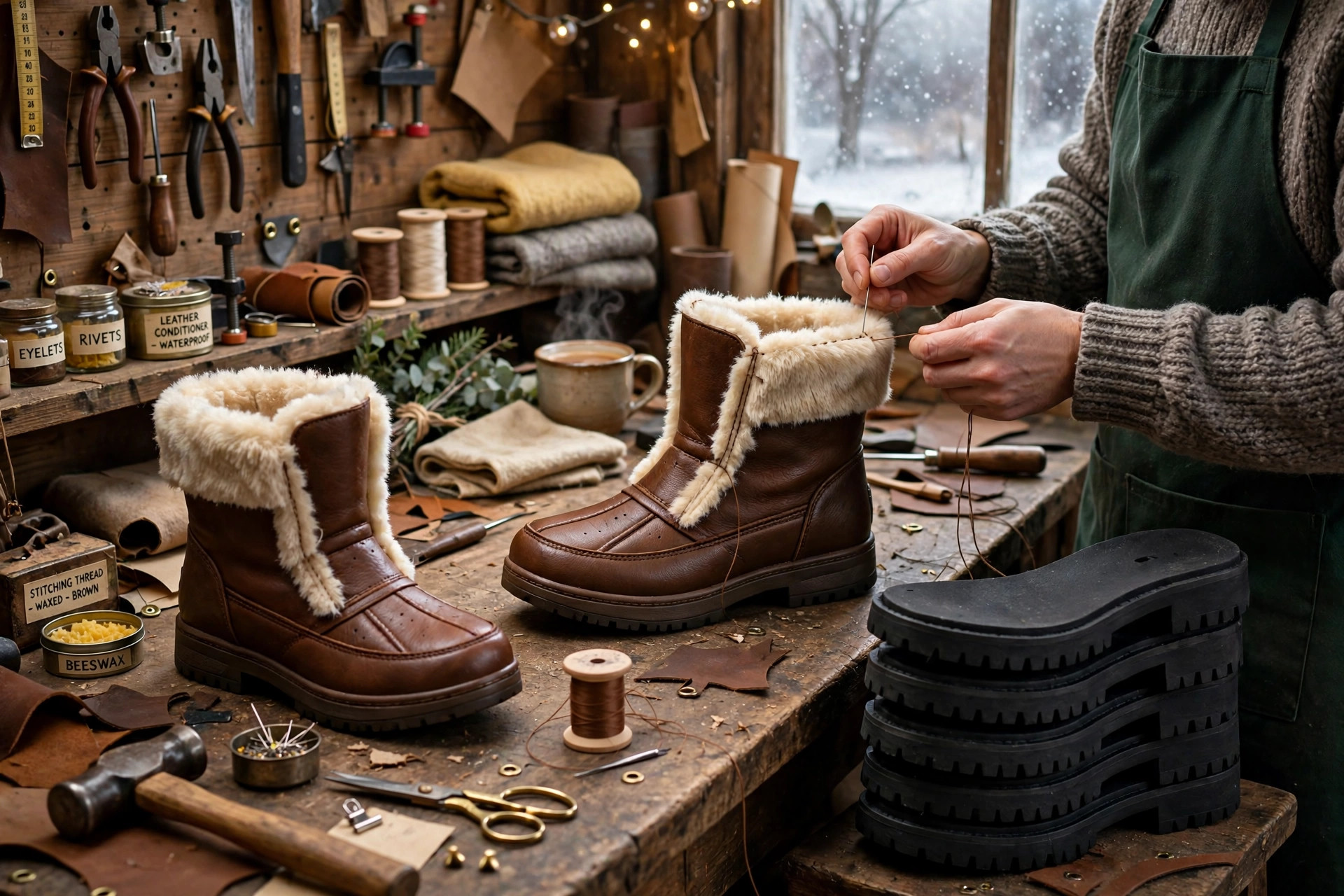
A winter boot is a layered system. The upper combines leather, textile or moulded rubber with a waterproof membrane or a fully waterproof rubber lower, the pac boot pattern. Inside sits the insulation: felt, foam, synthetic loft such as Thinsulate-style fills, or a removable felt liner boot that can be taken out to dry, which serious cold-weather designs prefer. The sole is a lugged rubber unit chosen for grip on ice and moulded or cemented to the upper, and the whole boot is rated by its maker for a temperature range, a claim a buyer should test rather than repeat. Construction quality shows at the joins: the rubber-to-upper seam, the tongue gusset that keeps snow out, and the insulation’s evenness at the toe, where cold reaches first.
Winter Boot Factory Listings
Palm International
Jiangsu Palm International Co., Ltd. was founded in 1994, originating from Jiangsu Palm Technology Industry Trade Company, with headquarters in Nanjing city. In 2001 they established an office in Shanghai, responsible for shipping, banking and raw materials importing from Taiwan, Thailand and other Asian countries. Their company is now comprised of one trade company and three subsidiary factories for manufacturing rubber boots, PVC boots, injection boots, slush boots and snow boots. They have also invested in three joint venture factories for the production of neoprene products, garments, raincoats, footwear and hardware. Taking advantage of doing international business in the Waigaoqiao Free Trade Zone, they own a large warehouse that enables them to deal with shipping logistics efficiently.
Footwear Resources and Definitions
- Shoe Components
- Shoe Covers / Rubbers
- Shoe Making Equipment
- Lacing Techniques
- Footwear Associations
- Shoe Wholesaler
- Women's Shoe Stores
- Men's Shoe Stores
- Wholesale Women's Shoes
- Shoe Information
- Footwear Definitions
- Clog Definition
- Slipper Definition
- Geta Definition
- Boot Definition
- Shoe Fetish Definition
- Grommet Definition
- Aglet Definition
More Footwear Factory Categories
Common Questions
What makes a boot a winter boot rather than a rain boot?
Insulation and cold-rated grip. A winter boot adds thermal insulation, often a removable liner, a gusseted tongue to keep snow out, and a lugged sole compounded to stay flexible and gripping in the cold; a rain boot is simply waterproof.
What does a temperature rating on a snow boot mean?
It is the maker’s estimate of the lowest temperature at which an active wearer stays warm in that boot. Ratings are not standardized between brands, so buyers compare insulation type and weight, liner design and test data rather than the headline number alone.
Why do serious winter boots have removable liners?
Insulation works when it is dry, and a liner that can be removed dries overnight, which matters on multi-day work and expedition use. Removable felt liners are the traditional solution and are also replaceable when they wear, extending the boot’s life.