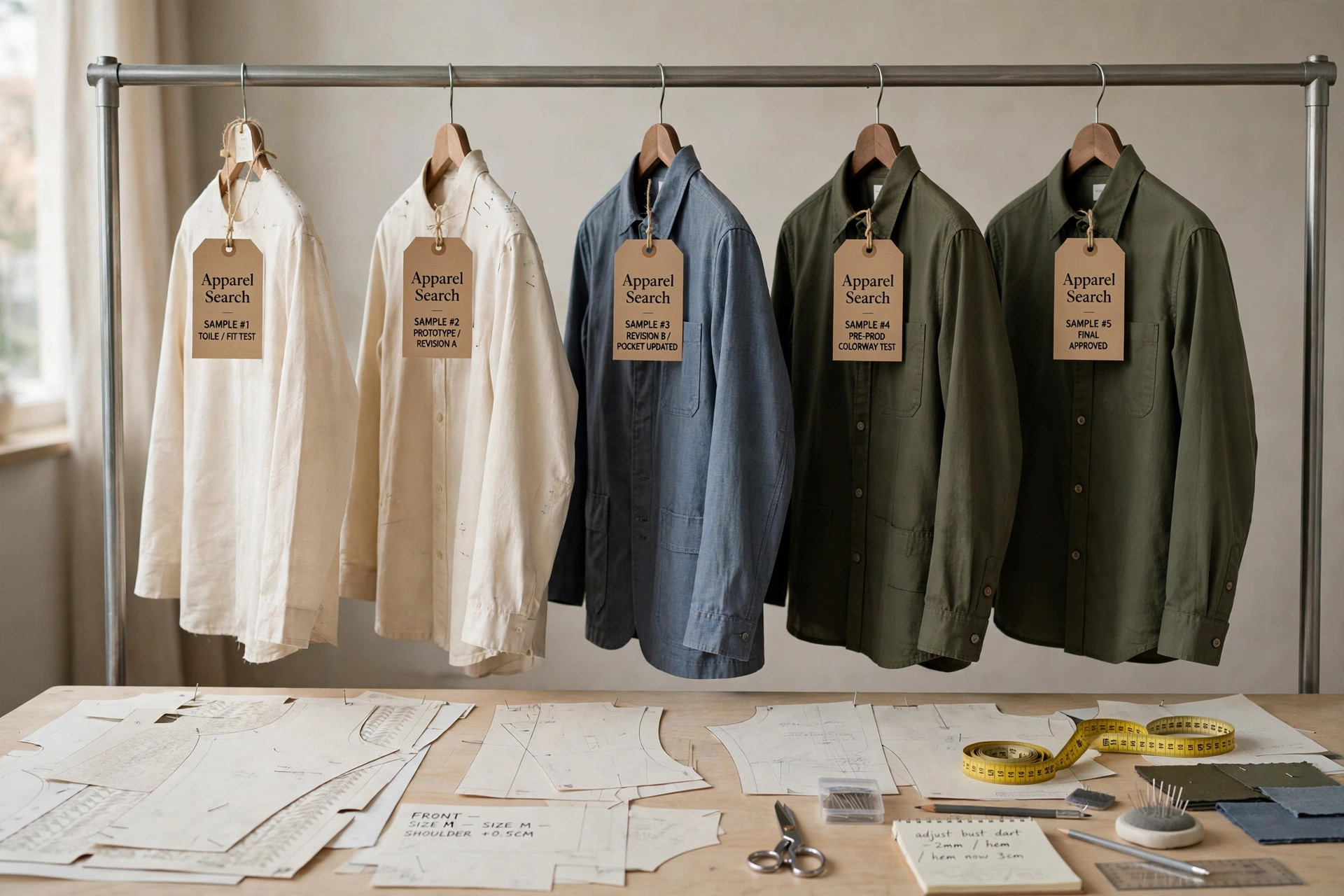
The sample development process is the pipeline of physical samples that turns a design into a production-ready garment: proto, fit samples, size set, salesman samples, the pre-production sample, and the TOP sample, in that order. Each stage answers a different question — can it be made, does it fit, does the grade work, can it be sold, is production approved, does bulk match approval — and skipping a stage does not remove its question, it just lets bulk production answer it at bulk prices. Managed well, sampling is the cheapest insurance in the garment business. The process is also where seasons are won or lost on time: development calendars are built from sampling rounds, and every extra round consumes days that production cannot give back. Knowing what each sample is for — and refusing to ask it other questions — is the core skill behind a fast, calm development season.
The Sample Family, In Order
The sequence runs: proto (first make, proving construction and proportion), fit samples (successive rounds refining fit on a body or form), size set (one garment in every size, proving the grade), salesman samples (correct-looking sets used to sell the range), PP sample (pre-production: the final approval garment made with bulk materials and methods), and TOP sample (top of production: taken from the actual bulk run to prove production matches approval). Some programs add a counter sample, a red-seal or gold-seal approval sample, or a shipping sample, but the six above form the standard spine.
Each sample has a named approver and a written verdict: approved, approved with comments, or resubmit. Verbal approval is no approval. The approver differs by stage — designer and technical designer for proto and fit, sales for salesman samples, technical and quality leads for PP and TOP — and confusing them wastes rounds: a fit sample judged on color, or a salesman sample judged on internal construction, answers questions nobody asked at that stage. Keep one sample log per style recording every round, date, verdict, and comment set; it is the style’s memory.
Samples should be made, as far as the stage allows, by the unit that will make bulk. A proto sewn by a master sample hand proves the design, but says little about a production line’s ability; from the size set onward, insist samples pass through realistic hands and machines so their evidence stays honest.
Proto and Fit Rounds
A proto proves the idea is makeable: pattern shape, construction order, and proportion, usually in substitute fabric of similar weight and behavior. Judge it for silhouette and construction logic, not final fit or color. Fit rounds then refine the garment on a fit model or dress form against the measurement spec: each round gets measured, fitted, photographed, and commented, the pattern is corrected, and the next round is made. Two to four fit rounds is normal for a new style; more than five usually signals unclear comments, a moving design, or a pattern problem being chased instead of solved.
Fit sessions work best with discipline: the same fit model or form each time, the garment measured before the session (never fit an unmeasured sample), comments written during the session with the pattern maker’s feasibility noted, and one decision-maker with final say. Distinguish fit changes from design changes — a moved pocket is design, a corrected armhole is fit — because design changes restart more of the pipeline than fit corrections do. Every round’s measurements and comments feed the living spec maintained under tech pack management, so the document and the garment never drift apart.
Measure the sample before the fit session and again after any pinning, so comments rest on numbers rather than impressions formed under fitting-room lights. Where fit models change between rounds, note it in the log — a new body explains apparent regressions that would otherwise send the pattern backwards.
Size Sets and Grading Checks
Once the base size fits, the pattern is graded — grown and shrunk by grade rules into the full size range — and a size set proves the grade in cloth: one garment in every size, or at minimum the extremes plus the base size for low-risk styles. Check each size against its graded spec measurements, then look at the set as a family: proportions should scale gracefully, pocket and detail placements should sit correctly on the smallest and largest sizes, and graded points like armhole depth and rise should grow by the rule, not by accident.
Grading faults are cheap here and brutal in bulk, where a wrong grade ships in every size at once. Common catches include necklines that balloon on large sizes, sleeve lengths graded twice, and increments applied to the wrong point of measure. Compare the set’s measurements against the graded table on the spec sheet line by line, and fit at least the extreme sizes on a body or form where the category allows. Approve the size set in writing before salesman or PP sampling proceeds; styles sold from an ungraded base size are sold on a promise the factory has not yet proven it can keep.
Keep the approved size set intact and labeled as a set; individual sizes borrowed for shows or photography have a habit of returning altered or not at all. Photograph the full set on a rail before approval is filed, so later disputes about what was approved have a dated visual record.
Salesman Samples
Salesman samples (SMS) exist to sell: complete sets, in correct or near-correct fabrics and colors, that representatives and showrooms use to take orders months before bulk exists. Quantities are real planning numbers — one set per showroom, rep, or key account, often 5 to 30 sets across a program — and their deadline is fixed by selling dates, not by the factory’s convenience. Because they are made before PP approval, they are typically sewn in the sample room, at sample-room cost and care, and may differ in small construction details from final production.
That difference must be managed honestly. Record where SMS deviates from the intended production standard — substitute trim, hand-finished details bulk cannot replicate — and correct anything a buyer would consider material before orders are written against the samples. Costs surprise newcomers: SMS sets are frequently charged at two to three times bulk unit cost, and late SMS that misses a selling window is worthless at any price. Plan SMS quantities and dates at the start of development, in the season calendar, not as an afterthought once fit is approved.
Salesman samples also seed quality expectations: photograph the approved SMS set and file the images with the order, so bulk inspectors can compare production against what was actually sold, not against a later, idealized memory of it. Where SMS and PP standards diverge, the divergence list travels with the order to the factory floor.
Costs and Timelines
Sampling consumes more of a season than most new brands expect. Typical per-round timing runs 7 to 14 days for a sample-room round in the same country as the pattern work, and 2 to 4 weeks per round when samples travel internationally between brand and factory. Across proto, three fit rounds, size set, SMS, and PP, a style commonly spends 10 to 20 weeks in development before bulk cutting starts. Sampling fees vary widely: many factories charge one to three times estimated bulk cost per sample, or flat fees per round, sometimes refundable against a confirmed bulk order above a threshold quantity.
Plan backwards from the delivery date: bulk production time, freight, PP approval, SMS deadline, then fit rounds, each with courier days included, and protect the early rounds — a week saved by rushing fit is repaid, with interest, in bulk corrections. Track sampling spend per style as a development cost in its own right; programs that do not count it routinely discover that a cheap bulk price was bought with expensive, endless sampling. Agree fee and refund terms in writing before the first proto, while both sides still have choices.
Courier and travel days belong in the sampling budget too: an international round is rarely under three weeks door to door once shipping, customs, and internal review queues are counted honestly. Seasons planned on factory sewing time alone are late before they begin, and the lateness is usually blamed on production.
Comment Discipline
Comments are the steering wheel of the whole process, and most wasted rounds are comment failures. Good comments are written (never only verbal), specific (measurements and locations, not “improve the fit”), complete (every fault found in that round, listed once), and closed (each comment from the previous round marked fixed or not fixed on the next sample). Photo markups — the fault photographed, circled, and annotated — cross language barriers better than paragraphs, and a measurement table with out-of-tolerance points highlighted leaves nothing to interpretation.
Version control prevents the classic disaster of a factory building round four from round two’s comments: number every comment set with the style, round, and date, require the factory to confirm receipt of the current set, and keep superseded sets filed, not deleted. Limit each round to one consolidated comment set from one accountable sender; comments arriving piecemeal from designer, technical team, and sales in separate emails guarantee contradictions the factory must guess between. The final comment set, on the approved PP sample, becomes part of the production contract — the approval stage detailed in the guide to pre-production samples.
Review rounds per style at season’s end. Styles that needed six rounds carry a lesson — an unclear brief, an unstable design, a weak pattern base — that should change how the next season starts. Development speed is a learnable, measurable property of the team, not a fixed trait of the styles it chooses.
FAQs
- What is the order of samples in garment development?
- Proto first, then fit rounds, then the size set, then salesman samples, then the PP (pre-production) approval sample, and finally the TOP sample taken from bulk production. Each stage answers a different question, from makeability through fit, grading, selling, and production approval. Skipping a stage lets bulk answer its question at bulk cost.
- How many fit rounds does a new style usually need?
- Two to four rounds is normal for a new style with clear comments and a stable design. More than five usually indicates unclear or contradictory comments, repeated design changes, or a pattern fault being chased round by round instead of diagnosed. A stable design and one decision-maker keep rounds down.
- What is the difference between a PP sample and a TOP sample?
- The PP sample is made before production, with bulk materials and methods, and is the final approval garment. The TOP (top of production) sample is pulled from the actual bulk run to prove production matches the approved PP standard. Both are checked against the same spec and sealed standard.
- Why are salesman samples so expensive?
- They are made in the sample room, in small quantities, often at two to three times bulk unit cost, before production efficiencies exist. Their real cost is justified by the orders they win — and wasted entirely if they miss the selling window. Sample-room labor, not materials, drives most of that premium.
- What makes sample comments effective?
- Written, specific, complete, and closed: measurements and photo markups rather than opinions, every fault from the round listed once, and each earlier comment marked fixed or not fixed on the next sample. One consolidated, numbered set per round prevents version chaos. Numbered, dated sets from one accountable sender keep versions straight.
More Supply Chain & Manufacturing Guides
This guide belongs to the Apparel Search production series. Browse the companion guides below, or start from the manufacturing guides hub.
Sourcing & Suppliers
- Fabric Sourcing Guide
- Sourcing Fabric at Trade Shows
- Trade Show Follow-Up
- Low-MOQ Clothing Manufacturers
- Factory Verification
- Supplier Verification
- Supplier Technical Evaluation
- The Global Apparel Supply Chain
Production & Factory Operations
- Production Management
- Sample Development Process (this guide)
- Fabric Inventory Management
- Flexible Manufacturing Workforce
- Manufacturing From Synthetic Fabrics
- Garment Construction Techniques
- Textile Waste in Factories
Materials, Dyeing & Trims
- Fabric Dyeing Services
- Specialty Dyeing & Finishing
- Fabric Innovation
- Custom Trim Hardware
- Trim Development Management
- Smocking Techniques
Business & Retail
Search Apparel Search
Apparel Search: explore the manufacturing guides hub and production & sourcing resources for the fashion industry.