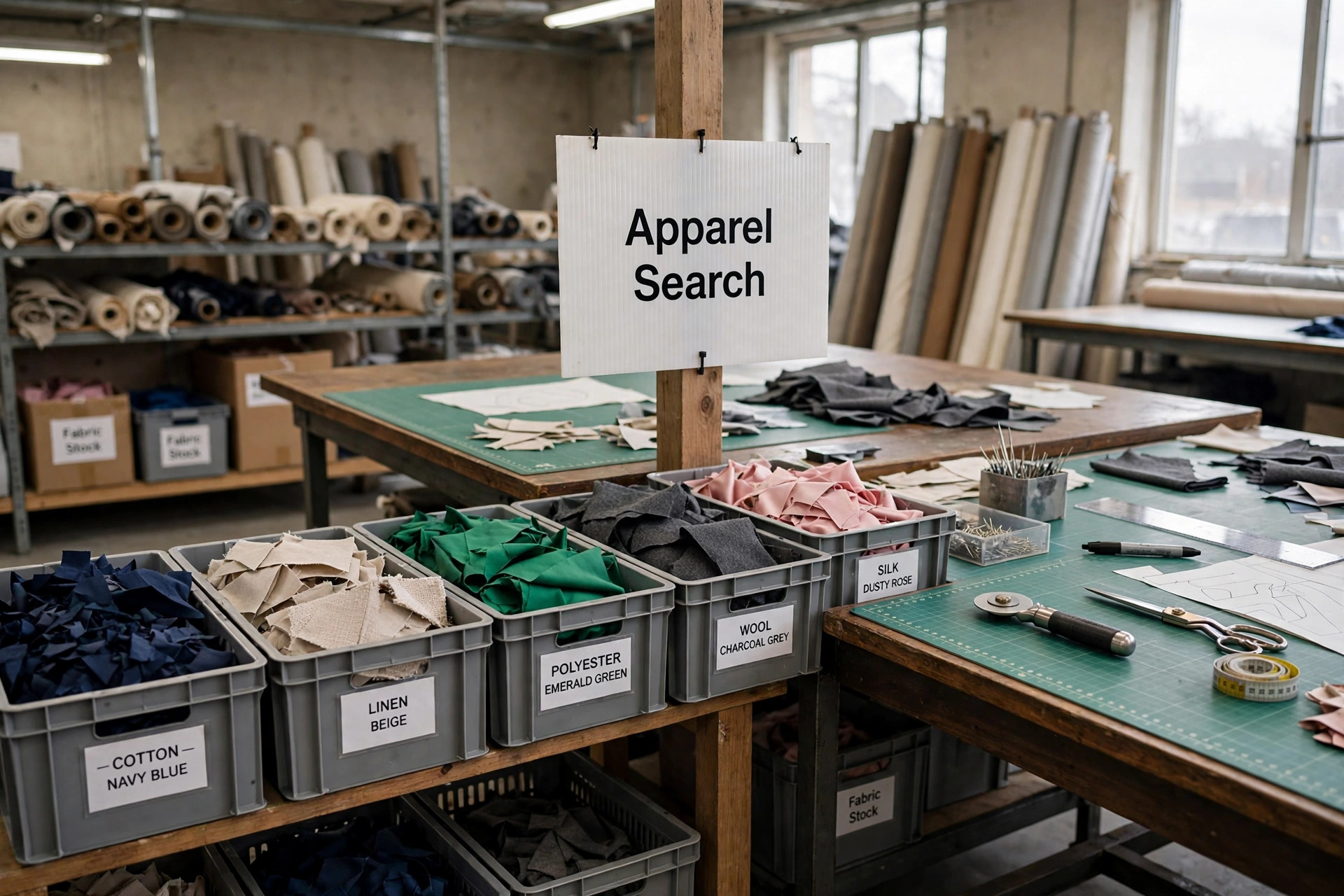
Textile waste in a garment factory is every meter of fabric and every defective garment that leaves the building as something other than a saleable product: cutting offcuts, end-of-roll remnants too short to cut, damaged rolls, seconds and sample waste. In a typical cutting room this stream runs at 10 to 25 percent of the fabric bought, which makes it both a direct cost — the brand or factory paid full price for cloth that became offcuts — and an operational discipline. This stream is factory waste only: the clothing consumers discard after use is a different stream with different channels, and it is not covered here. Usable stock still on the roll belongs to inventory, not waste, and the line between the two is where management starts. Handled deliberately, that stream shrinks at source, sorts into saleable grades, and returns part of its cost; handled casually, it is paid for twice — once as fabric, once as disposal.
Where Factory Textile Waste Comes From
The largest single source is cutting waste: the fabric between pattern pieces that no marker can eliminate. Marker efficiency on well-planned markers typically reaches 80 to 90 percent, which means 10 to 20 percent of the lay becomes offcuts by geometry alone. The rate varies by garment: straight, rectangular pieces in basic tees and bedding waste least; bias cuts, large pattern pieces, plaid and stripe matching, and one-way prints waste most, with heavily matched tailored garments sometimes exceeding 25 percent. Fabric width against marker width matters as much as pattern shape — a marker planned for 150 cm cloth cut on 145 cm rolls wastes a strip along every lay.
The remaining streams are smaller but controllable. End-of-roll waste: the last 1 to 3 meters of a roll, often shaded, creased or too short for a full ply. Damaged and defective fabric: sections cut out around holes, slubs and stains found at inspection or spreading. Seconds and rejects: garments failing final inspection beyond economic repair, often 1 to 3 percent of production in ordinary operations. Sample and development waste: proto yardage, test cuts and salesman-sample overage, small per style but significant across a season. Mapping these streams separately is the first step, because each has a different cause, owner and remedy — a single “waste” figure hides all of them. Record the map by weight, not by impression: a month of weighed stream data replaces years of argument about which source matters, and it usually shows cutting and end-of-roll losses dominating everything else combined.
Segregating at Source
Waste is worth money or costs money largely according to how it is sorted at the moment it is created. A bin of clean, single-fiber cotton offcuts in one color family is a saleable recycling input. The same offcuts mixed with polyester blends, elastane fabrics, interlining, paper and floor sweepings are landfill at a per-ton disposal cost. The rule is simple: mixed waste is worthless waste, and no downstream sorting economics fix what the cutting room mixed, because hand-sorting offcuts costs more than the recovered material returns.
Practical segregation needs little equipment. Place clearly labeled bins at each cutting table and spreading station, sorted by the distinctions recyclers actually pay on: fiber type (cotton, polyester, wool, blends), color family (white and light separated from dark), and cleanliness (clean cutting waste separated from oily, glued or fused waste, which most recyclers reject). Elastane content is the trap: even 2 to 5 percent elastane makes a cotton stream unacceptable to many mechanical recyclers, so stretch fabrics get their own bin and honest labeling. Train cutters and spreaders on the bin logic once, audit it weekly, and weigh each stream separately — weighing is what turns segregation from a poster on the wall into data the factory can price, sell and improve.
Reuse Inside the Factory
The highest-value destination for an offcut is another product inside the same building, and cutting rooms generate a steady supply of usable shapes: the areas between pattern pieces on a lay often yield panels large enough for smaller components. Standard internal reuse routes include pocketing, waistband and binding components cut from shell offcuts; sample and proto yardage drawn from remnants instead of new rolls; smaller products — caps, tote bags, accessories, children’s sizes — planned onto offcut geometry; and test pieces for wash, shrinkage and print trials that would otherwise consume bulk fabric.
Honest limits apply. Reuse consumes cutting and sewing labor, and an offcut product that needs its own handling, sorting and storage can cost more to make than its material saving — reuse pays when the receiving product is already in production and the offcut substitutes for fabric that would genuinely have been bought. Shade and lot discipline still apply: components cut from offcuts must stay within the garment’s shade group, or the saving becomes a quality claim. Track what is actually reused, by weight, rather than what is set aside hopefully: remnant racks that grow month after month are not reuse, they are deferred waste with rent due. Material that is still usable stock in any real sense belongs in the system described in fabric inventory management; the waste stream begins where honest reuse ends. Price the labor honestly in that judgement: cutting, sorting and storing remnants is real work, and a reuse route that only survives on uncounted labor is a cost wearing a saving’s clothes.
Recycling Channels
Sorted factory waste leaves through established channels, each with firm acceptance rules. Mechanical recycling is the workhorse: cotton and wool offcuts are shredded back to fiber — traditionally called shoddy when re-spun — and most factory offcuts in practice go to lower-grade outputs such as insulation, padding, mattress filling, automotive felt and low-count yarns blended with virgin fiber. Fiber-to-fiber recycling back into apparel-grade yarn exists and is growing, but it accepts a narrow input: clean, single-fiber, light-colored, elastane-free waste, which is a small fraction of most factories’ streams. Chemical recycling routes for polyester and cotton blends remain limited in capacity and geography.
What recyclers accept and pay follows the segregation logic directly. Clean white cotton cutting waste commands the best price — still modest, typically a fraction of the original fabric cost per kilogram — while dark mixed blends may return little more than avoided disposal cost, and contaminated waste is refused or charged as disposal. Recyclers specify bale size and density, maximum moisture, and prohibited content such as fused interlining, coated fabrics and metal or plastic contamination from careless bin use. Get the acceptance specification from the actual buyer before designing the bin system, not after: the factory’s sorting categories should mirror the buyer’s price table line for line, so every bin corresponds to a priced output.
Contractors, Compliance and Cost
Most factories move waste through contractors: recyclers who buy sorted streams, waste brokers who aggregate several factories’ volumes, and licensed disposal firms for the residue that nothing else accepts. Contract terms worth fixing in writing include the price basis per stream (per kilogram, by fiber and color grade), who bales and who transports, minimum collection volumes, and rejection rights when a bale fails the acceptance specification. Small factories producing modest weekly volumes often find a broker’s aggregated route pays better than direct dealing, once transport is priced honestly.
Compliance is general but real: industrial textile waste is regulated as commercial waste in most jurisdictions, landfill of recyclable industrial waste is increasingly restricted or taxed, and some regions require waste transfer documentation tracing loads from factory to destination. Open burning and informal dumping carry legal and buyer-audit consequences far beyond any saving. The cost picture, kept honestly, has three lines: disposal cost avoided, revenue from sold streams, and the internal labor and space cost of sorting, baling and storing. In well-run programs the first two roughly cover the third, with the real return sitting upstream in reduced waste generation. Waste sits inside the wider factory sustainability picture drawn in sustainable apparel manufacturing; here it is treated strictly as an operations and cost stream. Review contractor performance annually against bale rejection rates and realized prices; a contractor who quietly downgrades grades at the gate can erase the entire revenue line while the paperwork still looks tidy.
Measuring and Reducing
Measurement starts with a waste audit: over a representative period — typically two to four weeks covering several styles — weigh every stream separately and express each as a percentage of fabric issued to cutting. The audit almost always surprises: sample waste and end-of-roll losses are routinely underestimated, and one garment category usually accounts for a disproportionate share. Repeat the audit quarterly and after any major style-mix change, and report cutting waste per style alongside the marker efficiency achieved, because the two numbers together show whether waste is geometry or practice.
Reduction levers, in order of usual return: marker planning discipline and width-matched fabric buying, which attack the largest stream; defect feedback to mills, which shrinks cut-out losses; cutting accuracy that protects the planned marker instead of improvising around it; and order-quantity accuracy that stops over-cutting “just in case.” Set diversion targets — the share of waste kept out of landfill — that the sorting system can genuinely hit, commonly 70 to 90 percent in factories with good recycler access, and report generation and diversion as separate figures. A factory that cuts its waste from 20 to 15 percent has improved more than one that diverts 95 percent of a growing stream, and honest reporting says so: reduction first, diversion second, claims last. Publish the figures internally by line and by style, so the teams whose markers and cutting create the waste see their own numbers and own the improvement.
FAQs
- How much cutting waste does a garment factory produce?
- Typically 10 to 20 percent of fabric issued, set by marker efficiency of 80 to 90 percent. Matched plaids, bias cuts and one-way prints can exceed 25 percent, while simple rectangular products waste least. End-of-roll, damaged fabric and seconds add several more points.
- Why is mixed textile waste almost worthless?
- Because recyclers price by fiber, color and cleanliness, and hand-sorting mixed offcuts costs more than the recovered material returns. Clean single-fiber streams in separated colors are saleable; mixed, contaminated waste is a disposal cost. Segregation at the cutting table decides which.
- What happens to recycled factory offcuts?
- Most are mechanically shredded to fiber for insulation, padding, felts and low-count blended yarns. Fiber-to-fiber recycling into apparel yarn accepts only clean, single-fiber, elastane-free, light-colored waste, which is a small share of most factories’ output today. Sorting quality at source is what decides how much of a stream qualifies for the better channels.
- Can a factory make money from textile waste?
- Sorted streams earn modest revenue per kilogram and avoided disposal cost, which in a well-run program roughly covers sorting, baling and storage labor. The larger financial return is upstream: reducing waste generation from 20 to 15 percent saves full-price fabric.
- How is a waste audit done?
- Weigh every waste stream separately over two to four representative weeks, express each as a percentage of fabric issued, and break cutting waste down by style against marker efficiency. Repeat quarterly. The audit separates geometry waste from practice waste. One audit is a snapshot; the repeated series is the management tool.
More Supply Chain & Manufacturing Guides
This guide belongs to the Apparel Search production series. Browse the companion guides below, or start from the manufacturing guides hub.
Sourcing & Suppliers
- Fabric Sourcing Guide
- Sourcing Fabric at Trade Shows
- Trade Show Follow-Up
- Low-MOQ Clothing Manufacturers
- Factory Verification
- Supplier Verification
- Supplier Technical Evaluation
- The Global Apparel Supply Chain
Production & Factory Operations
- Production Management
- Sample Development Process
- Fabric Inventory Management
- Flexible Manufacturing Workforce
- Manufacturing From Synthetic Fabrics
- Garment Construction Techniques
- Textile Waste in Factories (this guide)
Materials, Dyeing & Trims
- Fabric Dyeing Services
- Specialty Dyeing & Finishing
- Fabric Innovation
- Custom Trim Hardware
- Trim Development Management
- Smocking Techniques
Business & Retail
Search Apparel Search
Apparel Search: explore the manufacturing guides hub and production & sourcing resources for the fashion industry.