Men's Shoes on eBay
Dress shoes, boots and sneakers — reading sole wear, welts and width fittings before you bid on footwear
Footwear is the menswear category where construction knowledge pays most visibly at auction. A welted leather shoe can be resoled and worn for decades, so quality used pairs hold real value — while fashion sneakers live and die by condition and box-fresh status. This guide covers how men's shoe listings break down, how to read sole and heel wear from photographs, why width letters matter as much as length, and how sizing drifts between makers and countries.
Think of this page as the checklist to run before any bid in its category: what typically lists, which details separate a sound garment from a tired one, and when in the year the same quality changes hands for least.
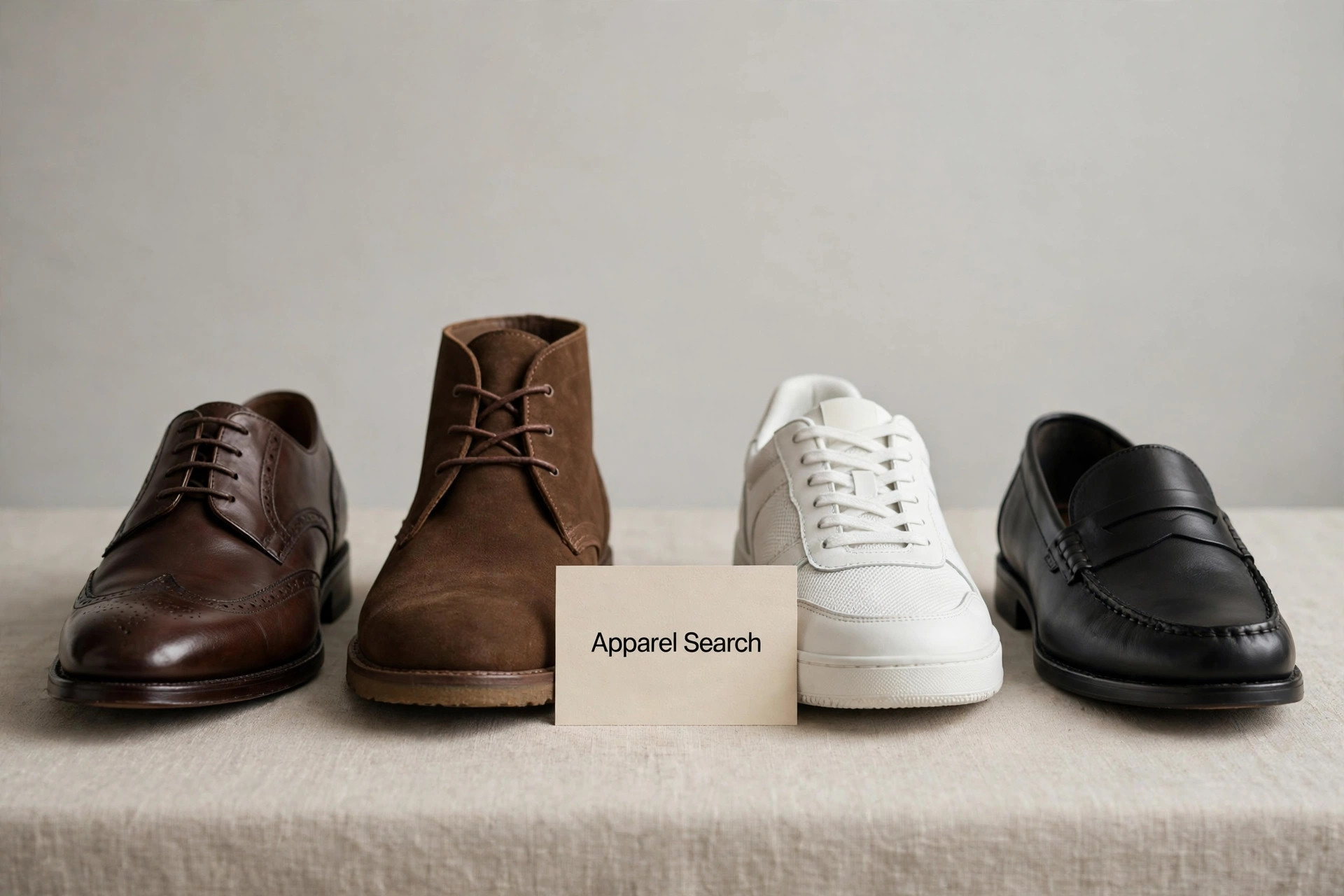
Current-season trainers are also sold new at set prices everywhere. The Apparel Search Amazon clothing guide gathers the Amazon men's shoe departments — compare a new pair there with the auction footwear below, especially for sizes you already know.
Shoe Families in the Listings
Listings for men's shoes on eBay typically cover leather dress shoes, oxfords and brogues, boots from work to dress styles, loafers and casual leather shoes, sneakers and trainers, specialist and vintage footwear and shoe bundles in wardrobe clear-outs. The sellers behind them range from individuals clearing a wardrobe to specialist dealers and outlet accounts, so photography, description depth and condition grading vary widely from one listing to the next. The value seam is the barely worn quality pair: bought for an occasion, worn twice, listed when the wardrobe is cleared — common in dress shoes, rare in trainers. Begin broad, then narrow with the size, color and condition filters; a saved search with alerts catches the short listings that end before a casual browser ever sees them.
Because seller wording is inconsistent, run several searches rather than one: "mens leather brogues"; "mens boots wide fit"; "welted shoes men"; "mens dress shoes". Vaguely titled and misspelled listings are where quiet bargains hide, since fewer bidders ever find them. Add the construction word — 'welted', 'stitched sole' — to separate resoleable quality from cemented soles that cannot be rebuilt. Sort by ending soonest to catch neglected auctions, and compare price plus postage together — a low bid with heavy shipping is seldom the cheapest way to own the garment.
Widths, Welts and Sole Reading
Fit comes first: length is only half of shoe fit: width fittings (letters or words like wide) decide comfort, sizing converts imperfectly between US, UK and EU marks, and a maker's own size in a listing beats any conversion chart. Auction garments cannot be tried on, so the flat measurements in the description are the only dependable evidence, and a seller who lists none is worth a message before bidding. On materials, expect full-grain and corrected leather uppers, suede, canvas and knit sneaker uppers and leather, rubber and synthetic soles. A stitched welt visible in sole photographs marks a shoe that can be resoled; a smooth glued sole edge marks one that cannot, whatever the upper's quality.
In this category condition moves value more than age does. Soles and heels are the odometer: even tread wear, an unworn heel corner and an uncreased toe box support a lightly-worn claim, and sellers of good shoes photograph all three. Study the photographs at full size, read the returns policy, and judge the seller's feedback by the pattern that matters — description accuracy — rather than the headline score alone. A garment described as new with tags should show those tags in a photograph; if it does not, ask before bidding.
Barely Worn Quality and Boot Seasons
Timing shapes the price. Boots list into autumn and cheapen in spring; dress shoes move steadily all year, with wedding and office-start seasons lifting prices briefly. A resoleable shoe bought used at a fifth of its new price, then resoled, delivers decades of wear for the cost of one budget pair. Fix a maximum that includes postage, bid it once, and let the automatic bidding do the work — chasing an auction past your ceiling is how a bargain turns into an overpayment. Never convert sizes by chart alone between makers — a size that fits in one brand pinches in another, and auction returns on worn shoes are rarely free.
Common Questions
What should I check first when buying men's shoes on eBay?
Measurements and condition. length is only half of shoe fit: width fittings (letters or words like wide) decide comfort, sizing converts imperfectly between US, UK and EU marks, and a maker's own size in a listing beats any conversion chart. Then confirm the fabric content and read the seller's returns policy before bidding.
Which search phrases find the best men's shoes listings?
Try several seller wordings — mens leather brogues, mens boots wide fit, welted shoes men — and save the searches so short or mis-titled auctions are caught before they end.
When is the cheapest time to buy men's shoes at auction?
Boots list into autumn and cheapen in spring; dress shoes move steadily all year, with wedding and office-start seasons lifting prices briefly. Bidding on off-peak endings and setting a firm maximum that includes postage keeps the delivered price down.