Flat Poly Bags for Packing Clothing
Two flat sheets, two side seals, no gusset — the simplest bag in the warehouse, and the most used.
The flat poly bag is the starting point of garment packaging: a tube or two sheets of polyethylene film, sealed up the sides and across the bottom, with an open top that is folded, taped or heat-sealed after the garment goes in. Nothing expands, nothing is shaped — the bag is exactly as wide and long as its measurements say, which makes it predictable, cheap and easy to specify. Most folded clothing that travels in a bag travels in a flat bag, from a single T-shirt at retail to case quantities moving between a factory and a warehouse.
Poly Bag Types & Bag Equipment
Construction: What Makes a Bag Flat
A flat bag is made from layflat tubing or sheet film cut to length and sealed. Its capacity is fixed by its face dimensions: a garment folded thicker than the bag's width allows will bow the seams, because there is no gusset to open and give the extra room. That fixed geometry is the flat bag's discipline — fold the garment to the bag, not the bag to the garment — and packing benches work to standard fold sizes for exactly this reason.
Film gauge decides how much protection the simplicity buys. Light gauges serve single retail garments that will live inside a carton; heavier gauges stand up to warehouse handling, hanging sets and reuse through inspection and returns. Clarity, slip and anti-static treatments are specified at ordering: a bag that clings makes hand packing slow, while a bag with the right slip lets a folded garment slide home in one motion.
The open top is closed to suit the route the garment will take — folded over and taped for store-ready singles, heat-sealed for sealed retail units and longer storage, or left folded inside a carton for factory-to-warehouse movement where the carton does the protecting. The flat bag itself asks for no machinery beyond, at most, a bench sealer.
Sizing and Specifying Flat Bags
Specify a flat bag by width, length and gauge, in that order, measured on the folded garment with a small working allowance — enough for the garment to enter without forcing, not so much that it swims and creases. Length must cover the garment plus the fold-over or seal allowance at the top; a bag that only just closes will burst its seal in the carton.
Vent holes are a quiet but important option: a bag sealed around a soft garment traps air, and venting lets cartons pack tight and stops bags ballooning in transit. Suffocation-warning print, size codes and brand print can all be applied at manufacture, turning the plainest bag into a labelled unit that a store can shelve without extra work.
Buyers choosing between stock and custom sizes should count the true cost of a near-fit stock bag: a centimetre of extra width across a hundred thousand bags is film bought and air shipped. The suppliers listed here cover both routes — stock ranges for immediate needs and custom manufacture for programmes where the fold size is fixed and the volume justifies an exact bag.
Flat Poly Bags — Suppliers & Manufacturers
United States Plastic Corp.
United States Plastic Corp. manufactures and distributes some 23,000 plastic and safety items, serving over 85,000 clients from a factory five acres under roof.
Supplies: Polyethylene bags, polypropylene bags, bags on rolls, flat bags, zipper bags and gusset bags
Universal Plastics
Universal Plastics is a plastic bag manufacturer.
Supplies: Plastic bags for garment packing
Flat Bags in the Packing Workflow
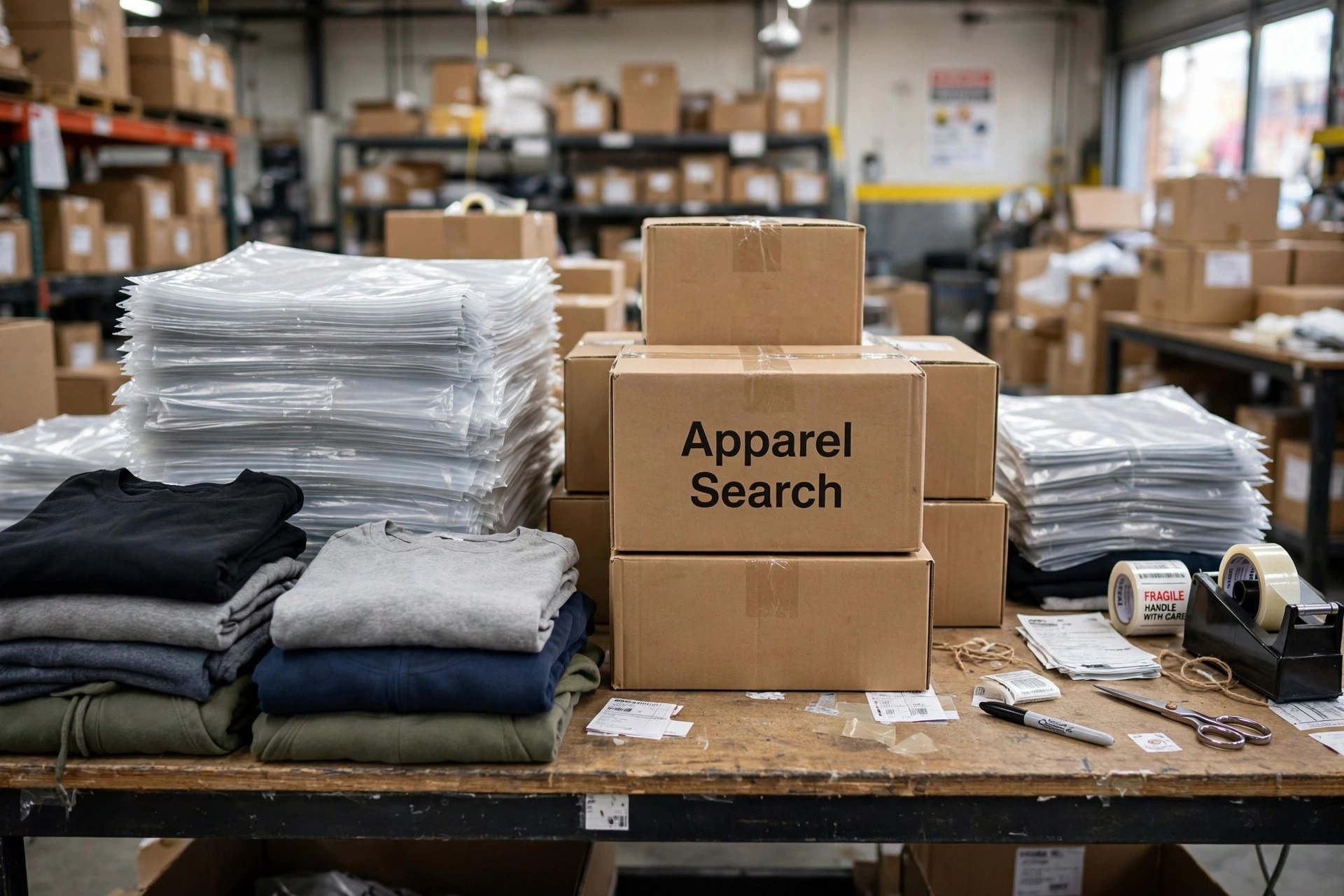
Flat bags reward a tidy bench: bags fanned or wicketed within reach, garments folded to the standard size before they reach the bagger, and sealed bags stacked in counted bundles for cartoning. Because the bag has no shape of its own, the fold is the quality control — a garment folded off-size shows immediately, either straining the bag or rattling inside it.
For storage, keep bagged garments flat and cartons uncrushed; the film protects against dust, scuffing and moisture splashes, not against weight from above. Reused through returns and inspection, a sound flat bag can protect a garment several times before it is retired — one more reason the simplest bag is also the warehouse's most economical.
Common Questions
What is a flat poly bag?
A flat poly bag is a bag made from polyethylene film sealed at the sides and bottom with no gusset or expansion fold. Its capacity is exactly its width and length, so garments are folded to fit the bag. It is the simplest and most widely used bag for packing folded clothing.
How do I size a flat bag for a folded garment?
Measure the folded garment and add a small working allowance in width so the garment slides in without forcing the seams, and allow length for the garment plus the fold-over or heat-seal closure at the top. The film gauge is chosen for the handling the bag will face — light for single retail garments in cartons, heavier for warehouse handling and reuse.
How are flat poly bags closed?
The open top can be folded over and taped, closed with a bag sealing tape dispenser, or heat-sealed for a fused, tamper-evident seam. The right closure depends on the route: taped folds for store-ready singles, heat seals for sealed retail units and longer storage.