Garment Bags for Clothing on Hangers
The long bag that travels on a hanger — protecting a suit or dress from the factory rail to the store rail.
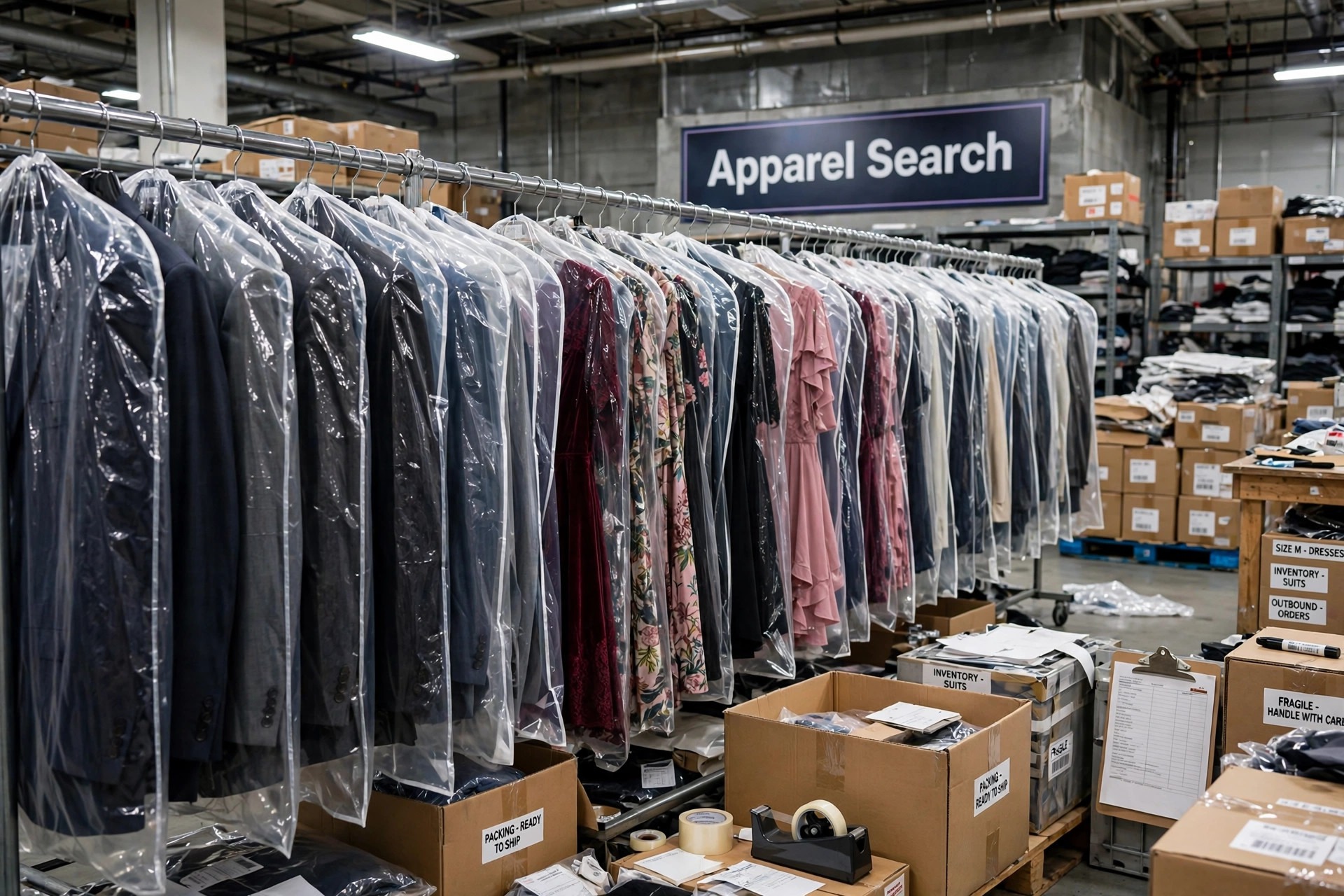
A garment bag does its work on the move. It is a long, clear poly bag, open or lightly closed at the bottom, with a shaped top and a hole or slot for the hanger hook, slipped over a suit, dress or coat at the factory and left on through pressing, transport, warehousing and delivery, so the garment arrives at the store rail clean, uncreased and ready to hang. Where a flat bag serves folded clothing, the garment bag serves everything that travels hanging — the part of the apparel trade where the hanger, not the fold, is the unit of work.
Poly Bag Types & Bag Equipment
How Garment Bags Are Made and Used
Garment bags are cut long — sized to the garment family they will cover, from shirt lengths through to full-length dresses and coats — and the top is shaped around the hanger. A reinforced hanger hole, or the special slope cutting used on garment packaging bags, lets the hook pass through while the film shoulders sit on the hanger's arms, so the bag hangs square and does not slide or bunch at the neck.
The film is light: the bag's enemies are dust, scuffing, drips and handling marks, not weight. Clarity matters because the bag stays on through inspection and store delivery — staff need to see size, colour and style through the film, and many bags carry printed size or handling information for exactly that reason. Bags are supplied flat in bundles or on rolls for the rail-side dispenser, drawn down one at a time as garments come off the press.
At the store, the bag comes off at the rail — its whole job was the journey. That single-use journey is why garment bags are specified lean: enough film to protect, no more. The related but different product is the wardrobe garment carrier — a sturdier, handled carrier for moving hanging clothes in bulk or for retail sale as a reusable item — which one of the suppliers listed below includes in its range.
Choosing Garment Bags for a Hanging Programme
Length is the first decision, and it is made by garment family, not by averages: a bag that ends mid-thigh on a coat leaves the coat's hem exposed to every scuff the journey offers. Width must clear the hanger and the garment's shoulders without splitting at the side seals when a rail is packed tight and garments press against each other.
The hanger opening deserves attention out of proportion to its size. A clean, reinforced hole keeps film from tearing down from the hook under a heavy garment's weight; slope-cut tops suit high-volume lines where bags are applied at speed. Buyers running both folded and hanging programmes should keep the two bag families separate in specification and in storage — a garment bag is far too much film for a folded shirt, and a flat bag cannot do a garment bag's job at all.
Suppliers of garment bags commonly also supply the surrounding packing materials — mailing bags, dispatch sacks and mailing boxes for the folded and parcel side of the same operation — so a hanging programme's bags are often bought as part of a wider packing-materials relationship.
Garment Bags — Suppliers & Manufacturers
Postpack Ltd
Postpack manufactures and supplies materials sold online including clothing bags, wardrobe garment carriers, garment bags, mail order bags, dispatch sacks, mailing bags, polythene bags and mailing boxes, plus workwear, gloves and protective clothing, footwear and headwear. Address: Unit 4, Hollis Road, Grantham, Lincs. NG31 7QH, England. Phone: 0870 264 3048. Fax: 0870 264 3049. E-mail: sales@postpack.co.uk. Contact: Mark Reid.
Supplies: Garment bags, mailing bags, dispatch sacks, mailing boxes and protective clothing
Universal Plastics
Universal Plastics is a plastic bag manufacturer.
Supplies: Plastic bags, including bags for garment packing
Garment Bags in Transit and Storage
On the rail, bags should hang free: rails loaded so tightly that bags rub print and film at every movement arrive with the scuffing the bags were meant to prevent. In carton transport of hanging garments — the garment-on-hanger cartons used for store delivery — the bag protects garment from garment inside the carton, and its length should still cover the garment fully once hung in the box.
Storage of the bags themselves is simple but not careless: bundles kept flat, dry and out of sunlight, drawn in order so old stock is used first. A bag that has yellowed or gone brittle in storage fails at the hanger hole at the worst moment — over a finished, pressed garment ready to ship.
Common Questions
What is a garment bag in warehouse packaging?
In warehouse packaging, a garment bag is a long, clear poly bag with a hanger hole or slope-cut top, slipped over a suit, dress or coat on its hanger at the factory. It stays on through transport and warehousing so the garment arrives at the store rail clean and uncreased, and is removed when the garment is hung for sale.
How is a garment bag sized?
By garment family: length must cover the garment fully — a bag that stops short leaves the hem exposed — and width must clear the hanger and shoulders without straining the side seals on a packed rail. The top is shaped for the hanger, with a reinforced hole or slope cutting so the hook passes through and the bag hangs square.
What is the difference between a garment bag and a wardrobe garment carrier?
A warehouse garment bag is a light, single-journey poly cover that protects a hanging garment in transit and is removed at the store. A wardrobe garment carrier is a sturdier, handled carrier, sold as a reusable product or used for moving quantities of hanging clothes, rather than as disposable transit protection.