Polypropylene Bags for Clear Garment Presentation
The clearer, crisper poly film — chosen when the garment has to look sharp through the bag.
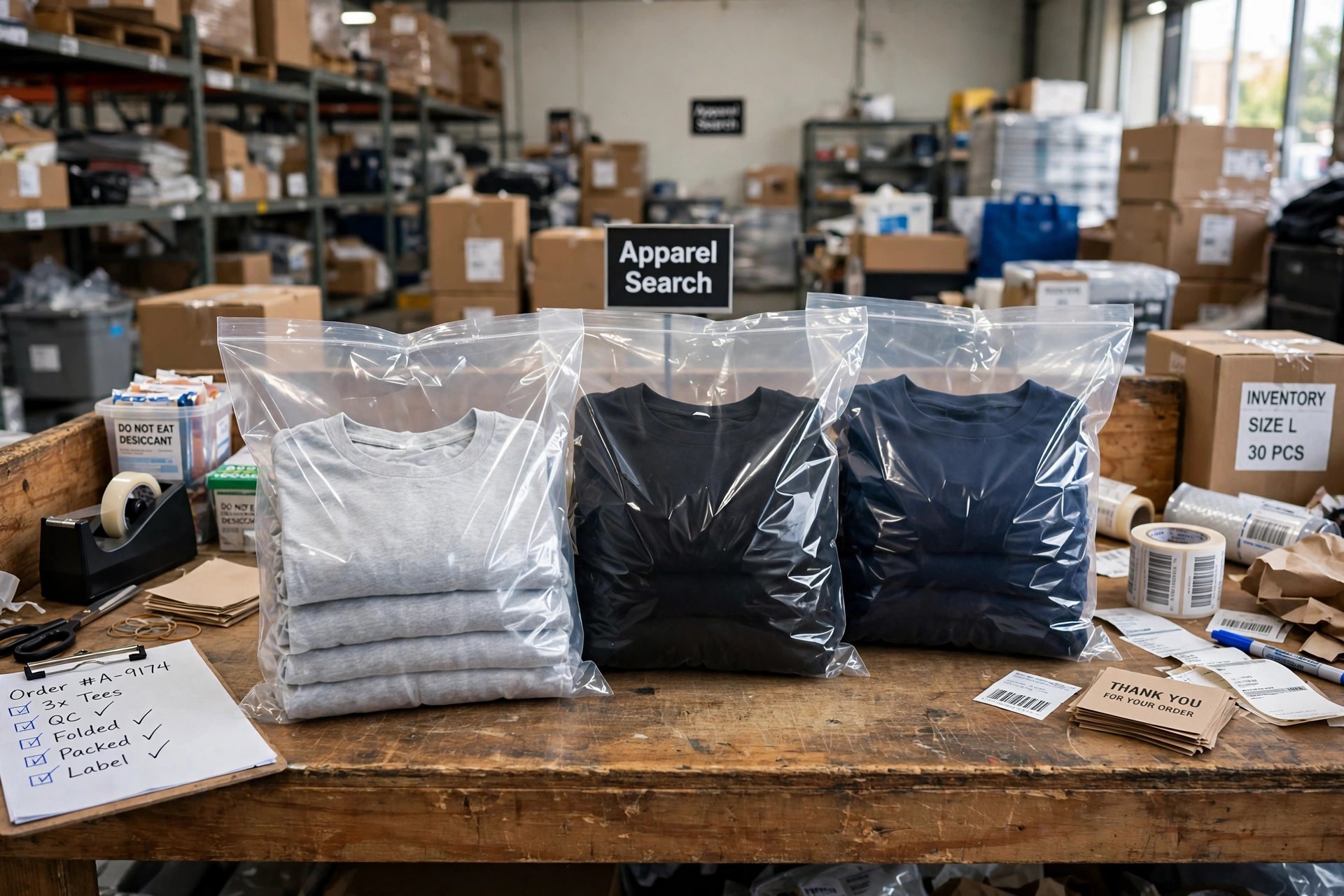
A polypropylene bag is bought with the eyes. Polypropylene — PP — makes a film noticeably clearer and stiffer than standard polyethylene, so a garment behind it keeps its colour, its print and its shelf presence: the bag all but disappears, and the product does the selling. That is why PP is the presentation film of the apparel trade, used where bagged garments are displayed, handled by shoppers, or sold in their bags — and why the same polymer, woven into fabric, also makes some of the toughest bulk bags in the warehouse.
Poly Bag Types & Bag Equipment
The Material: Clarity and Stiffness
PP film's clarity comes with a crisper hand and a higher melting point than polyethylene. A PP bag holds a fold sharply, presents a flat face to the shopper, and keeps its shape around a folded garment instead of draping over it. For retail programmes that stack, hang or peg bagged accessories and garments, that self-supporting quality keeps a display tidy through a day of handling.
The stiffness cuts both ways. PP is less forgiving than PE around sharp or bulky contents and at very low temperatures, and its narrower sealing window asks more of the bench: seals are set and tested for PP specifically, not borrowed from the polyethylene settings beside them. In return, the bag resists the soft scuffing that clouds PE, so a PP bag still looks clear at the end of a journey that would haze a softer film.
Woven polypropylene is the same polymer in a different form: tapes of PP woven into a fabric, then made into sacks of real strength — the 25 kg and 50 kg woven bags, with or without gussets, and the bulk FIBC bags in the listings below. A buyer can meet PP at both ends of a warehouse: presenting a shirt in film, and moving materials by the half-tonne in woven sacks.
Polypropylene or Polyethylene?
Decide by where the bag will be seen. If the bag's journey is factory to warehouse to carton to store back-room, with the garment unbagged before display, polyethylene's toughness and economy answer the need. If the bag is the display — if the customer meets the garment through the film — polypropylene's clarity and crispness earn their premium, and cellophane stands beyond it as the most presentation-led film of all.
Programmes often run both films side by side under one supplier relationship, as the listings here show: manufacturers offering reclosable, polypropylene, cellophane and polyethylene bags from one range, able to advise which film suits which product line. That advice is worth taking at specification stage, with real garments in real bags, under store lighting — the difference between the films is a visual one and no data sheet settles it.
Closures pair naturally with PP's presentation role: zipper profiles and resealable adhesive flaps, which let a shopper or store open and reclose the bag without destroying its look, are common on PP retail bags, and the coated and laminated flexible packaging in one listing below extends the same film family into printed, branded presentation formats.
Polypropylene Bags — Suppliers & Manufacturers
Atlapac
Atlapac helps buyers work out the right bag, material and size for a product — custom or stock, reclosable, polypropylene, cellophane or polyethylene — drawing on more than 30 years in the bag business and a family-owned approach to customer industries.
Supplies: Custom and stock bags — reclosable, polypropylene, cellophane and polyethylene
CorrpakBPS
Specialising in an extensive range of packaging products, CorrpakBPS is a world-class leader in woven PE and PP bags of 25 kg and 50 kg — open top, with or without gussets — manufactured in massive quantities at its facilities. Its bulk bags, also known as FIBCs, semi-bulk bags, totes or jumbo bags, are produced from flat woven or circular woven fabrics, uncoated or coated depending on the application, hold non-hazardous dry free-flowing products weighing up to 4,400 pounds or hazardous dry products up to 2,204 pounds, and can be fitted with liners that prevent moisture reaching the product and reduce the possibility of contamination.
Supplies: PE bags, PP bags and gusseted bags, including bulk FIBCs
United States Plastic Corp.
United States Plastic Corp. manufactures and distributes some 23,000 plastic and safety items, serving over 85,000 clients from a factory five acres under roof.
Supplies: Polyethylene bags, polypropylene bags, bags on rolls, flat bags, zipper bags and gusset bags
Universal Plastics
Universal Plastics is a plastic bag manufacturer.
Supplies: Plastic bags for garment packing
Handling Polypropylene Bags in the Warehouse
Store PP-bagged stock as display stock: flat, uncrushed, and away from the roughest handling lanes, since the film's job is finished only when the shopper sees through it. In cold conditions give the film respect — stiffness rises as temperature falls — and keep heavy carton loads off bagged display units in transit.
At the bench, treat PP as its own material: its own sealer settings, its own test seals, its own fold standard. A programme that runs PE and PP on adjacent benches with shared settings will make mediocre seals in one film or the other all day long.
Common Questions
Why choose polypropylene bags for clothing?
Polypropylene film is clearer and stiffer than standard polyethylene, so a garment keeps its colour, print and shelf presence through the bag, and the bag holds a crisp, flat, self-supporting shape in displays. It is the presentation film of the apparel trade, used where customers meet the garment through its bag.
What is the difference between polypropylene and polyethylene bags?
Polyethylene is tougher, softer, stretchier and cheaper — the utility film for protection in storage and transit — with a slightly hazy clarity. Polypropylene is clearer, crisper and more scuff-resistant, with a higher melting point and a narrower heat-sealing window, and is less forgiving around sharp or bulky contents and in deep cold.
What are woven polypropylene bags used for?
Woven PP is the same polymer woven into a strong fabric and made into sacks — including 25 kg and 50 kg woven bags, with or without gussets, and bulk FIBCs that hold dry, free-flowing products up to 4,400 pounds. They serve the bulk and materials end of the warehouse, while PP film bags serve garment presentation.