Zippered Poly Bags for Reclosable Garment Packing
The bag that opens and closes again — a zip track at the mouth, pressed shut by hand.
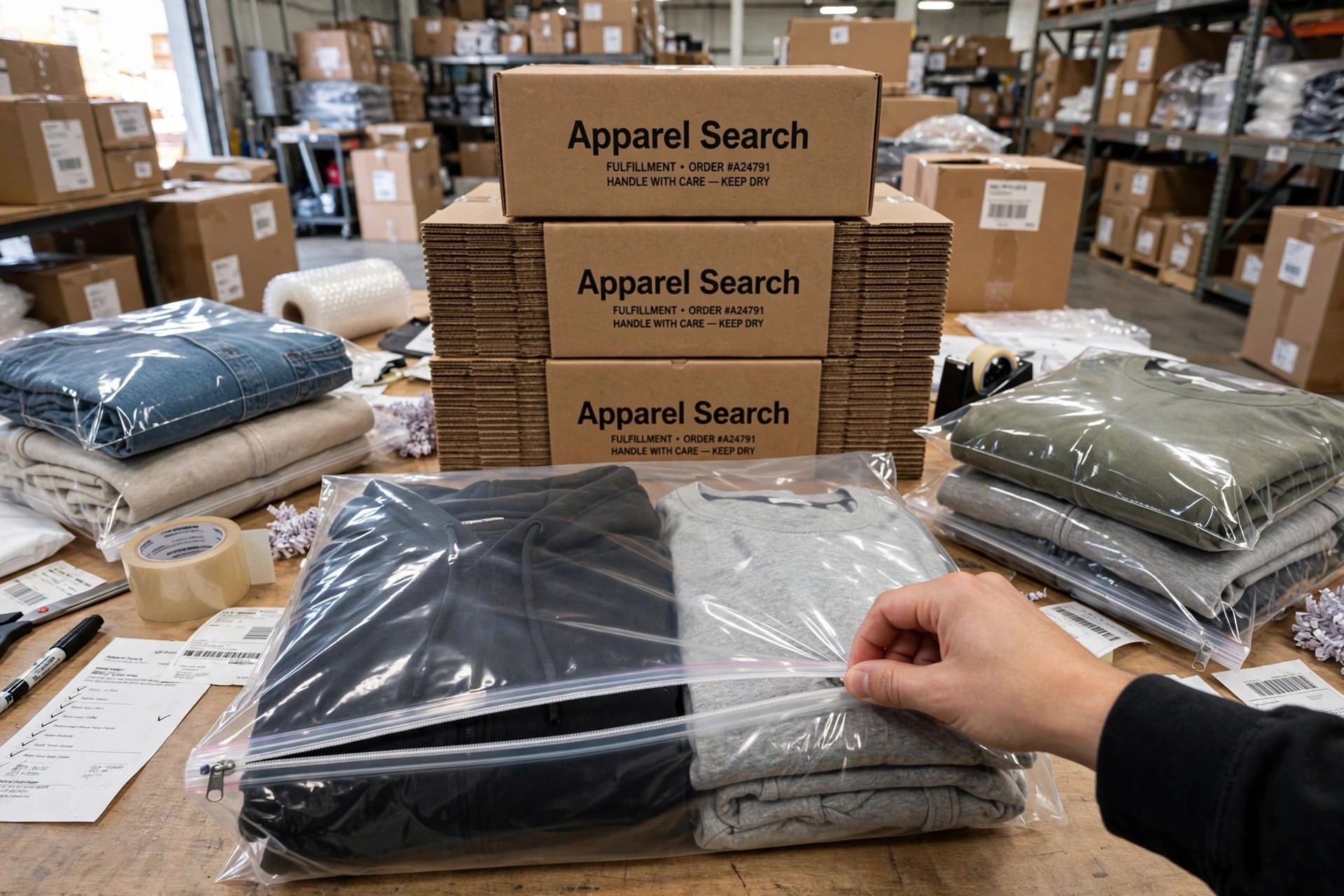
A zippered poly bag closes with a track: two interlocking profiles at the bag's mouth that press together under a run of the fingers and peel apart when the bag is opened. The closure is the bag's whole proposition — reclosability. A garment can be bagged, opened for inspection, bagged again, opened at a store, and bagged once more, with the same bag sealing properly at every closing. Zippered bags are not used as much as plain bags when packing apparel, but they are used on occasion — and on those occasions, nothing else in the bag range does the job as well.
Poly Bag Types & Bag Equipment
The Zip Closure and How It Behaves
The zip profile is extruded as part of the film or applied to it, and its quality decides the bag's life: a well-made track aligns itself under the fingers, closes with a definite feel along its full length, and survives dozens of cycles. A poor track closes in patches and opens in transit, which is worse than no zip at all, because the bag was trusted. Test a zipper bag by closing it, then pulling the mouth apart by its faces — the track should resist evenly, everywhere.
Zipper bags are made across the film range — polyethylene for utility reclosable work, polypropylene where clarity and presentation join the reclosability, as the suppliers below reflect in ranges that run from zipper bags to polypropylene and cellophane lines. Sizes run from small accessory bags to full garment sizes, and the track can sit below a header or hanger feature where the bag is also meant to hang.
The closure asks one discipline of the user: run the full track. A zip closed for ninety percent of its length is open at the end that matters, and garments creep, dust enters and moisture follows. Bench training for zipper bags is ten seconds long — close it, then check the ends — and it is the whole of the technique.
Where Zipper Bags Earn Their Place in Apparel
Samples and salesman kits are the classic use: garments that travel, are shown, are handled and return to their bags repeatedly, in a circuit where a heat seal would last one opening and a flap would tire in a week. Multi-piece sets are the second: a suit with its accessories, a layette, a uniform kit — contents a customer or store may open, check and reclose as a set.
Retail uses the zipper bag where the bag stays with the product: bedding-adjacent apparel, travel and storage products, and premium lines whose bag becomes the customer's own storage for the garment. In each case the bag is not packaging to be removed but part of the product's life, which is what justifies a closure that costs more than the film it sits on.
In the general packing hall, by contrast, the plain bag rules — folded garments are bagged once and sealed once, by tape or heat, and a zipper's reclosability is a feature paid for and never used. The honest programme specifies zipper bags by exception, for the families named above, and plain bags for everything else.
Zippered Poly Bags — Suppliers & Manufacturers
Atlapac
Atlapac helps buyers work out the right bag, material and size for a product — custom or stock, reclosable, polypropylene, cellophane or polyethylene — drawing on more than 30 years in the bag business and a family-owned approach to customer industries.
Supplies: Zipper bags, polypropylene bags and cellophane bags, custom and stock
United States Plastic Corp.
United States Plastic Corp. manufactures and distributes some 23,000 plastic and safety items, serving over 85,000 clients from a factory five acres under roof.
Supplies: Zipper bags, polyethylene bags, polypropylene bags, bags on rolls, flat bags and gusset bags
Buying and Using Zipper Bags Well
Buy the track, not just the bag: ask for cycle life, close a sample twenty times, and check the twentieth closing as carefully as the first. Store zipper bags with their tracks uncreased and their bundles uncompressed — a track stored under a kink can take a set that no finger run will fully close.
In use, keep the track area clean. Fibres and lint in the profile are the everyday cause of patchy closure, so the top of the bag is kept clear of the garment's face as it is closed — the same clean-mouth discipline that good heat sealing demands, applied to a mechanical seal.
Common Questions
What is a zippered poly bag?
A zippered poly bag has two interlocking plastic profiles at its mouth that press together to close and peel apart to open, making the bag reclosable many times over. The zip track is extruded with or applied to the film, in polyethylene for utility work or polypropylene for clearer retail presentation.
When are zippered bags used for clothing?
Where reclosability is genuinely needed: samples and salesman kits that are opened and reclosed in a circuit, multi-piece sets that are checked and reclosed as a set, and retail products whose bag stays with the garment as its storage. For ordinary one-way garment packing, plain bags closed by tape or heat seal are the standard, cheaper choice.
How can I tell a good zipper bag from a poor one?
Close it and pull the mouth apart by the bag's faces: a good track resists evenly along its full length and still does so after many open-close cycles. A poor track closes in patches and can open in transit. Also check that the full track is run closed in use — a zip left open at one end leaves the bag effectively open.