Ed Hardy Women's Fashion Brand
Tattoos are trendy - three words that sum up the whole brand. Don Ed Hardy is an American tattoo artist raised in Southern California, best known for his tattoo work and his eponymous apparel and accessories brand, Ed Hardy. He became recognised for incorporating Japanese tattoo aesthetics and technique into his American style work - and in the 2000s Hardy licensed his brand, until it was found on a wide variety of products, worn as boldly printed clothing that carried tattoo art off the skin and onto the street.
Shop Women's Ed Hardy Now
Shop Women's Ed Hardy on Amazon Shop Women's Ed Hardy on eBayThe Amazon and eBay links on this page are affiliate links. If you make a purchase through them, Apparel Search may earn a commission.
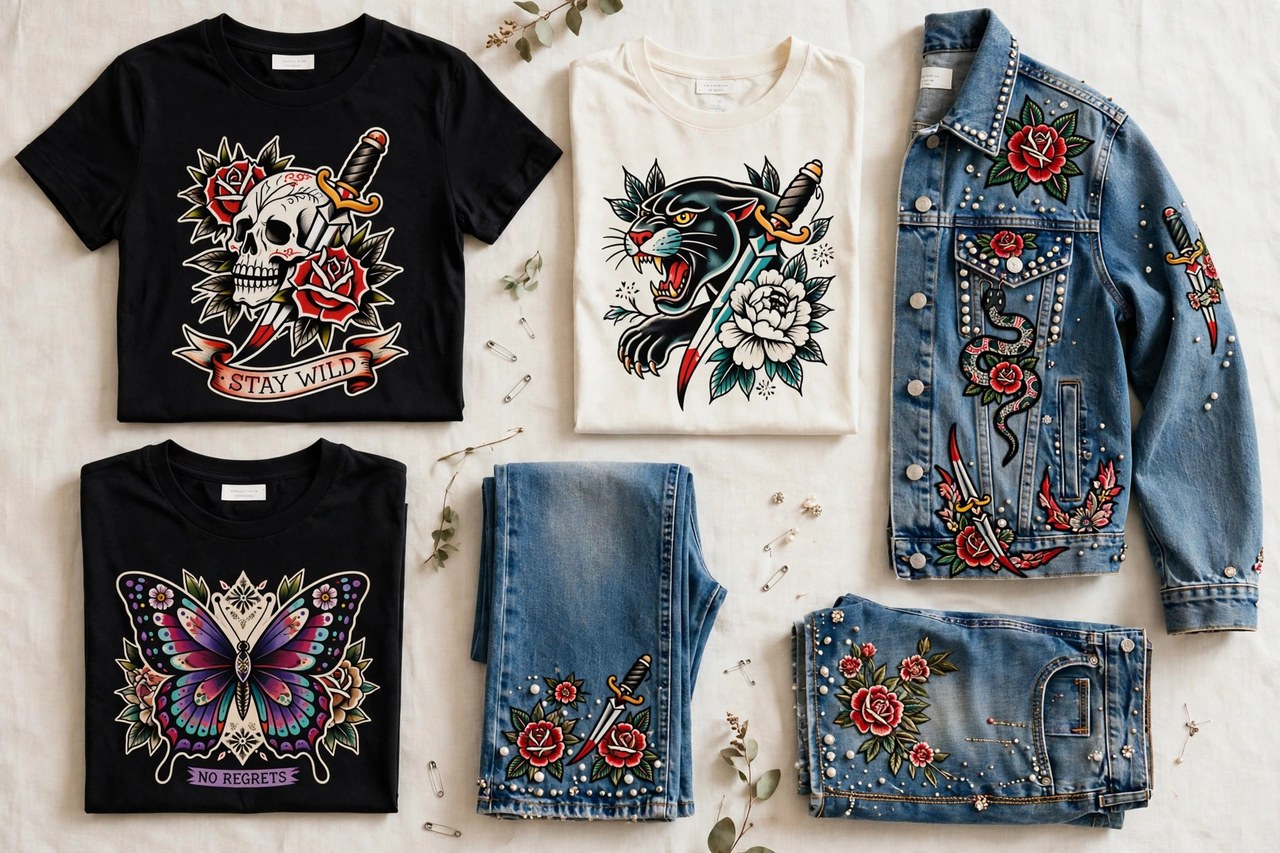
Tattoos are trendy - three words that sum up the whole brand. Don Ed Hardy is an American tattoo artist raised in Southern California, best known for his tattoo work and his eponymous apparel and accessories brand, Ed Hardy. He became recognised for incorporating Japanese tattoo aesthetics and technique into his American style work - and in the 2000s Hardy licensed his brand, until it was found on a wide variety of products, worn as boldly printed clothing that carried tattoo art off the skin and onto the street.
Apparel Search's own linked pages frame the story from both ends: a definition entry for Don Ed Hardy, and a designer profile for Christian Audigier, the brand's most famous licensee. Audigier, previously of Von Dutch Originals - which marketed the imagery of Kenny Howard, aka Von Dutch, another noted American subculture artist - licensed the worldwide rights to the Ed Hardy brand in 2005 through his holding company, Nervous Tattoo, and tried to replicate the Von Dutch marketing: directly to celebrity clients, and through stores in high-profile fashion districts.
$700 Million, Then the Fall
The brand under Audigier was extremely popular for a time, peaking at more than $700 million in gross revenue in 2009 - but it collapsed quickly in 2009-2010, with many stores closing. That arc is the essential fact of Ed Hardy as a fashion business: few labels have risen faster on licensed imagery, and few have fallen faster when ubiquity spent the very subculture credibility the imagery was borrowed from. The brand's later corporate world runs through Apparel Search's Iconix Brand Group profile, linked from this page.
For a women's shopper today, that history changes how the clothes should be bought. Ed Hardy pieces are now met mainly through the brand's own current store and through resale of the Audigier-era product - and the era is the value. Pieces from the peak years carry the full-strength formula: Hardy's Japanese-influenced tattoo graphics, printed and embellished at production quality the boom paid for. Later, thinner licensed product borrowed the name with less of the art. Judge by the print and the cloth in the hand, not the label alone.
Judging Tattoo-Art Clothing
The tests are the printmaker's tests. Graphics should be dense, registered cleanly and integrated with the garment - printed, embroidered or embellished with weight - rather than sitting stiffly on a thin tee. Check embellishment attachment, inside finishing, and fabric body: the best Ed Hardy women's pieces feel like garments that were built around the artwork, with the art scaled to the panel it fills. On resale, condition of the print is condition of the piece; cracking, fading or lifting embellishment cannot be styled away.
Care is protective: wash inside out, cool and gentle, dry flat and away from heat that attacks prints and stones alike. Raised in Southern California, trained in two tattoo traditions at once, licensed to $700 million and collapsed within a year - Don Ed Hardy's brand is a complete fashion parable on one page, and its clothes remain what they always were: wearable tattoo art, best bought where the art itself is strongest.
Common Questions
Who is Don Ed Hardy?
An American tattoo artist raised in Southern California, best known for his tattoo work and his eponymous apparel brand, recognised for incorporating Japanese tattoo aesthetics into his American style work.
Who licensed the Ed Hardy brand, and when?
Christian Audigier licensed the worldwide rights in 2005 through his holding company Nervous Tattoo, marketing to celebrity clients and opening stores in high-profile fashion districts.
How big did Ed Hardy get, and what happened?
It peaked at more than $700 million in gross revenue in 2009, then collapsed quickly in 2009-2010 with many stores closing.
More in Women's Fashion Brands E
The E letter hub and related E brands:
Photos

More to Explore on Apparel Search
References & Further Reading
Looking for Women's Clothing Stores?
This profile helps you research the Ed Hardy women's fashion brand. To browse where to buy, visit our women's clothing store directory, where you can find retailers that carry women's clothing.