Men's Wool Sports Coats Guide
A men's wool sports coat is the patterned, textured tailored jacket - tweeds, checks, herringbones and bold cloths that a blazer, by definition, is not. It exists to be worn with odd trousers rather than a matching suit, and wool is its native fiber because sports coat cloths are all about surface: the nap of tweed, the fleck of donegal, the ridge of herringbone.
Shop Men's Wool Sports Coats Now
Shop Men's Wool Sports Coats on Amazon Shop Men's Wool Sports Coats on eBayThe Amazon and eBay links on this page are affiliate links. If you make a purchase through them, Apparel Search may earn a commission.
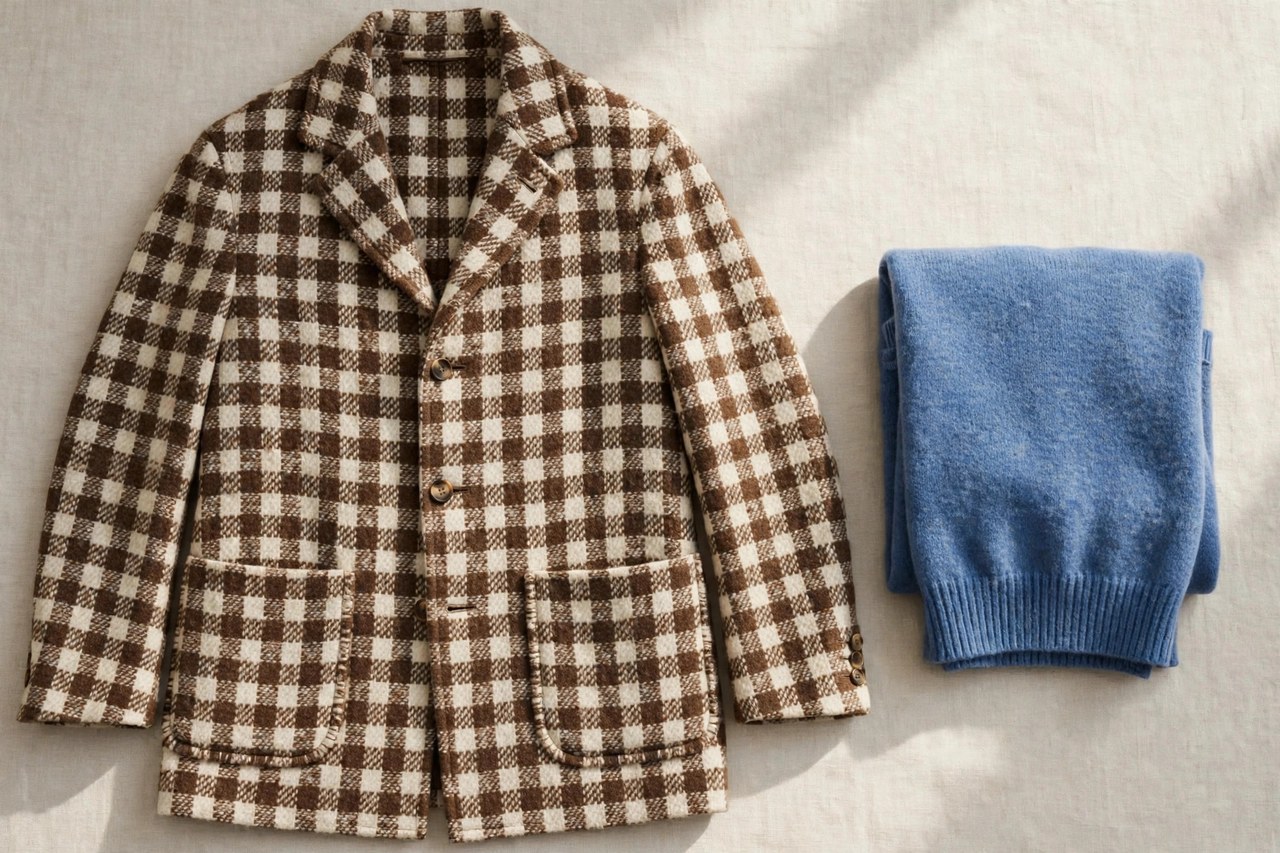
A men's wool sports coat is the patterned, textured tailored jacket - tweeds, checks, herringbones and bold cloths that a blazer, by definition, is not. It exists to be worn with odd trousers rather than a matching suit, and wool is its native fiber because sports coat cloths are all about surface: the nap of tweed, the fleck of donegal, the ridge of herringbone. This guide walks through the choices that matter - style, fit, fabric and finish - with the practical detail a product listing rarely gives you, and closes with the care habits that keep the garment in service.
Styles and Construction
Cloth is the whole conversation. Harris and donegal tweeds bring flecked, hard-wearing texture for country and cold-weather wear; herringbones and district checks in lambswool give classic sports coat patterns; flannel and cashmere blends soften the jacket for town. Construction follows the blazer's rules - canvas in the chest in quality coats, softer natural shoulders in casual styles, patch pockets for informality - with two sports coat specifics: pattern must match across pockets, seams and sleeves (the tailoring tell that separates price levels instantly), and the cloth weight should suit odd-trouser pairings, generally midweight wools that sit happily over flannels and cords. Elbow patches are heritage decoration; throat latches and action backs are country function.
A tailored wool coat or jacket is judged in layers: the cloth, the canvas or fusing that gives the chest and lapels their shape, and the lining that lets it glide over knitwear. Melton weaves dense and wind-tight for peacoats and overcoats, flannel reads soft and matte, tweeds hide wear and suit country styling, and gabardine runs smooth for rain-shedding trench styles. Sleeves should show clean pitch without diagonal drag lines, the collar should hug the neck, buttons should be sewn with thread shanks, and a half or full canvas front will drape and recover better than a fully fused one at the same cloth weight.
Fit and Sizing
Fit a sports coat as you fit a blazer - shoulders, button closure without pull, seat-covering length, cuff-showing sleeves - with one addition: try it over a sweater as well as a shirt, because sports coats live over knitwear half their lives. The pattern's scale should suit your frame: large checks on small frames and vice versa can overwhelm or disappear. Wool's settling behavior rewards a neat fit now; a tweed jacket bought baggy stays baggy, minus its dignity.
Tailored wool outerwear should be brushed after wear - a clothes brush lifts surface soil before it works into the weave - and rested a full day between outings on a broad hanger that carries the shoulders. Spot-clean promptly rather than washing; dry clean only a few times a season, since solvent and pressing fatigue cloth and canvas. Store coats clean, unbuttoned, in breathable garment bags with moth protection, never compressed in plastic. Set the creases and lapel roll with steam, not a hard press, and have loose buttons and lining tears repaired early - a coat's structure makes small repairs cheap and neglect expensive.
Wearing and Care
Sports coats in textured wool are forgiving patients: brush after wear (tweed especially sheds its day under a brush), rest between wears, steam rather than press, dry clean rarely, and store clean with cedar - colorful woolens are moth cuisine. The cloth hides small mends beautifully, so repair early and invisibly; a sports coat maintained this way is a twenty-year garment, which is why so many are inherited rather than bought.
Fit a wool coat or sports coat over the bulkiest layer it will honestly cover - a sweater for an overcoat, a shirt and light knit for a blazer - and test the working range: arms forward, arms crossed, sitting with the buttons fastened. Shoulders end at yours, the collar sits against the neck without a gap, and the fronts close without an X of pulling at the button. Coat length is coverage: a trench or overcoat should reach at least mid-thigh, a peacoat ends at the hip, and a blazer should cover the seat. Sleeve length shows a sliver of shirt cuff on tailored jackets; coat sleeves protect the wrist.
Common Questions
What trousers go with a patterned wool sports coat?
Plain ones in the coat's supporting colors: mid-grey flannels with almost any check, tan cords or moleskins with country tweeds, navy worsteds with quieter herringbones. The trouser should pick up one of the coat's quieter tones and stay texturally calmer than the jacket.
Is a sports coat the same as a blazer?
No: a blazer is solid (classically navy) with metal buttons, while a sports coat is patterned or textured cloth with ordinary buttons. They occupy the same slot in an outfit, which is why the words get swapped, but the cloth test settles it in a second.
Can I wear a tweed sports coat in the city?
Yes - tweed's country origin is no longer a dress code boundary. Keep the rest of the outfit clean and urban (grey flannels, a plain knit or shirt, neat shoes) and the tweed reads as texture and character rather than countryside costume.
More in Men's Clothes Guide W
Background
Sports jackets come in an endless variety of colors, patterns, and fabric types. The sports jacket comes in a large variety of colors and patterns. It also isn't as structured as suit jackets or blazers, and has a generally looser fit. They sometimes have elbow patches on the arms, as well as a slit and pleats on the back side. A sports coat is a very versatile garment. It can be worn with jeans or dress trousers. Sports jackets can most easily be identified by their use of thicker fabrics when compared to the suit jacket or blazer. However, many sports jackets use lightweight fabric such as silk, linen and others as well. Even when using wool, their are various fabric weight and weave options. A sport coat (or sports coat) (American English), also called a sports jacket (British English), less commonly known as a sportcoat, is a jacket for men.
More to Explore on Apparel Search
Looking for Men's Clothing Stores?
This guide explains men's wool sports coats. To browse where to buy, visit our men's clothing store directory, where you can find retailers that carry them.