Women's Plus Size Gowns Guide
The complete plus size gown category in 14W to 32W — long dresses for every level of occasion, from flowing day gowns to structured formal styles, and how they differ.
Shop Women's Plus Size Gowns Now
Shop Women's Plus Size Gowns on Amazon Shop Women's Plus Size Gowns on eBayThe Amazon and eBay links on this page are affiliate links. If you make a purchase through them, Apparel Search may earn a commission.
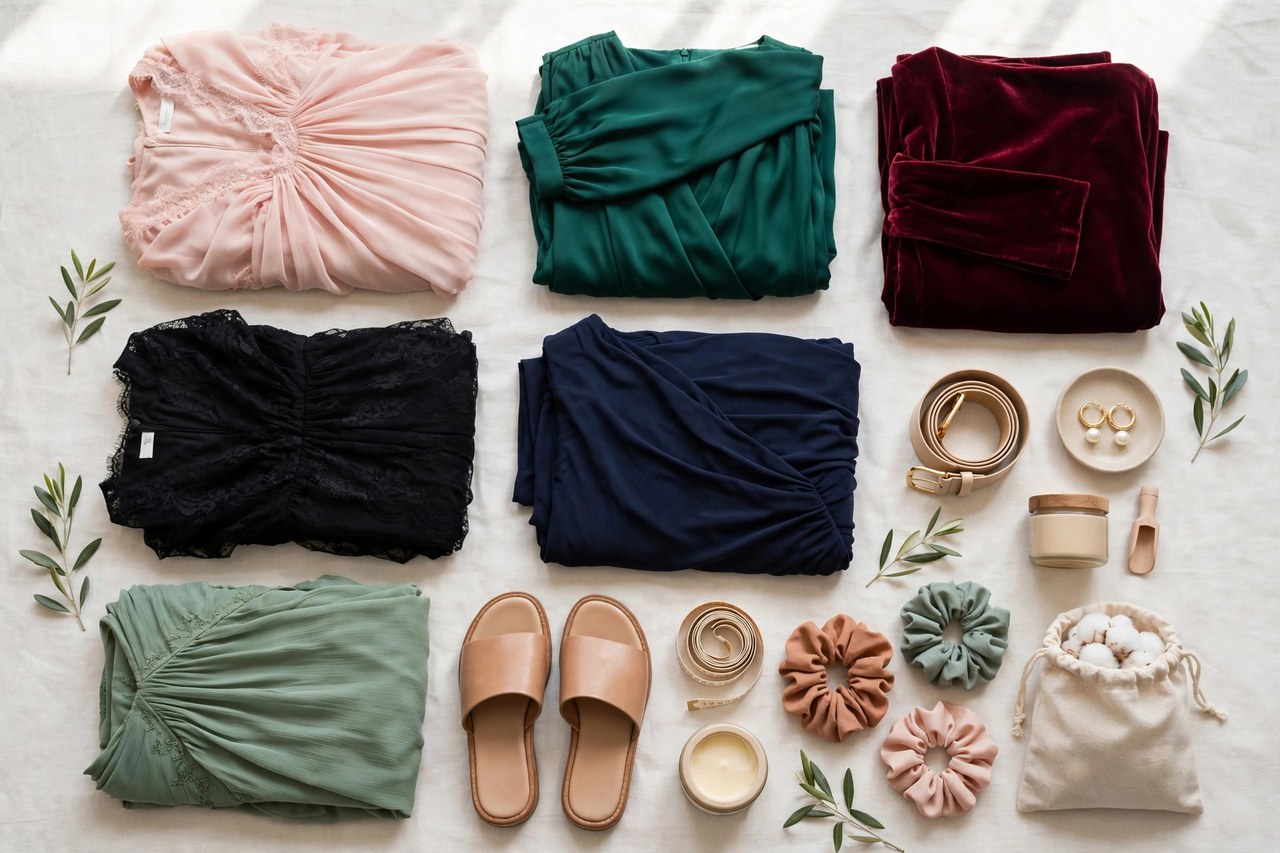
Gown is the broadest word in the long-dress family: it covers any full-length dress with a sense of occasion, from a flowing printed gown worn to a garden celebration to the most structured formal gown at a gala. This guide maps the whole category in plus sizes 14W to 32W, because shoppers meet the word everywhere and its meaning shifts with the seller.
The distinctions matter when you are buying for a specific event. A day gown and an evening gown may share a silhouette and even a fabric family, yet differ in bodice structure, lining, finish and price by a factor of three. Reading those differences from a product description — and knowing which your occasion needs — prevents the two classic gown mistakes: arriving overdressed in a fragile formal piece at a relaxed event, or underdressed in a soft day gown where structure was expected.
The Gown Family: From Day Gowns to Formal Gowns
At the relaxed end sit day and maxi gowns: long, soft dresses in jersey, rayon, cotton or chiffon, usually unlined or lightly lined, with pull-on or simple closures and little or no internal structure. They serve holidays, daytime weddings, cruises and celebrations where length is the dressing-up. In plus sizes their fit hinges on bust room, a waist or empire seam placed correctly, and enough sweep that the skirt falls from the hip rather than clinging to it — soft fabric over curves shows every shortage of cloth.
The middle of the family holds occasion and dressy gowns — long dresses in satin, lace or crepe with real zippers, linings and shaped bodices, worn to formal weddings, ceremonies and evening receptions. At the top sit formal and evening gowns, the constructed end: boned or structured bodices, waist stays, layered skirts and formal finishes, governed by the construction standards detailed in the evening gowns guide. Bridal and bridesmaid gowns branch from this end of the family with their own conventions, covered in their own guides in this section.
How Gowns Differ From Formal Dresses
Shoppers also ask how a gown differs from a formal dress. The working answer: a gown is always long and is a single, complete garment built around its length, while a formal dress — the subject of its own guide here — is defined by its dress code and may be long, midi or cocktail length. Every gown worn to a formal event is a formal dress, but most formal dresses are not gowns.
Within gowns, length itself has grades. A true gown reaches the floor or close to it in the intended shoes; a long dress or maxi may end at the ankle. On plus bodies, that last inch changes the read of the whole garment, because a floor-length skirt continues the body's line to the ground while an ankle hem interrupts it.
Bodices, Necklines and Sleeves Across the Category
Bodice structure is the gradient that runs through the whole gown family. Day gowns drape or gather the bodice softly, relying on elastic, ties or stretch; occasion gowns shape it with seams, darts and a fitted lining; formal gowns engineer it with structure you can feel. In plus sizes, match the bodice to the bust it carries: the fuller the bust, the more a soft, unstructured bodice needs at least a lined shelf, wide straps or sleeves to distribute weight, and the more a structured bodice earns its comfort over a long event.
Necklines and sleeves follow the same logic at every level. Empire and V necklines lengthen and frame; halter and one-shoulder styles need their strap and closure engineering checked at plus scale; cap, flutter, elbow and full sleeves add coverage and balance skirt volume, and in long gowns a sleeve also balances the visual weight of a floor-length skirt. Back design deserves a look before buying — low and open backs change your foundation options completely, and a gown whose back you have not considered is the most common source of fitting-room surprises in this category.
Choosing and Caring for a Plus Size Gown
Choose by occasion first, structure second, decoration last. Name the event, its hour and venue, then decide which band of the gown family it belongs to; then choose the bodice support your body needs for that many hours; only then compare lace, beading and color. Order by your largest measurement, allow alteration time for hem and bodice, and rehearse sitting, stairs and dancing in the gown before the event, because a floor-length skirt behaves differently in motion than in a mirror, especially around the hip and hem.
Care scales with formality. Day gowns in jersey and rayon usually wash gently at home; satin, lace and structured gowns need professional cleaning, prompt attention to spills, and storage hung by the inner loops in a breathable bag so the skirt's weight does not stretch the bodice. A gown is an occasional garment by design, so its value is measured per wear and per photograph across years.
Related Women's Guides
More to Explore on Apparel Search
- Plus Size Clothing
- Plus Size Clothing Stores
- Shop for Plus Sizes
- graduation gowns
- gowns for women
- difference between a gown & dress
- plus size
- fashion
- trendy
- stylish
- plus size fashion model
- plus size fashion definition
- Clothing Stores
- Fashion Designers
- Popular Brands
- Apparel
- Women's Clothing Stores
- Women's Clothing Wholesalers
- Women's Fashion
Looking for Women's Clothing Stores?
This guide helps you choose women's plus size gowns. To browse where to buy, visit our women's clothing store directory, where you can find retailers that carry them.