Women's Plus Size Dress Guide
The plus size dress is the one-piece shortcut to a finished outfit — this umbrella guide covers the silhouettes, waist placements and fabrics that work on curves in 14W and up.
Shop Women's Plus Size Dress Now
Shop Women's Plus Size Dress on Amazon Shop Women's Plus Size Dress on eBayThe Amazon and eBay links on this page are affiliate links. If you make a purchase through them, Apparel Search may earn a commission.
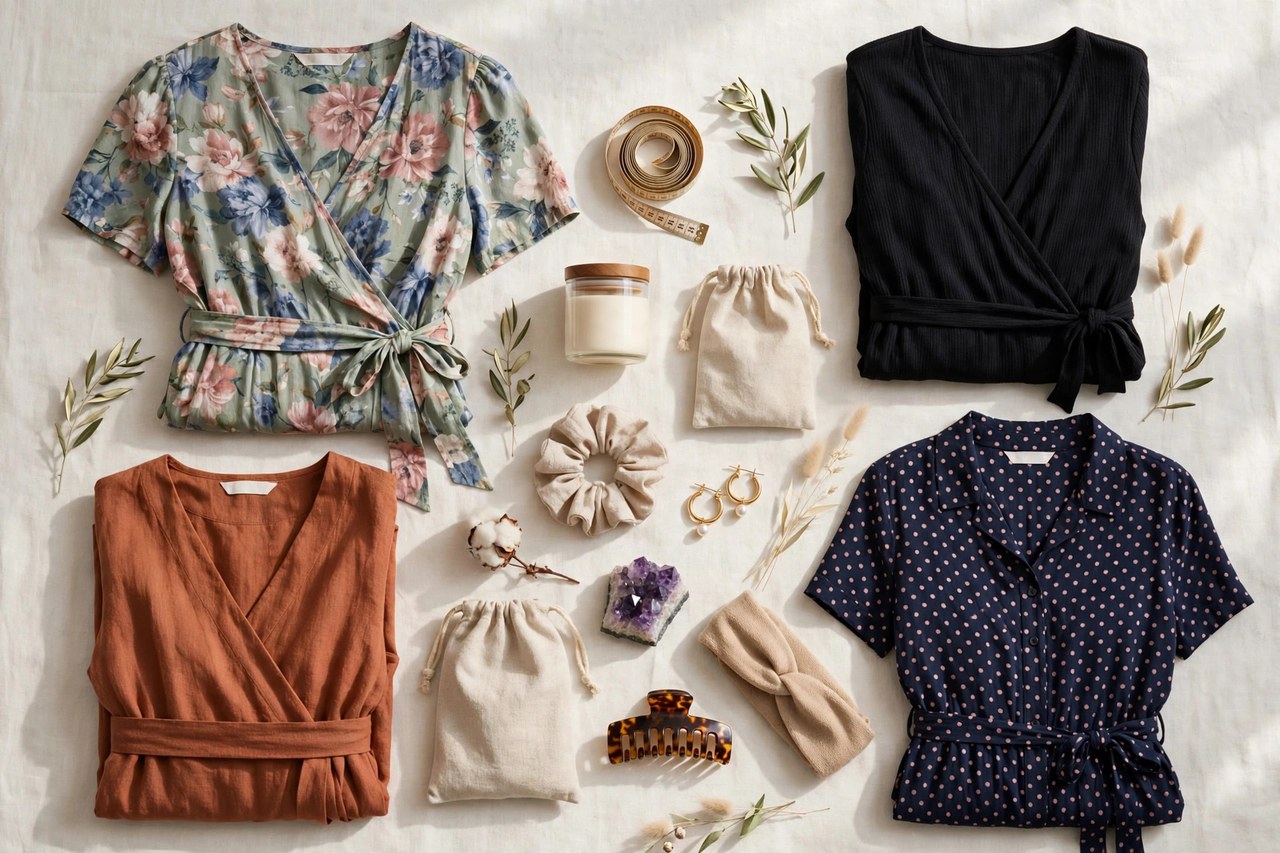
The dress is fashion's most efficient garment: one piece, one decision, a complete outfit. In plus sizes 14W through 5X and beyond, it is also the category where good cutting shows most clearly, because a dress must fit bust, waist and hip in a single connected pattern with nowhere to hide a mismatch. A well-cut plus dress follows a curvy body's actual landmarks, its darts and seams placed at a plus bust, its waist at a plus torso's real waist, its skirt given enough sweep to hang clean over a plus hip.
This is the umbrella guide to plus dresses. It maps the main silhouettes and what each does on a curvy figure, explains waist placement and neckline choices, and covers fabrics and the fit routine to use in any fitting room. Specialist guides then go deeper by occasion: cocktail and party dresses for the evening, casual and sundresses for day, formal and evening gowns, and bridal and bridesmaid styles. Learn the silhouette language here and every dress purchase afterward becomes quicker and surer.
Silhouettes and What They Do on Curves
Fit-and-flare is the plus benchmark: a fitted bodice, a defined waist and a skirt that releases over hip and thigh, balancing the figure and allowing comfortable sitting and movement. The wrap dress achieves a similar definition with an adjustable tie, deep adjustability across bust and waist, and a V-neckline that elongates; check wrap depth and security for your bust. A-line dresses release from the shoulder or a high seam, skimming rather than defining the waist, and suit shoppers who prefer ease through the middle with structure at the shoulder.
Sheath dresses skim close in a column and demand the most precise fit and the most structured fabric; with stretch and princess seams they are superb, and without them they are unforgiving. Shift dresses hang straight with minimal shaping and work best in fabrics with body, sized so they clear the hip without pulling. Empire dresses raise the waist seam to just under the bust and pour fabric from there, a comfortable, romantic line that needs enough skirt sweep to avoid a tent read. Every silhouette succeeds in plus when its seams were placed on a plus body.
Waist Placement, Necklines and Sleeves
Waist placement is the plus dress's steering wheel. A seam or belt sitting at the natural waist defines the figure's narrowest point and balances bust and skirt; sitting too low it drags the torso long, too high it crowds the bust. Because plus torsos vary, try dresses by where the waist lands on you, not by the style name.
Necklines and sleeves are fit features, not just style. A V or scoop should end where your bra coverage and comfort say, with straps or sleeves placed to cover bra straps when you want that security. Sleeveless plus dresses need armholes cut high and close enough not to gape or expose, and enough strap width for support. Three-quarter and elbow sleeves flatter most arms and suit most seasons, flutter and cap sleeves add softness, and long sleeves in a dress demand bicep room measured, not assumed.
Fabrics: Drape, Structure and Stretch
Fabric decides which silhouette a dress can honestly be. Fluid fabrics, rayon challis, crepe, matte jersey and chiffon over lining, drape and flow, suiting wrap, A-line and empire styles and forgiving small fit differences. Structured fabrics, ponte, scuba, cotton sateen, taffeta and suiting blends, hold a shape, suiting sheaths, fit-and-flares and tailored dresses, and they smooth the body's line while demanding more precise sizing. Knit dresses trade structure for comfort and need weight enough not to cling at every contour unless clinging is the chosen effect.
Stretch deserves the same respect here as in denim: a few percent elastane in a woven dress adds sitting and reaching ease while keeping the silhouette, provided recovery is strong. Lining transforms many dresses, letting the skirt fall over the hip without catching, and at plus sizes a lining should itself have ease and a smooth finish. Prints scale with the body: motifs sized generously enough not to look pinched, placed prints checked so flowers and borders land where you want them at your size, not where they sat on the size 8 sample.
The Fitting Routine and Wardrobe Building
Fit every dress through a standard routine: zip or close it fully, check the bust for strain or gaping, confirm the waist position in a side mirror, sit and cross your legs, raise your arms, walk and climb a step, then look at the back, where pulls at the shoulder blades, a hiking hem or a strained zip confess what the front concealed. Wear the bra and shoes you intend with the dress; foundations and heel height both change where hems and waists fall, and a hem should be judged at its true working height.
Build a dress wardrobe by occasion coverage rather than by impulse: one polished day dress, one casual knit dress, one evening-capable dress and one seasonal pleasure, all in silhouettes proven on your body, will dress more of life than a rail of experiments. The plus dress, chosen this way, is not a gamble on a hanger; it is the fastest reliable route from wardrobe to ready that exists.
Related Women's Guides
More to Explore on Apparel Search
- Plus Size Clothing
- Plus Size Clothing Stores
- Shop for Plus Sizes
- Plus Size Evening Gowns
- Plus Size Gowns Guide
- Plus Size Bridesmaid Dresses
- Plus Size Party Dress
- Plus Size Prom Dress
- plus size
- fashion
- trendy
- stylish
- plus size fashion model
- plus size fashion definition
- Clothing Stores
- Fashion Designers
- Popular Brands
- Apparel
- Women's Clothing Stores
- Women's Clothing Wholesalers
- Women's Fashion
Looking for Women's Clothing Stores?
This guide helps you choose women's plus size dress. To browse where to buy, visit our women's clothing store directory, where you can find retailers that carry them.