Women's Plus Size Swimwear Guide
Plus size swimwear in sizes 14W and up is built with longer torsos, fuller bust support and power-mesh lining, so one-pieces, tankinis and swim dresses stay secure and comfortable in the water.
Shop Women's Plus Size Swimwear Now
Shop Women's Plus Size Swimwear on Amazon Shop Women's Plus Size Swimwear on eBayThe Amazon and eBay links on this page are affiliate links. If you make a purchase through them, Apparel Search may earn a commission.
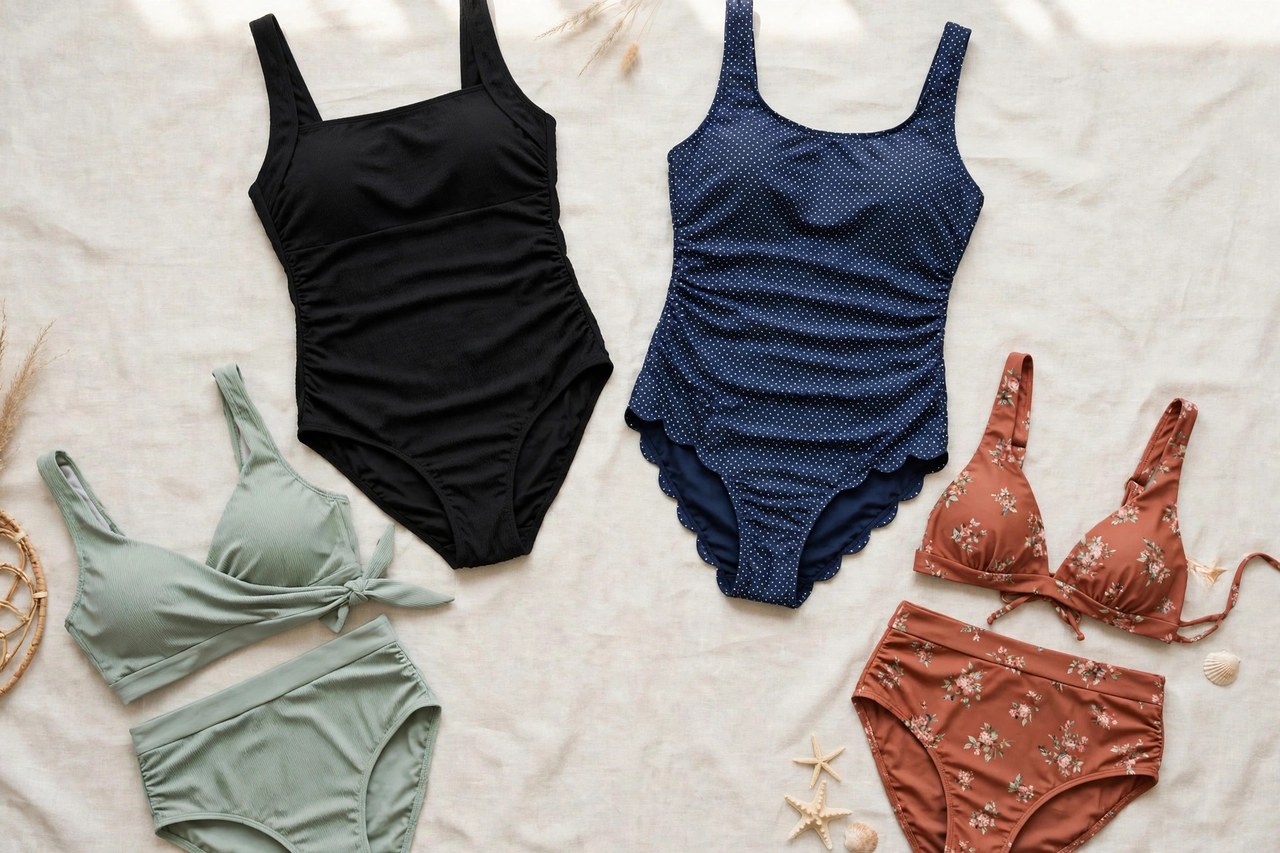
Plus size swimwear is sized from 14W through 32W and in 1X to 6X ranges, and a well-made suit does far more than scale up a straight-size pattern. Bust cups are fuller, straps are wider, the torso is longer, and lining is placed to support the midsection without squeezing it. Shoppers who have only tried sized-up regular suits often notice the difference immediately: less pulling at the shoulders, less riding at the leg, and a neckline that stays in place when swimming rather than only when standing still.
This guide covers swimwear strictly as a garment: the support construction to compare, the main styles and what each does, the fabrics and linings that determine how long a suit lasts, and how to check fit by measurements. Whether you swim laps, take water aerobics, or spend a beach day walking and sitting as much as swimming, choosing construction first and color second gives you a suit that works for a full season instead of a single outing.
Support, Lining and Torso Fit
Bust support in plus swimwear comes in several forms. Molded cups give smooth shape and light support, underwire styles lift and separate with the most structure, and soft-cup suits with a full elastic bra band offer moderate support with more flexibility. Wider adjustable straps distribute weight across the shoulder instead of cutting in, and a higher back or cross-back design helps straps stay put during arm movement. Check that the support band sits level and firm under the bust when the suit is dry, since water adds weight.
Torso length is the fit point most often missed. Plus ranges offer regular and long-torso cuts; if a suit pulls down at the neckline or rides up at the leg, the torso is usually too short, not the size too small. Power mesh lining through the front panel provides gentle midsection smoothing and helps the suit keep its shape when wet. Leg openings should lie flat with moderate coverage elastic that grips without digging, and side seams should sit at the natural hip rather than drifting forward.
Styles: One-Pieces, Tankinis and Swim Dresses
The one-piece is the most secure choice for laps and active swimming because nothing separates or lifts in the water. Look for a scoop or high neckline for coverage during strokes and chlorine-resistant fabric if you swim weekly. Tankini sets pair a longer top, often 26 to 30 inches, with brief, short or skirted bottoms; the two-piece format makes sizing the top and bottom separately easy and simplifies restroom breaks, but the top should overlap the bottom waistband by several inches so no gap opens when you reach or bend.
Swim dresses and skirted suits add a flared overskirt over an attached brief, giving thigh coverage while the inner suit does the support work. High-waisted bottoms pair with bikini or tankini tops and should have a wide waistband that stays up when wet. Rash guards and swim shirts in plus sizes add sun coverage and work over a supportive suit for kayaking or paddle sports. Separates let you replace a worn bottom without replacing the whole set, which is practical when chlorine wears pieces at different rates.
Fabrics, Chlorine and Care
Most plus swimwear uses nylon or polyester blended with spandex, also labeled elastane or Lycra. Polyester blends resist chlorine and sun fading best and are the smart choice for pools and regular lessons. Nylon blends feel softer and dry quickly but break down faster in chlorinated water. A spandex content around 15 to 20 percent gives firm stretch with good recovery; much higher can feel compressive, while worn-out spandex loses snap and causes sagging at the seat and bust, the surest sign a suit needs replacing.
Lining quality matters as much as the outer fabric. A full front lining, ideally power mesh at the tummy panel, prevents show-through when wet and adds structure. Rinse every suit in cool fresh water after each wear, wash gently by hand with mild detergent, and dry flat away from sun and heat. Never wring a suit tightly or leave it rolled in a damp towel. Rotating two suits for frequent swimming lets elastic recover between wears and can double the useful life of both, saving money across a season.
Sizing, Fit Checks and Buying Tips
Order swimwear by your fullest measurements, usually bust and hip, and consult the brand size chart in inches rather than relying on dress size alone, because swim sizing runs firmer than clothing. If you fall between sizes, most fitters suggest sizing up for comfort in one-pieces and choosing separates in different sizes when bust and hip straddle charts. Try suits on and move: raise both arms, bend, sit, and walk. Straps should not slide, the leg elastic should not creep, and the torso should not tug at either end.
Shop early in the season when long-torso, underwire and chlorine-resistant plus styles are fully stocked, and keep receipts until you have water-tested a suit at home if store policy allows returns on unworn suits with tags and liner intact. Note the fabric blend and your best size by brand in your phone, since plus swim ranges vary widely between makers. A suit bought for its construction, in a fabric matched to how often and where you swim, will feel secure from the first lap to the last day of summer.
Related Women's Guides
More to Explore on Apparel Search
- Plus Size Clothing
- Plus Size Clothing Stores
- Shop for Plus Sizes
- women's swimwear
- women's swimwear stores
- plus size
- fashion
- trendy
- stylish
- plus size fashion model
- plus size fashion definition
- Women's Wholesale Swimwear
- Swimwear News
- Clothing Stores
- Fashion Designers
- Popular Brands
- Apparel
- Women's Clothing Stores
- Women's Clothing Wholesalers
- Women's Fashion
Looking for Women's Clothing Stores?
This guide helps you choose women's plus size swimwear. To browse where to buy, visit our women's clothing store directory, where you can find retailers that carry them.