Women's Spaghetti-Strap Swimwear Guide
Spaghetti-strap swimwear is defined by its narrow straps — and in swimwear, strap width, adjustability and anchoring decide how much support a suit can honestly offer.
Shop Women's Spaghetti-Strap Swimwear Now
Shop Women's Spaghetti-Strap Swimwear on Amazon Shop Women's Spaghetti-Strap Swimwear on eBayThe Amazon and eBay links on this page are affiliate links. If you make a purchase through them, Apparel Search may earn a commission.
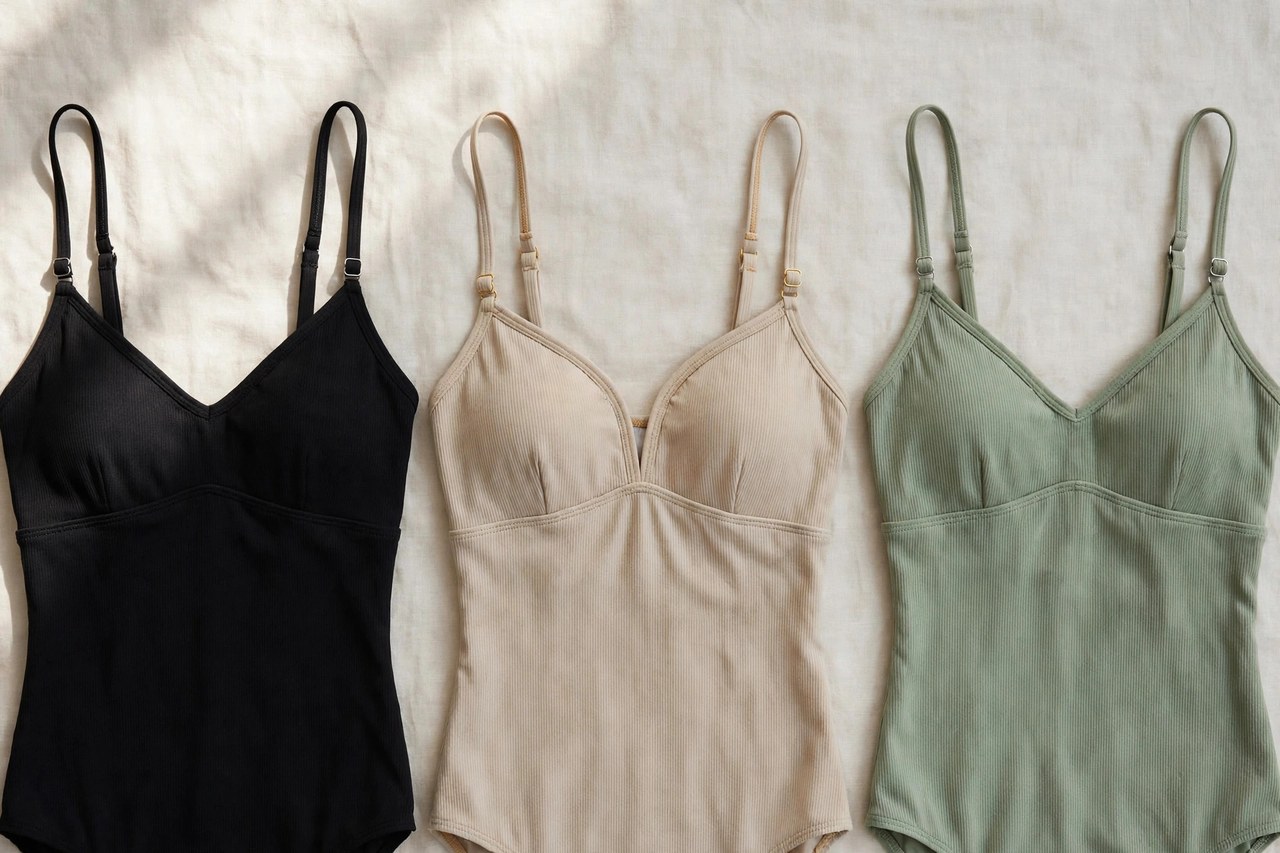
Spaghetti-strap swimwear is any swimsuit held up by thin, narrow straps — straps roughly the width of a strand of spaghetti, far narrower than the wide tank straps of an athletic suit. The style appears on one-piece suits, two-piece tops and swim dresses, and it is chosen for its light, minimal line and the clean shoulder it leaves. This guide treats the strap itself as the subject: how it is made, what it can and cannot support, and how to judge whether a particular suit's straps are engineered or merely decorative.
Everything here is about garment construction and fit. A narrow strap concentrates the work of holding a suit in place onto a small area, so the honest questions are mechanical ones: is the strap adjustable, is it elastic all the way through, where is it anchored, and what other structure in the suit — shelf lining, underband, boning or a tied back — shares the load the strap cannot carry alone.
Strap Construction: Fixed, Adjustable and Convertible
Fixed straps are sewn at both ends at one length. They are simple and secure when the length happens to match your torso, and unforgiving when it does not — a fixed strap that is too long lets the neckline sag in the water, and one that is too short pulls the suit up. Adjustable straps use small sliders, like lingerie hardware, to change length, and they are the single most useful feature in this category: torso length varies far more than dress size suggests, and adjustment absorbs the difference.
Convertible straps unhook at the back to wear straight or crossed; crossing them shortens the effective length and adds security for swimming. Better straps are made from the suit's own swim elastic encased in fabric, so they stretch and recover in chlorine; cheap straps are plain fabric tubes that go slack when wet. Check the anchor points: straps sewn into a reinforced seam or attached with a sturdy ring carry load, while straps tacked to a single layer of lining fabric tear out under strain.
Support, Stated Honestly
A narrow strap is a light-duty component, and product descriptions should be read accordingly. Spaghetti-strap suits typically provide light support: they position a lined or lightly padded cup and hold a neckline in place for swimming, floating and ordinary pool and beach activity. They are not the construction to choose for high-impact water sports or for anyone who needs substantial lift and containment — wide-strap, underband and athletic constructions elsewhere in this swimwear guide exist for exactly that job.
Within the category, support improves with specific features: an elastic underband beneath the bust that carries weight the straps should not, molded or removable cups that give the fabric a shape to hold, a tie-back or hook-back closure that lets you set the band snug, and cross-back strap arrangements that resist slipping off the shoulder. Judge a spaghetti-strap suit by its band and body first and its straps second; the straps finish the support system, they are not the system.
Styles and Fit Checks
The strap appears across the swim range. On one-piece suits it gives a clean, dress-like line, often with a straight or sweetheart neckline. On two-piece tops it is the classic light top construction, usually paired with a tie or clasp back. On swim dresses and tankini tops, narrow straps keep the shoulder bare while the body of the garment provides the coverage. In every version the strap's job description is the same, which makes trying on methodical rather than mysterious.
Fit checks for this category are specific. Set adjustable straps so the neckline sits where it should without the straps digging into the shoulder — digging means the band is too loose and the straps are doing its work. Raise your arms and bend: a well-anchored strap stays seated. Check wet behavior if you can, since swim fabric gains weight and loses grip in the water; a suit that only just behaves dry will not behave wet. And confirm strap hardware lies flat and is coated for chlorine and salt, because rough or corroding sliders announce themselves on skin quickly.
Care for Straps and Elastic
Straps are the first part of a swimsuit to fail, because they hold tension constantly and their elastic is thin. Rinse the suit in cool fresh water after every swim to remove chlorine and salt, which attack elastic, and wash gently by hand with mild soap. Never wring a suit by its straps, and never hang it to dry by the straps alone — the weight of wet fabric stretches exactly the component you are trying to preserve. Dry flat or draped over a line at the waist of the suit.
Store suits flat and unclipped, rotate two suits if you swim often so each has a full day to recover its elastic between wears, and retire a spaghetti-strap suit when the straps stay stretched after drying — at that point no adjustment restores the original fit. Chosen with honest expectations and cared for this way, a narrow-strap suit is a precise, comfortable garment for the light-support role it was designed to fill.
Related Women's Guides
More to Explore on Apparel Search
- Fashion
- Clothing Retail Stores
- Fashion News
- Fashion Designers
- Popular Brands
- Apparel
- Women's Clothing Stores
- Women's Clothing Wholesalers
- Women's Fashion
- Women's Swimwear Stores
- Women's Wholesale Swimwear
- Women's Swimwear Guide
- Swimwear News
- Fashion Videos
- Fashion Calendar
- Celebrity Fashion
- Fashion Designer Directory
Women’s Clothes Guide by Letter: Women's Apparel Directory N · Women's Clothes Directory O · Women's Clothing Directory P · Women's Apparel Directory Q · Women's Fashion Directory R · Women's Clothes Directory T
Looking for Women's Clothing Stores?
This guide helps you choose women's spaghetti-strap swimwear. To browse where to buy, visit our women's clothing store directory, where you can find retailers that carry them.