Women's Slimming Swimwear Guide
Slimming swimwear is swimwear built with shaping construction — control linings, higher-elastane fabrics and structured panels that smooth and support in the water and out.
Shop Women's Slimming Swimwear Now
Shop Women's Slimming Swimwear on Amazon Shop Women's Slimming Swimwear on eBayThe Amazon and eBay links on this page are affiliate links. If you make a purchase through them, Apparel Search may earn a commission.
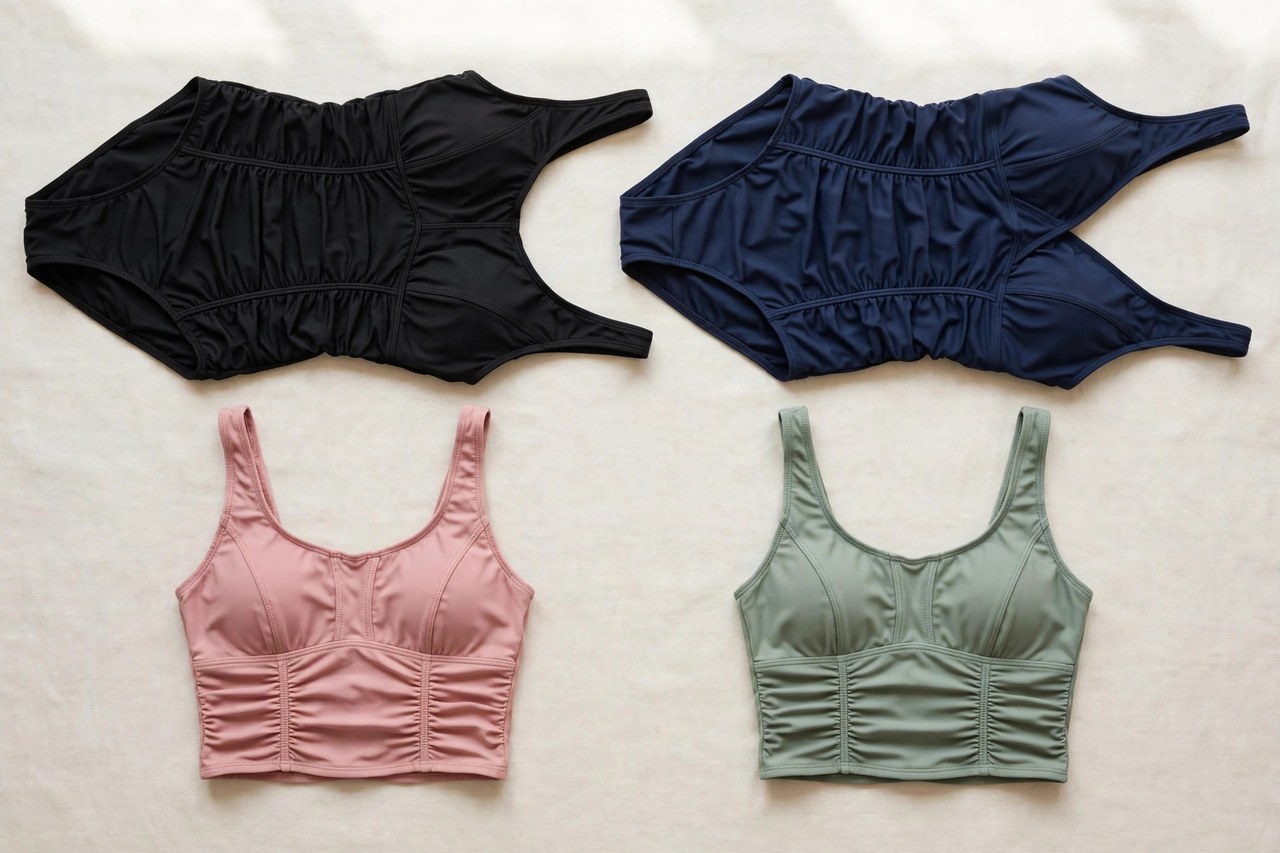
Slimming swimwear is a construction category, not a promise. These are swimsuits built with shaping elements — firmer linings, control panels and higher-stretch-recovery fabrics — intended to give a smoother line and more support than a basic unlined suit. The garments include one-pieces with built-in control, tankini tops with shaped linings, and swim dresses and separates that use panel placement and fabric weight to do the structuring.
This guide stays with the product itself: what the control layers are made of, where panels are placed, how ruching and seaming change the surface of a suit, and how to size and care for high-elastane swimwear. Read that way, slimming on a label becomes a set of checkable construction facts rather than a marketing word, and you can compare two suits by their specifications instead of their slogans.
Control Linings and Panel Construction
The core of most slimming suits is a control lining, often a powermesh or firm tricot layer sewn inside the front of a one-piece or the body of a tankini top. It spans the midsection panel and works by distributing gentle, even compression, the same principle as a lined, structured garment in any other category. Some suits extend the lining through the back as well; front-only lining is the more common and less expensive construction.
Outer construction supports the lining. Princess seams and side panels in a slightly firmer fabric give the suit a shaped framework, diagonal seaming directs the eye and the stretch, and ruching — fabric gathered into fine folds, usually across the midsection — breaks up the surface so the suit reads as texture rather than tension. Wide, adjustable straps and molded or underwire cups, where fitted, complete the structure by carrying support at the top of the garment instead of leaving it all to the body fabric.
Fabrics: Elastane Content and Recovery
Shaping swimwear depends on elastane content and recovery. Standard swim knits blend nylon or polyester with elastane; control styles use a higher elastane percentage in the lining, and sometimes in the outer fabric, so the suit stretches to put on and then holds its shape through a swim. Recovery is the key word: a fabric that stretches but does not snap back will bag at the seat and waist by midday, whatever the label claims.
Chlorine resistance matters more here than in a basic suit, because elastane is exactly what chlorine and heat degrade first. Chlorine-resistant elastane blends and polyester-based knits keep their recovery longer in pool use, while nylon blends feel softer for occasional wear. Check the fiber content on the product details before buying: the lining percentage and the outer percentage are usually listed separately, and the lining figure is the one that describes the control level.
Styles: One-Pieces, Tankinis and Separates
The one-piece control suit is the most complete form, with the lining working as one continuous panel. Tankini versions put the shaped lining in a longer top worn with a separate bottom, which makes sizing the top and bottom independently easier and is the practical choice when your top and bottom sizes differ. High-waisted swim bottoms with their own control front panel pair with either, and swim dresses add a skirted outer layer over a fully lined suit body underneath.
Size a shaping suit by the size chart and the torso measurement, not by your dress size alone, and expect the first try-on to feel firmer than a basic suit — that firmness is the construction working. It should feel even and smooth, never pinching at the leg openings or shoulder straps; pinching means the compression is being carried by the edges rather than the panels, and the next size up will usually shape better than the smaller one did.
Care for High-Elastane Swimwear
Rinse a control suit in cool, clean water after every wear, because chlorine, salt and sunscreen all attack elastane. Wash gently by hand with mild detergent, never wring the lined panels, and dry flat in shade; hanging a wet lined suit by its straps stretches the very structure you paid for. Hot tubs and heated pools shorten the life of any high-elastane garment, so many regular pool swimmers keep an older suit for hot water.
Rotate two suits if you swim often, giving each at least a day to recover its shape between wears — elastane literally rebounds during rest. Store suits flat and unclipped, away from rough surfaces that snag fine powermesh. When a suit stays stretched after resting, sags at the seat, or the lining crackles, the elastane has given out and the shaping with it; that, not the calendar, is the replacement signal.
Related Women's Guides
More to Explore on Apparel Search
- Fashion
- Clothing Retail Stores
- Fashion News
- Fashion Designers
- Popular Brands
- Apparel
- Women's Clothing Stores
- Women's Clothing Wholesalers
- Women's Fashion
- Women's Swimwear Stores
- Women's Wholesale Swimwear
- Women's Swimwear Guide
- Swimwear News
- Fashion Videos
- Fashion Calendar
- Celebrity Fashion
- Fashion Designer Directory
Women’s Clothes Guide by Letter: Women's Apparel Directory N · Women's Clothes Directory O · Women's Clothing Directory P · Women's Apparel Directory Q · Women's Fashion Directory R · Women's Clothes Directory T
Looking for Women's Clothing Stores?
This guide helps you choose women's slimming swimwear. To browse where to buy, visit our women's clothing store directory, where you can find retailers that carry them.