Blanket Sleeper
Clothing Definitions — definitions of garments and clothing terms from Apparel Search
Search Apparel Search
At a Glance
Definition: A blanket sleeper is a one-piece pajama with long sleeves and long legs, closed by a front zipper and usually made with attached feet, designed to keep the wearer warm through the night without separate blankets or socks.
Also known as: footed pajamas, footie pajamas; an older name is Doctor Dentons, after a famous manufacturer
Category: Clothing Definitions
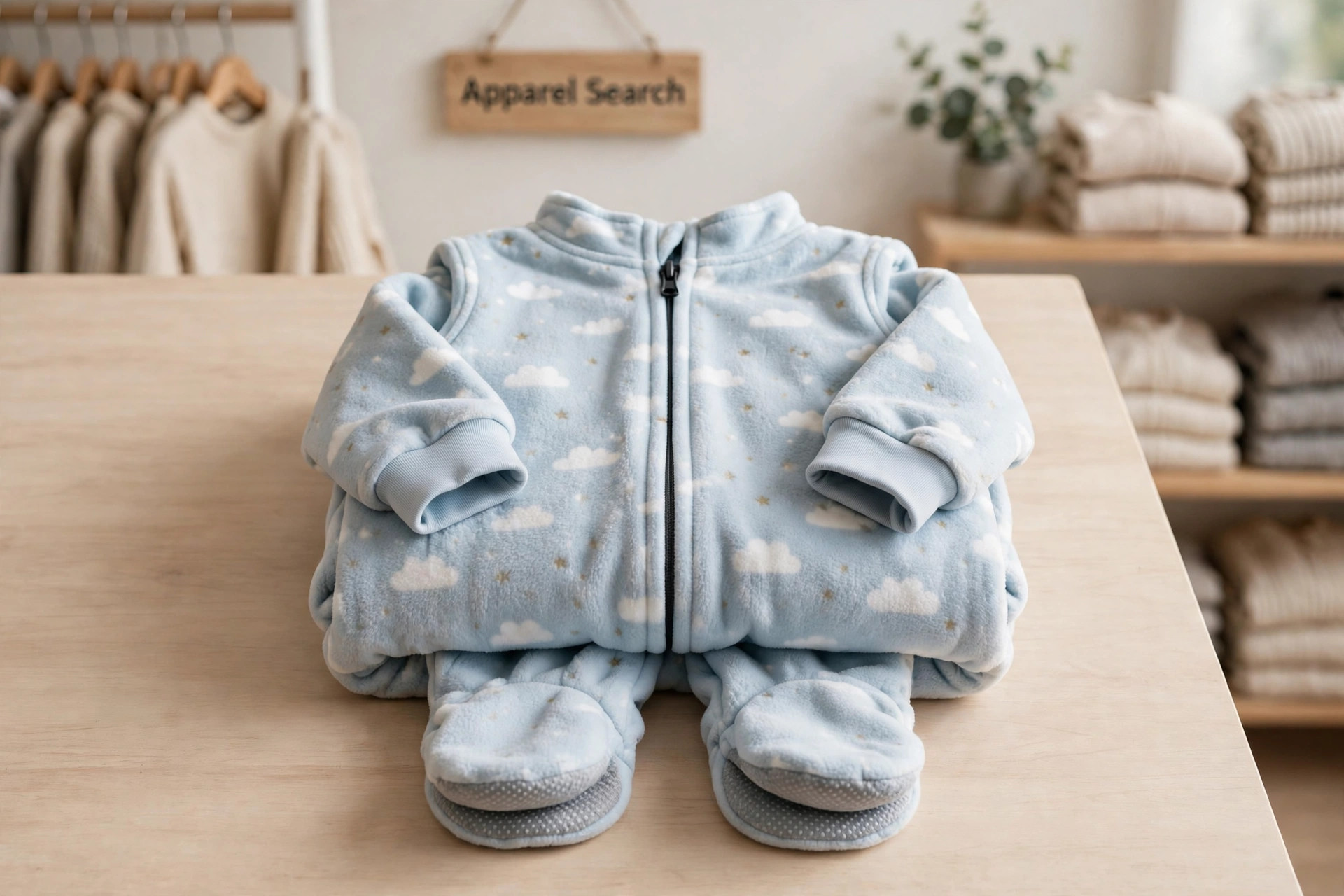
The blanket sleeper is the warmest answer to a cold bedroom: a pajama made as a single garment, so there are no gaps at the waist, no socks to kick off, and no blanket to slide away in the night. Styled like a loose coverall, with long arms, long legs and usually attached feet, it is a cold-climate staple across North America — made for infants, children and adults alike, with the details changing at each age.
Construction: One Piece, Zipped at the Front
A blanket sleeper has long sleeves and long legs in a single piece, and is typically closed with a zipper down the front — running either to the crotch or continuing down one leg to the ankle, which lets the garment open wide for dressing. Many styles finish in attached feet, so the wearer's own feet stay covered without separate socks. The resemblance to a loose coverall is real, but the purpose is different: this is sleepwear, cut generously for comfort rather than fitted for work.
Fabric does most of the work. Sleepers are made from a range of materials, but synthetic fleece is the most common, because it is warm for its weight, soft, hard-wearing and easy to wash — the qualities that matter in a garment worn nightly through a cold season. Cotton fabrics, especially terrycloth, appear often in infant sizes, and flannel joins terrycloth and fleece in adult styles.
Infant Styles: Snaps Where They Matter
Infant blanket sleepers are often made from cotton fabrics such as terrycloth, though synthetic fleece is also used, and they are frequently decorated with cartoon or nursery-rhyme characters and occasional embroidery. The front closes to the crotch with snaps or a zipper, but the telling detail is lower down: the inside seams of the legs are often closed with snaps instead of being sewn shut, so the legs can be opened for a diaper change without undressing the baby completely.
The feet on infant sizes are made of the same fabric as the rest of the sleeper — soft all over, since an infant is not walking on them. At this age the sleeper does double duty, serving as all-purpose daytime clothing as well as nightwear, which is why infant styles are sold in such a wide range of prints and colours. Parents choosing one should follow the sizing and sleep-safety guidance on the garment's own label, including the snug fit recommended for children's sleepwear.
Children's Styles: Built to Be Walked In
Children's blanket sleepers are most frequently made from synthetic fleece, and they are engineered for a child who gets out of bed. The soles of the attached feet are typically covered in plastic or a similar grippy, hard-wearing material, giving protection and longer wear, and many styles add toe caps — extensions of the sole material that wrap over the toes. Zippers run to the crotch or the ankle as on other sizes, and a small fabric tab usually covers the top of the zipper so the slider cannot scratch the chin or neck. Cartoon characters remain the standard decoration.
Older readers may remember the drop seat: until the 1960s, children's sleepers frequently had a flap at the back, closed with buttons or snaps, that could be released for the toilet without taking the sleeper off. Modern designs usually do without it, though custom-made sleepers often bring it back. At this age the blanket sleeper is also commonly used as a playsuit — warm, washable one-piece clothing for indoor play — as well as for sleeping. Our children's pajamas guide covers the wider range of children's nightwear styles.
Adult Styles, Sizing and Care
Adult blanket sleepers use the same recipe — terrycloth, flannel and synthetic fleece predominate — with feet attached on some styles and omitted on others. Where feet are present they are usually made of the body fabric, though plastic soles are sometimes added. The front opening runs to the crotch and closes with a zipper, snaps or buttons; some styles revive the drop seat, and some add a hood. Pastel colours, floral prints and seasonal patterns such as snowflakes are the commonest choices. The garment's older relative, the one-piece union suit, was worn as underwear; the blanket sleeper is its sleepwear descendant, worn on its own.
Sizing follows height as much as chest or waist, because a one-piece garment must cover torso and legs together: too short in the body, and the shoulders and feet pull against each other. Care is simple — fleece and flannel sleepers machine-wash well — but zippers should be closed before washing to protect both the slider and other garments, and the plastic soles of children's sizes checked for wear, since a worn sole loses the grip that is its whole purpose.
Common Questions
What is a blanket sleeper?
A blanket sleeper is a one-piece pajama designed for warmth and ease of putting on, resembling a loose coverall with long arms and long legs. It is typically closed with a front zipper extending to the crotch or down one leg to the ankle, and many styles feature attached feet.
What are blanket sleepers made of?
They can be made from a variety of fabrics but are most often made from synthetic fleece. Infants' styles are often made from cotton fabrics such as terrycloth, and adults' styles commonly use terrycloth, flannel and synthetic fleece.
How do children's blanket sleepers differ from infants' styles?
Infants' styles often have inside leg seams closed with snaps rather than sewn shut, to make diaper changes easier, and feet made of the same fabric as the body. Children's styles usually use synthetic fleece with plastic-covered soles and toe caps for protection and longer wear, and a fabric tab over the top of the zipper to prevent scratches.