Shorts
Clothing Definitions — definitions of garments and clothing terms from Apparel Search
Search Apparel Search
At a Glance
Definition: Shorts are a garment worn over the pelvic area and the upper part of the legs but not their full length — trousers cut short, defined purely by the length of leg they cover.
Also known as: Short trousers (British, for the tailored knee-length form)
Category: Clothing Definitions
Word Origin
A transparent name: shorts are short trousers. The word records the garment's construction — a pair of trousers or pants cut down to a fraction of the leg — which is also how the earliest shorts were literally made.
Shorts are exactly what their name says: a shortened version of trousers, as they are called in British English, or pants, in American English. The garment covers the pelvic area and part of the legs, but never the leg's whole length, and that single fact is the whole definition — the category is defined purely by length, so it takes in garments of very different purposes, from sportswear cut to the upper thigh to tailored walking shorts that end at the knee. In British usage the tailored form is still often called short trousers. This page covers the main types and how to choose between them.
Length Is the Definition
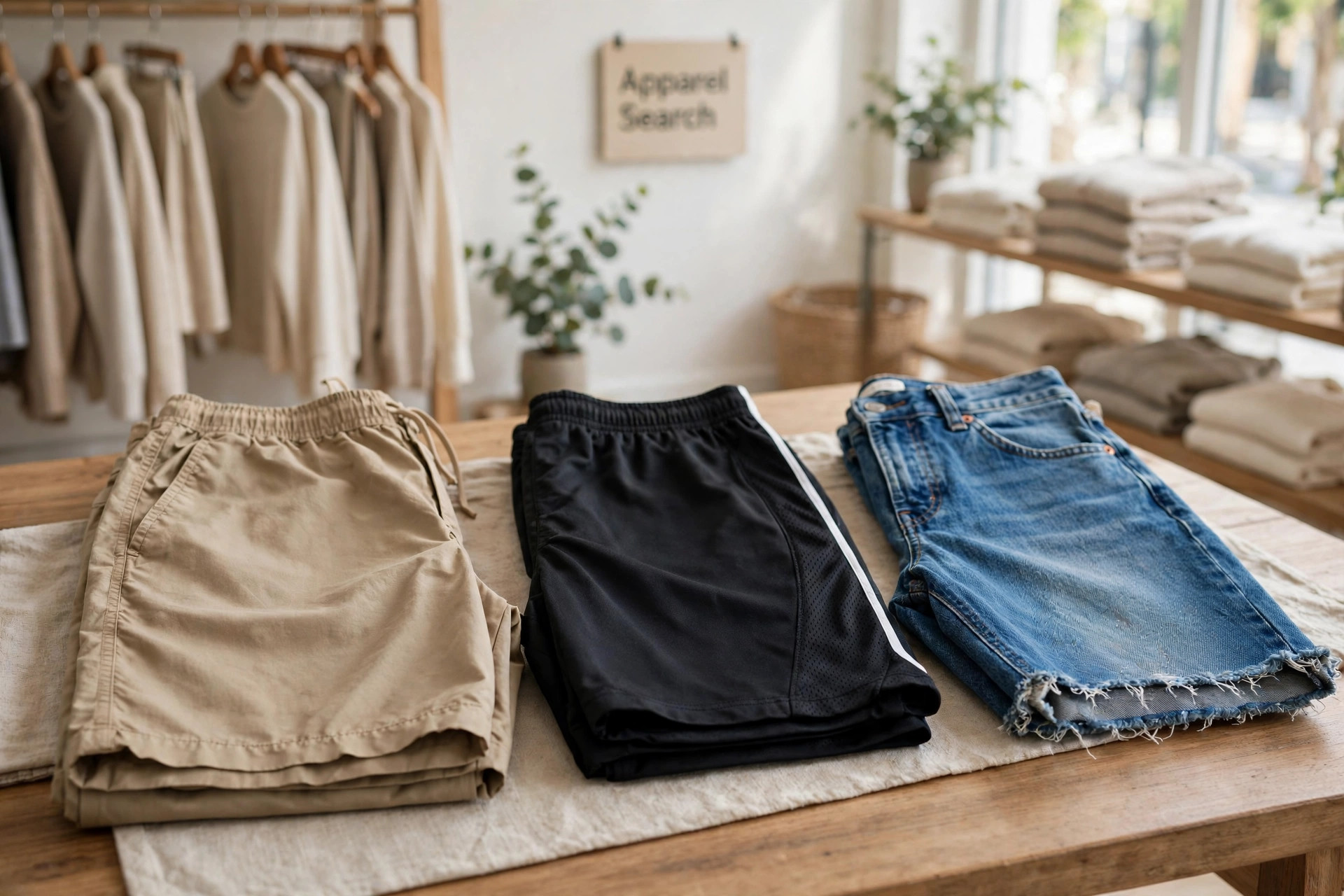
Because shorts are defined by what they do not cover, the useful distinctions are length and purpose. At the shortest end, track shorts reach only the upper thigh and give maximum freedom of movement in sport, and hotpants — very short, close-fitting shorts — sit at the same end of the scale as a fashion garment. Mid-thigh is the general casual length for warm weather. Walking shorts end at or just above the knee, are built like trousers with pockets and waist loops for a belt, and are the dressiest form, accepted in settings where shorter shorts are not; the knee-length tailored style is the one sold as Bermuda shorts. Cargo shorts add large bellows pockets to the same basic cut.
The trouser vocabulary applies throughout: rise, waistband, fly and pocket styles are all shared with full-length trousers, which is why shorts are best understood as trousers built to a shorter leg. Two hybrid forms borrow from the skirt instead. A skort is shorts with a panel of fabric across the front, so that from the front it resembles a skirt — the name contracts skirt and short — giving the look of a skirt with the security of shorts beneath. Culottes go further: a wide, divided garment that hangs like a skirt while being constructed as shorts or short trousers.
Sport and swim shorts show how far the length definition stretches. Running and track styles are cut for stride, often with split sides and a brief liner, in cloth chosen to dry and move rather than to hold a crease. Swim shorts are built on the same pattern as casual shorts but in quick-drying synthetic cloth with drainage in the pockets. Neither resembles tailored walking shorts in purpose, yet all three are the same garment by the only test the name applies: trousers that stop well short of the ankle.
Cut-Offs and the Named Types
Cut-offs are the homemade member of the family: shorts made by cutting the legs off trousers, typically jeans, above the knee, with the cut left unfinished to fray. They began as salvage — trousers whose knees had worn through were cut down and given a second life — and became a recognised style in their own right, now sold ready-made as well as made at home. At the other end of the making scale, Daisy Dukes are the very short denim style named for a television character, an example of a shorts style defined by a name and a length rather than by any construction of its own.
Each market shapes the garment differently, and Apparel Search's guides treat them separately: women's shorts, men's shorts and children's shorts. Women's ranges run from tailored city shorts through cotton drawstring and gym styles to the shortest fashion cuts. Men's divide between athletic shorts, cargo and walking shorts with substantial pockets, and swim shorts. Children's favour elastic waists, hard-wearing fabrics and lengths that allow play.
Choosing and Caring for Shorts
Choosing shorts is mostly a matter of matching length and fabric to the activity. A finished hem and a length near the knee read as deliberate dress; a frayed cut-off reads as leisure. Pockets and belt loops make walking shorts practical for travel. For sport, freedom of movement and quick-drying cloth matter more than appearance. Fabric follows use in every market: denim for cut-off and casual styles, cotton twill for walking shorts, light synthetics that dry fast for sport and swim styles, and linen blends for hot-weather dress shorts.
Care follows the trousers they are cut from. Cotton and denim shorts wash in the machine and need no special handling, while tailored styles keep their shape best when hung rather than folded. The clothing shorts belong to is warm-weather clothing, but the garment itself is a construction, not a season — which is why the same pattern room that cuts a house's trousers cuts its shorts.
Not to Be Confused With
Three divided garments, separated by how much leg and skirt they show. Shorts are plainly shorts: two short legs, read at a glance as cut-down trousers. A skort hides its shorts behind a skirt panel at the front, so it reads as a skirt while wearing as shorts. Culottes are cut so wide that the division is nearly invisible — they hang and move like a skirt, at lengths from the knee down, and are constructed as trousers throughout.
Common Questions
What are the main types of shorts?
Track shorts reach only the upper thigh and give maximum freedom of movement in sport. Walking shorts reach to the knees, usually have pockets and belt loops, and are made for casual wear. Cut-offs are homemade shorts made by cutting the legs off trousers, typically jeans, above the knee and leaving the cut to fray. Hotpants are very short, close-fitting shorts, and skorts combine shorts with a fabric panel in front so they resemble a skirt from the front.
Where did cut-offs come from?
Cut-offs began as a practical salvage: trousers whose knees had worn through were cut down above the knee and given a second life as shorts, with the unfinished cut left to fray. The look became a recognised style of shorts in its own right, sold ready-made as well as made at home.
What is a skort?
A skort is shorts with a piece of fabric across the front so that from the front it resembles a skirt. The name is a contraction of skirt and short. Skorts give the appearance of a skirt with the freedom of movement and security of shorts underneath.