Ski Suit
Clothing Definitions — definitions of garments and clothing terms from Apparel Search
Search Apparel Search
At a Glance
Definition: A ski suit is a suit made to be worn over the rest of the clothes when skiing, made from wind- and water-resistant or waterproof fabric and built to keep the body warm — either one-piece, in the form of a jumpsuit, or two-piece, as a ski jacket and matching trousers; racing suits are thin and close-fitting to cut air resistance.
Category: Clothing Definitions
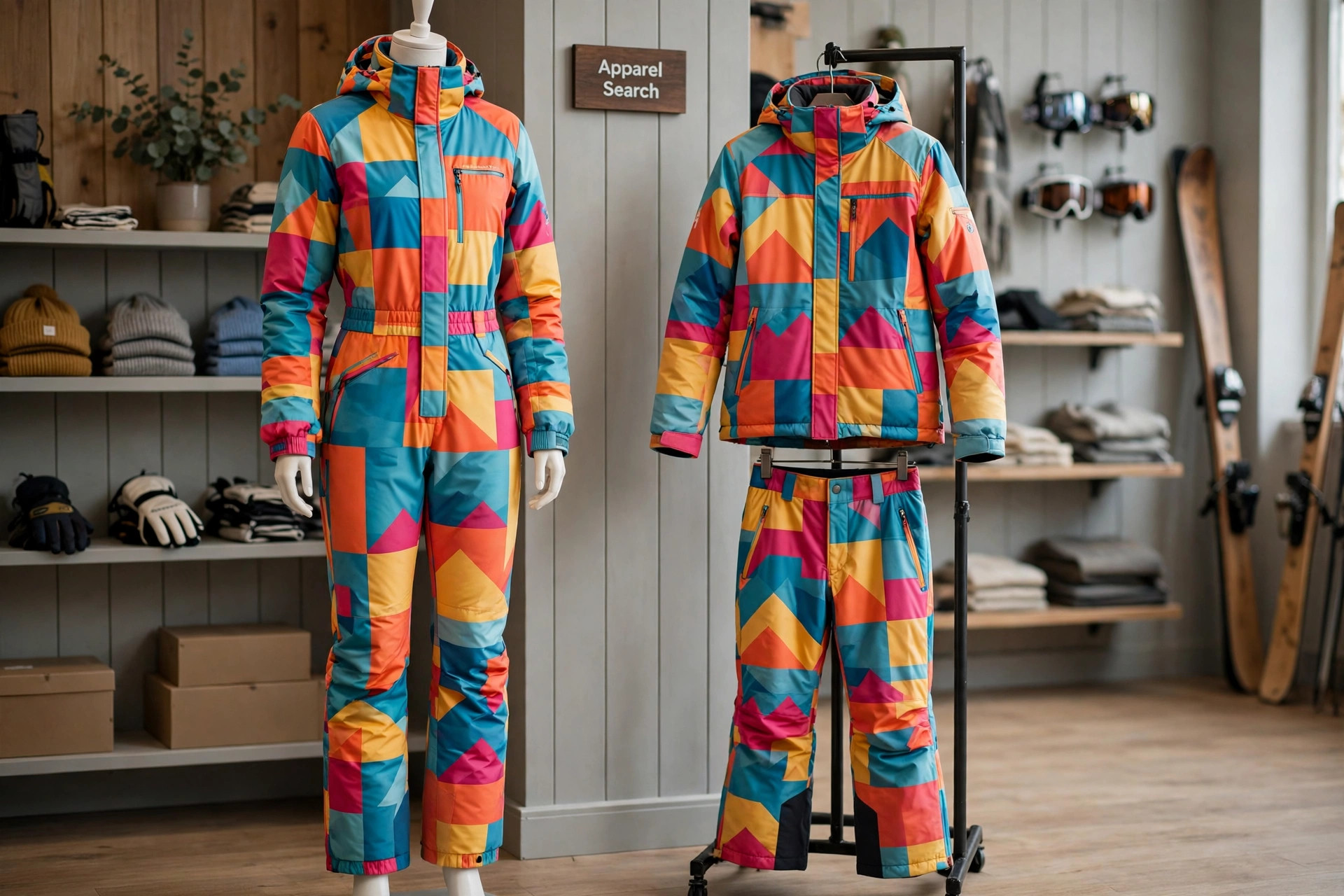
A ski suit is a suit made to be worn over the rest of the clothes when skiing. It is made from wind- and water-resistant or waterproof fabric, and it is usually made to keep the body warm, although the wearer often adds warm underwear beneath it as well. A ski suit can be one-piece, in the form of a jumpsuit, or two-piece, in the form of a ski jacket and matching trousers. Suits made for speed skiing and alpine racing are a special case: they may be very thin and close-fitting, adding as little air resistance as possible to the body. Of all the special suits, it is the one most readers have actually worn.
Warmth, Weather and Fit
Skiing combines cold air, wind, falling snow and hard physical effort, often within the same hour, and the ski suit is designed around that contradiction. The shell fabric must shed wind and water, because a wet outer layer loses heat rapidly and chills the wearer on a slow chairlift. Underneath, insulation traps body heat, and base layers move sweat away from the skin so the insulation stays dry. Vents, adjustable cuffs and a closable collar let the skier dump heat on a climb and seal it in again for the descent.
Fit follows the discipline. A recreational suit is cut with room for layers and for the deep knee bend of turning, with reinforced panels where boots, bindings and falls wear the fabric hardest. It is worn as the outer layer of a system — the suit over the rest of the clothes, warm underwear beneath — and the layering is what lets the skier adjust warmth as weather and effort change through the day. The accessories complete the system: gloves and headwear are part of the same cold-weather equipment, not afterthoughts.
Snow itself is the third adversary, after cold and wind. A fall packs snow into every opening it can find, and melted snow is water, which destroys insulation. That is why the ski suit's closures matter as much as its fabric: cuffs that seal over gloves, a collar that closes to the chin, and — in the one-piece form — no waist opening at all. The waterproof shell, the sealed openings and the dry insulation underneath are one defence in three parts, and a failure in any one of them is felt in all three.
One Piece or Two
The one-piece suit, essentially an insulated jumpsuit, became the classic image of skiing in the second half of the twentieth century. With no gap at the waist, it keeps snow out in a fall and keeps warmth in, but it is awkward off the slope and harder to fit — the jumpsuit's whole-body fitting problem, in padded form.
The two-piece suit of jacket and trousers won most skiers over for practical reasons: the jacket can be worn alone in town, the layers can be mixed as conditions change, and each half can be replaced or sized separately. Both forms remain in use, and the choice is one of convenience and personal preference rather than performance for most recreational skiing.
The fitting argument runs the same way as the jumpsuit's. A one-piece suit must fit a whole body at once — torso length, leg length and shoulder in a single garment — while a two-piece lets each half be sized on its own. Against that, the one-piece offers the unbroken seal. Recreational skiers, who spend as much of the day in lifts, lodges and cars as on the snow, have mostly voted for convenience; the one-piece survives where the seal matters most and as the classic silhouette of the sport.
The Racing Exception
Suits made for speed skiing and alpine racing reverse every recreational priority. They may be very thin and skintight, a smooth, close-fitting shell whose only job is to add as little air resistance as possible to the body, worn over minimal layers for a run that lasts seconds or minutes rather than a full day on the mountain. Warmth, pockets, vents and durability — the whole recreational specification — are traded away for smoothness.
The racing suit is a useful reminder of what the ski suit's ordinary form is for. Strip the weather out of the problem and the suit shrinks to a skin; put the weather back and it grows insulation, seals and layers. The recreational ski suit is an environmental suit for the most familiar hostile environment of all: a winter mountain.
Between the two extremes sits the ordinary skier's compromise, and it is a genuinely difficult one: warm enough for a stationary lift ride in wind, breathable enough for the effort of the descent, waterproof against falling snow and the occasional fall into it, and free enough in the knees and shoulders to ski in. That the same garment category also contains a suit that does nothing but cut the air is the measure of how completely the ski suit is specified by its use.
Common Questions
What is a ski suit made of?
A ski suit is made from wind- and water-resistant or waterproof fabric, built to keep the body warm over the clothes worn underneath. Racing versions for speed skiing and alpine skiing are deliberately thin and close-fitting so they add as little air resistance as possible.
What are the two forms of ski suit?
A ski suit is either one-piece, in the form of a jumpsuit, or two-piece, in the form of a ski jacket and matching trousers. The two-piece form is easier to adjust and to remove between runs; the one-piece form seals out snow at the waist.
Do skiers wear anything under a ski suit?
Yes. A ski suit is outerwear worn over the rest of the clothes, and the wearer often adds warm underwear beneath it. Layering lets the skier adjust warmth as weather and effort change through the day.