Should a T-Shirt Ever Cost More Than One Hundred Dollars?
A fashion poll on premium pricing for the simplest garment in the wardrobe
The T-shirt is the simplest garment most people own, which is exactly why its price ceiling makes a good poll question: should a T-shirt ever cost more than one hundred dollars? A basic tee is a commodity — cotton jersey, a standard cut, made by the million — and priced accordingly. A designer T-shirt may use long-staple or organic cotton, heavier jersey, a cut developed and fitted like tailoring, small-batch printing or embroidery, and production in higher-wage factories; it also carries a brand premium that has nothing to do with cloth. Whether the result is a better T-shirt or merely a more expensive one is the judgment the poll invites, and answers tend to divide sharply along how shoppers value materials and making against brand and image.
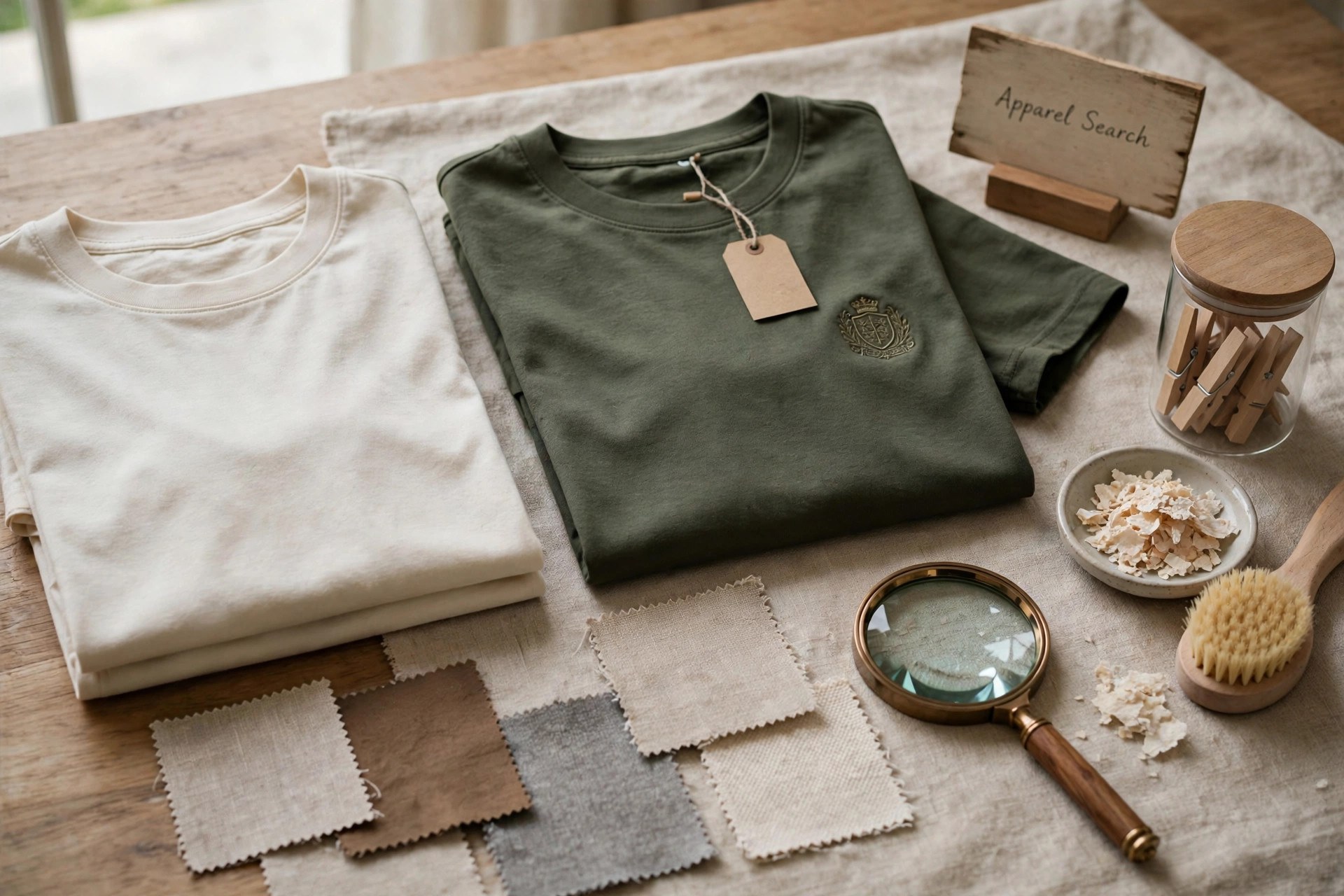
Should a T-shirt Ever Cost More Then One Hundred Dollars?
Fashion Polls : Research clothing and
style by using a fashion poll.
Fashion Polls Women's Designer T-shirts Men's Designer T-shirts Fashion Industry Polls Fashion Industry Research Fashion Education Fashion Schools Shop for Clothing
Thank you for visiting the, "Should a t-shirt ever cost more then one hundred dollars?" poll. If you enjoy this fashion poll you may want to try another fashion poll such as the "Do your prefer shopping in stores or online poll?".
You can discuss this issue and any other issue relevant to fashion at the Fashion Industry Network Discussion area.
Have you heard of the new website polling technology?
A fashion poll is essentially a survey of the public or a sampling of public opinion to acquire information about a particular issue relevant to fashion or the fashion industry. Polls can be taken either online or offline.
Fashion Industry Fashion Job Search Fashion Models Fashion Industry Network Fashion Schools Fashion News Fashion Jobs
What Extra Money Can Buy in a T-Shirt
Some of a premium tee's price is in the garment. Better cotton — longer fibers, combed and tightly spun — makes jersey that feels smoother, drapes better and resists the twisting and pilling that cheap tees develop after a few washes. Heavier fabric holds a cleaner silhouette; careful cutting and stitching keep seams straight and collars from sagging; and a developed fit, graded across sizes rather than scaled mechanically, is real design work. Small production runs and higher-wage factories add cost without adding any visible feature at all. A shopper who has worn a cheap tee until it warped can name what the money bought: the shirt that still looks right after fifty washes.
What Extra Money Cannot Buy
The counter-argument is that a T-shirt has a ceiling set by its nature. It is a casual garment with no structure to engineer, no lining, no hardware and a short fashion life — a printed slogan dates, a color fades, a fit goes out of style. Past a certain point, comparisons show the price tracking the logo rather than the cloth, and blind tests regularly embarrass premium basics. There is also a values position in the poll: that a three-figure T-shirt is a deliberate display of spending rather than a purchase of quality, and that the same money buys more clothing value almost anywhere else in the wardrobe. The poll's split usually runs between shoppers who judge the garment and shoppers who judge the signal.
Common Questions
What makes one T-shirt worth more than another?
Fiber quality and jersey weight, cutting and stitching that keep the shirt's shape, a developed fit, small-batch decoration, and where and how the shirt was produced.
Why do designer T-shirts cost over $100?
Partly materials and making, and partly brand premium — the label, the fashion positioning and limited distribution add price beyond the cost of the cloth and construction.
Does a higher price guarantee a longer-lasting T-shirt?
No. Better fibers and construction usually last longer, but past a point price tracks brand rather than durability — fabric feel, seam quality and collar construction are better tests than the tag.
More to Explore
- Fashion Polls
- Women's Designer T-shirts
- Men's Designer T-shirts
- Fashion Industry Polls
- Fashion Industry Research
- Fashion Education
- Fashion Schools
- Shop for Clothing
- Do your prefer shopping in stores or online poll?
- new website polling technology
- Fashion Industry
- Fashion Job Search
- Fashion Models
- Fashion News
- Fashion Jobs