Accessories Buyer Job Description
Buying handbags, belts, scarves, hats and jewellery that complete the outfit and lift the sale
An accessories buyer chooses the handbags, belts, scarves, hats, gloves, sunglasses and fashion jewellery that a store sells alongside its clothing. Accessories rarely stand alone: they are bought to work with the season's apparel ranges, to give customers an affordable way into a look, and to lift the value of each transaction when they are added to a garment purchase. That supporting role makes accessories buying one of the most commercially sensitive jobs in retail, because a well-judged scarf or bag can carry a department's margin while a misjudged one ties up open-to-buy in stock that only moves at markdown. This page explains what an accessories buyer actually does, the skills the role demands, how people qualify for it, and where the career leads.
More Buying Job Descriptions by Letter:
What an Accessories Buyer Does
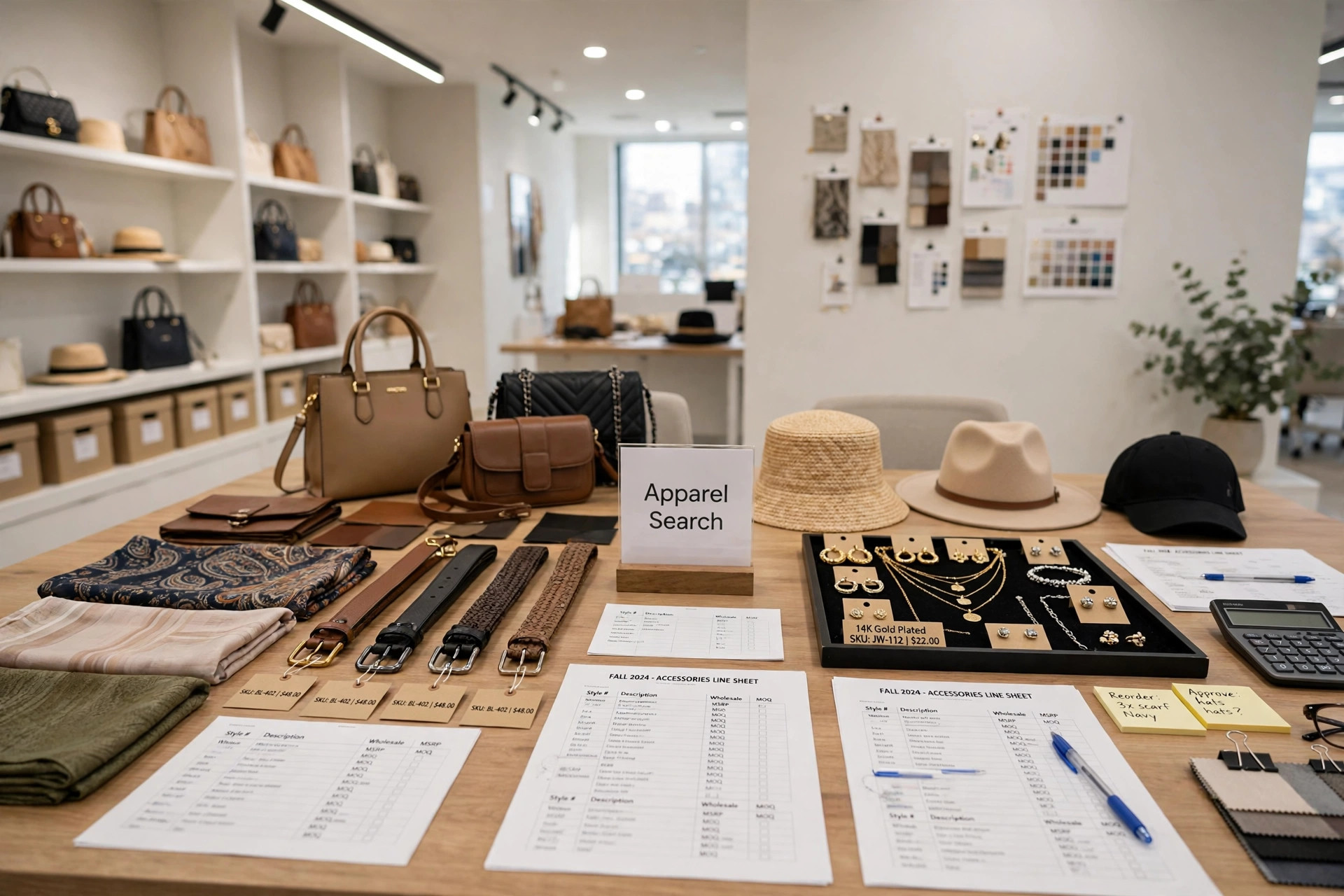
The accessories buyer builds an assortment that complements the clothing ranges it will sit beside. That starts with studying how the apparel buyers are shaping the season — the key colours, fabrics and silhouettes — and then selecting accessories that extend those stories: belts that work with the season's trouser shapes, scarves in the prints and colours the knitwear team is backing, bags at price points that match the outerwear they will be sold with. The buyer attends vendor appointments and trade shows, compares samples for quality and finish, and decides which items earn a place in the range and in what depth.
Once the range is chosen, the buyer negotiates cost prices, delivery dates and minimum quantities, places orders against an open-to-buy budget, and follows deliveries so stock lands when the matching apparel arrives — an accessory that arrives a month after its partner garment has missed its moment. In season, the buyer tracks sales by item and by store, watches the attachment rate (how often an accessory sells with a garment), repeats proven sellers while suppliers can still deliver, and marks down slow lines early enough to protect the department's margin.
Why Accessories Are a Distinct Buying Discipline
Accessories behave differently from clothing. Most are one-size or lightly sized, so the buyer is spared the size-ratio decisions that dominate apparel buying, but the category makes up for it in breadth: a single department can span leather goods, soft accessories, hats, gloves, eyewear and jewellery, each with different suppliers, lead times and quality standards. Fashion jewellery turns quickly and is highly trend-driven; a good leather bag is a longer commitment at a far higher unit cost. The buyer must hold both tempos at once, refreshing fast lines frequently while committing carefully on the expensive ones.
Price architecture matters enormously in this category. Accessories are often bought as gifts and as self-treats, so the range needs credible entry price points as well as statement pieces, and the buyer plans that ladder deliberately. Quality judgement is equally specific: stitching and edge finishing on leather, clasp and hinge strength on jewellery, colourfastness on scarves, and the hand-feel of gloves are all assessed on samples before orders are placed, because accessory returns are frequently quality complaints rather than fit problems.
Skills and Abilities the Role Requires
An accessories buyer needs a sharp eye for detail and for how an outfit is completed. The best accessories buyers think like stylists and merchants at once: they can see that a belt width is wrong for the season's trousers, and they can also calculate what that belt must cost to hold its margin at the intended selling price. Numeracy is essential — open-to-buy control, margin calculation, sell-through analysis and markdown planning are weekly work — and so is negotiation, since accessories are sourced from many small and mid-sized vendors whose terms vary widely.
Organisation carries the rest of the job. The category has many items, many suppliers and frequent small deliveries, so accurate order records and delivery chasing are constant. Communication skills matter with store teams, who report what customers ask for at the accessory fixtures, and with visual merchandising colleagues, because accessories sell disproportionately well when they are displayed with the garments they were bought to accompany.
Qualifications, Training and Career Path
There is no single required qualification for accessories buying. Degrees and diplomas in fashion buying, fashion business or merchandising provide a recognised grounding, and many accessories buyers arrive from assistant buyer roles in apparel departments, where they learned range planning and order management before specialising. Retail experience on an accessories department is genuinely valuable: selling bags, scarves and jewellery teaches what customers pick up, what they put back, and why — knowledge that is hard to learn from sales reports alone.
The usual ladder runs from buyer's assistant or assistant buyer on an accessories or apparel department, to accessories buyer with ownership of the category's budget and range, and on to senior buyer. From there, experienced buyers move into divisional merchandise management, where they oversee several departments, or sideways into related categories such as footwear or beauty accessories. Because accessories touch every apparel range in a store, a strong accessories buyer builds a broad commercial network that makes those later moves natural.
Common Questions
Do accessories buyers buy jewellery as well as bags and scarves?
In most stores, yes. Fashion jewellery usually sits inside the accessories buyer's department alongside handbags, belts, scarves, hats and gloves, although very large retailers sometimes split fine jewellery or watches into a separate buying office.
Why is the attachment rate important to an accessories buyer?
The attachment rate measures how often an accessory is sold together with a garment. Accessories are planned to complete outfits, so a rising attachment rate shows the range is working with the apparel it was bought to support, not just selling on its own.
How do you become an accessories buyer?
Common routes are a fashion buying or business qualification followed by an assistant buyer role, or moving across from apparel buying or accessories retail selling once you have learned range planning, costing and order management on live departments.