Hosiery Buyer Job Description
Buying tights, stockings, socks and leggings — a basics business run on replenishment and size-colour runs
A hosiery buyer selects the tights, stockings, hold-ups, socks, knee-highs and leggings a store sells. Hosiery is a basics business: most of the range is bought not to be new but to be there — the right denier, colour and size, in stock every week of the year, at a price that survives constant comparison. That makes hosiery buying a discipline of replenishment, pack architecture and size-colour runs rather than seasonal spectacle, with a smaller fashion layer — colours, patterns, lace and seasonal textures — laid over the top. This page explains what the hosiery buyer does, why availability is the category's real measure, and how the career develops.
More Buying Job Descriptions by Letter:
What a Hosiery Buyer Does
The hosiery buyer builds a range in layers. At its centre sit the never-out basics: sheer and opaque tights in the core skin tones and black, in the deniers customers wear daily, plus cotton and thermal styles for winter, socks in multipacks, and school and work staples. Around that core the buyer adds seasonal fashion hosiery — colours, patterns, fishnets, lace and embellished styles — in limited depth, and specialist lines such as support and shaping hosiery, maternity tights and sports socks. Each layer is bought differently, and confusing them is expensive.
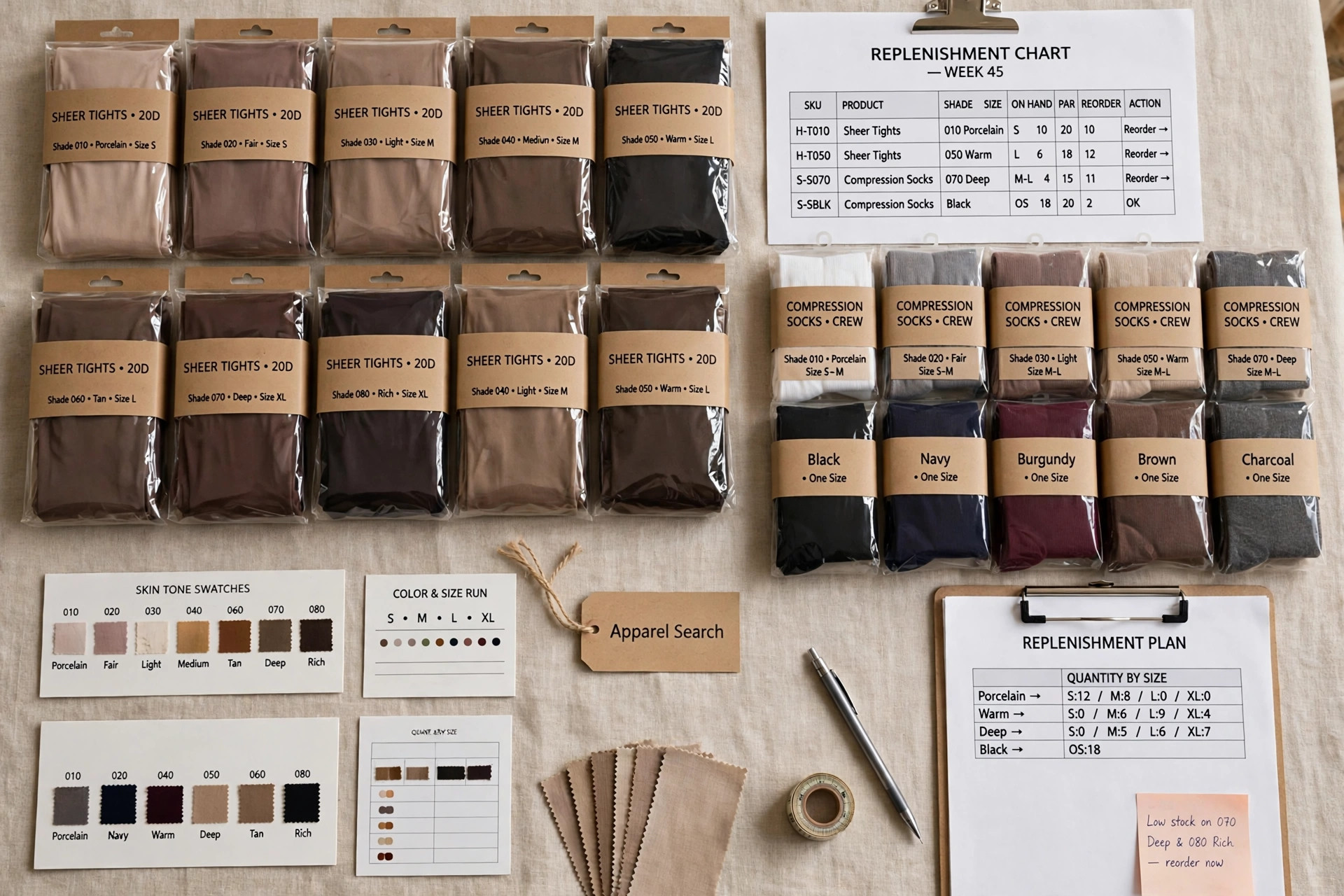
Daily work is dominated by availability. The buyer sets and reviews replenishment levels by size and colour, monitors rate of sale against stock cover, and reorders core lines on short cycles from suppliers who hold yarn-dyed or greige stock for quick response. Pack decisions are the buyer's own: single pairs versus multipacks, the denier and colour mix inside a pack, and the price points each pack must hit. In season the buyer watches weather closely — the first cold week of autumn can double opaque tight sales — and protects the core range first when supply tightens.
Denier, Colour Runs and Size Runs: The Category's Technical Language
Hosiery is specified in ways no other category uses. Denier describes the yarn weight and therefore the sheerness: low deniers for sheer summer tights, high deniers for opaque winter styles, with appearance, durability and price all moving together. The buyer must know which denier bands the customer expects for each use, how yarn quality and knitting gauge affect ladder resistance and comfort, and how finishes — matte, sheen, sandal toe, reinforced toe, cotton gusset — change both wear and cost.
Size and colour runs are where the money is won or lost. Hosiery sizing blends height and hip measurement into a small number of size bands, and demand concentrates heavily in the middle sizes and in black and the leading skin tones, with long tails of slow colours and extreme sizes that must still be offered for the range to be credible. The buyer plans those runs from the department's own data, resists supplier pressure to buy even runs, and reviews the tail ruthlessly: a slow colour in a slow size ties up the replenishment budget the core lines need.
Skills and Abilities the Role Requires
Replenishment numeracy is the core skill. The hosiery buyer works in rates of sale, weeks of cover, pack quantities and reorder points, and must be comfortable making many small, fast decisions accurately rather than a few large seasonal ones. Forecasting is weather- and calendar-sensitive — school terms, office dress codes, party season and temperature all move demand — and the buyer learns to read those signals and to hold safety stock where a stock-out costs a habitual customer's whole basket, not one item.
Commercial judgement shows in pack architecture and supplier choice. Hosiery is sourced from a concentrated pool of specialist mills, often on own-label programmes, where yarn, knitting and packaging specifications are the buyer's to set. Negotiating cost per pair at volume, specifying quality that survives washing and wear, and managing packaging that communicates denier, size and colour clearly at a crowded fixture are all part of the role, as is working with the lingerie and underwear buyers whose customers and suppliers overlap.
Qualifications, Training and Career Path
Hosiery buyers usually develop from assistant buyer roles in hosiery, lingerie or underwear — the intimate and basics categories — where replenishment buying is learned on live ranges. Fashion buying or merchandising qualifications are the common entry route into those assistant posts, and experience in high-volume basics retail is particularly relevant preparation, because the skills are closer to continuity merchandising than to fashion range buying.
Progression runs to buyer or senior buyer across hosiery and legwear, to broader lingerie and underwear buying roles, and on to divisional merchandise management. The replenishment and pack-architecture expertise also transfers into own-label product development for hosiery brands and into other continuity categories — basic underwear, socks and everyday essentials — wherever availability, not novelty, is the commercial promise.
Common Questions
What does denier mean in hosiery buying?
Denier is the weight of the yarn used to knit the hosiery. Low deniers produce sheer tights and stockings; high deniers produce opaque, warmer styles. Denier affects appearance, durability and price, so the buyer specifies it deliberately for each line's intended use.
Why is replenishment so important for a hosiery buyer?
Most hosiery is a basic that customers expect to find in stock every week, in their size and colour. The buyer's core job is keeping those lines available through rate-of-sale monitoring and fast reordering, while fashion hosiery is bought in smaller, seasonal quantities around that core.
How is hosiery sizing different from clothing sizing?
Hosiery sizes combine height and hip measurements into a few bands, and demand concentrates in the middle sizes and core colours. The buyer plans size and colour runs from sales data, buying depth in the centre of the run and a careful tail at the extremes.