CAD Artist Job Description
Creating fashion artwork on computer — prints, repeats, colourways and graphics that factories can reproduce exactly
A CAD artist creates fashion artwork on a computer: the prints, graphics, embroideries and colourways that appear on garments, produced as precise digital files a mill or factory can reproduce exactly. The CAD in the title stands for computer-aided design, and the artist in it matters equally — this is an artworker's job done in software, not a technician's job that happens to involve pictures. Where the fashion artist in this directory draws by hand for presentation, the CAD artist builds the production artwork itself: seamless repeats, engineered placements, screens and separations. This page explains the CAD artist's work, tools and route in.
More Design Job Descriptions by Letter:
What a CAD Artist Does
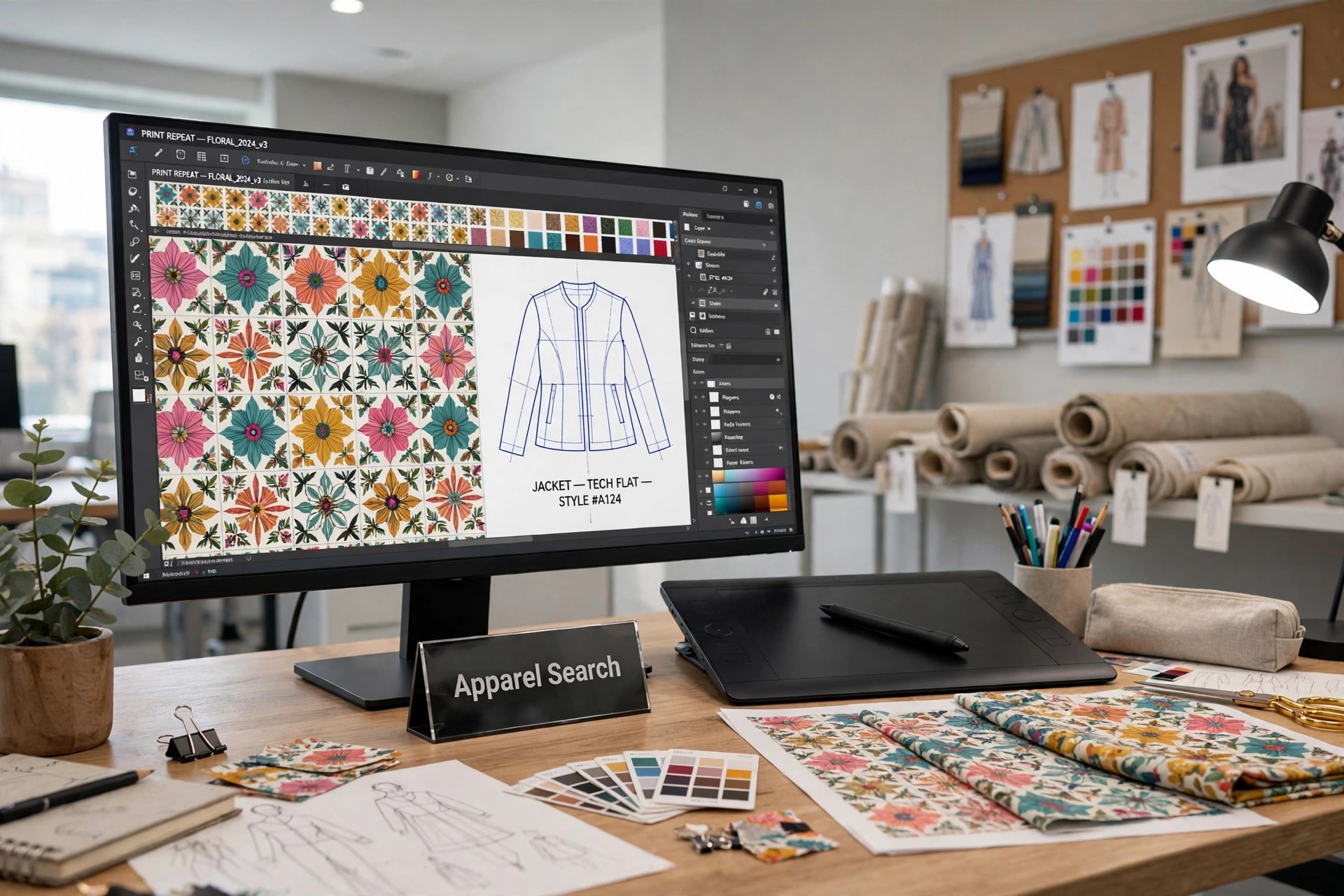
The core work is artwork production. A designer's sketch, a bought vintage print or a hand-painted motif arrives at the CAD desk and leaves as a production file: cleaned, put into seamless repeat at the correct scale and drop, separated into the colours a printer will actually print, and saved in the formats the mill requires. Alongside original prints, the CAD artist creates colourways — the same design recoloured across a season's palette, sometimes dozens of versions for buyers to select from — and prepares placement graphics for T-shirts, logos and embroidery artworks, each sized and positioned to the garment it will decorate.
Speed and accuracy define the days. Colourways for a range review are turned around in hours; a repeat error discovered at the mill costs a print run, so files are checked at full scale, tile by tile, before release. The CAD artist maintains the studio's artwork library — every design filed with its repeats, colourways and usage recorded — and reworks bought or licensed artwork to house standards. Strike-off comments come back to this desk too: when the printed fabric sample differs from the file, the CAD artist adjusts separations and colour values until cloth matches intention.
Repeats, Separations and Print Knowledge
Repeat construction is the discipline's heart. A motif that looks innocent as a single image must tile invisibly across metres of cloth — in straight, half-drop, brick and mirror repeats — without visible seams, awkward gaps or accidental patterns the eye catches across a garment. The CAD artist thinks in the repeat unit while designing, balancing motif scale, density and direction against the garment sizes the print will be cut into, and against the printing method: rotary screen, flat-bed, digital and sublimation printing each impose their own colour counts, repeat sizes and file requirements.
Colour separation and colour management carry equal weight. Screen printing needs one clean separation per colour, with trapping and registration handled in the file; digital printing needs colour-profiled files whose screen appearance predicts the cloth. The CAD artist works with calibrated monitors, colour books and physical strike-offs, understanding that the file is a set of instructions whose real test happens on fabric, in dye and ink, at a mill the artist may never visit. That print literacy — knowing how artwork behaves after it leaves the screen — is what separates a CAD artist from a general graphic operator.
Skills and Abilities the Role Requires
Software fluency is the visible requirement: raster and vector illustration and specialised textile CAD packages, worked at production speed with layers, channels and repeat tools used instinctively. Underneath it sits a genuine artist's equipment — drawing, colour sense, pattern judgement — because cleaning a motif, redrawing a bought print or inventing a filler flower that saves a repeat are drawing tasks, whatever the input device. Studios test for both at interview, usually with a practical repeat or colourway exercise against the clock.
The working skills are precision and throughput. Many designs at different stages, buyers waiting on colourways, mills waiting on files: the CAD artist prioritises, names and versions files immaculately, and communicates file status clearly to designers who think in garments, not channels. An eye for the commercial context helps too — knowing which prints carry the season, which colourways the buyers actually need, and where an extra hour of polish earns its cost and where it does not.
Qualifications, Training and Career Path
CAD artists commonly train in textile design, surface pattern, fashion design or graphic design, with textile and surface-pattern courses teaching print process alongside software. Employers hire on portfolio and practical test: show production-ready repeats, separations and colourways, not only pretty motifs, and expect to demonstrate software speed live. Junior CAD posts and CAD assistant roles in print studios, mills and design houses are the standard entry, with freelance CAD work for print studios a common parallel route once speed is proven.
Progression runs to senior CAD artist, CAD or print studio management, and into print design itself, since the CAD desk sits at the centre of how prints are made; experienced CAD artists also move into textile design roles where they originate the artwork they once only produced. In an industry printing more digitally every year, the combination of artistic hand and file discipline this role teaches is increasingly valuable — and increasingly the place where print quality is won or lost.
Common Questions
What does CAD stand for in a CAD artist's job?
Computer-aided design. A fashion CAD artist uses design software to create production artwork — prints in seamless repeat, colour separations, colourways, placement graphics and embroidery files — that mills and factories reproduce exactly on cloth and garments.
How is a CAD artist different from a CAD designer?
Emphasis. The CAD artist concentrates on artwork: prints, repeats, graphics and colour. The CAD designer concentrates on the garment itself in CAD — technical flats, specifications and design development files. Studios divide the work differently, and many people do both, but the artist's desk is the print and graphics desk.
What software and skills do CAD artists need?
Raster and vector illustration packages and specialised textile CAD tools, worked at production speed, plus real drawing and colour ability, repeat construction, colour separation and print-method knowledge. Hiring usually includes a practical test, because file accuracy and speed are the job.