CAD Designer Job Description
Designing garments on computer — technical flats, digital range boards and specifications the whole team works from
A CAD designer designs and documents garments on a computer. If the CAD artist in this directory builds the prints and graphics, the CAD designer builds the garments' digital selves: the technical flat drawings that show every seam and stitch, the recoloured style files buyers select from, the range boards that present a collection, and in many companies the first bridge into pattern and product-lifecycle systems. Designers sketch; CAD designers make those sketches exact, consistent and usable by everyone downstream — factories, technologists, buyers and merchandisers. This page explains the role's work and how it differs from the neighbouring CAD artist's desk.
More Design Job Descriptions by Letter:
What a CAD Designer Does
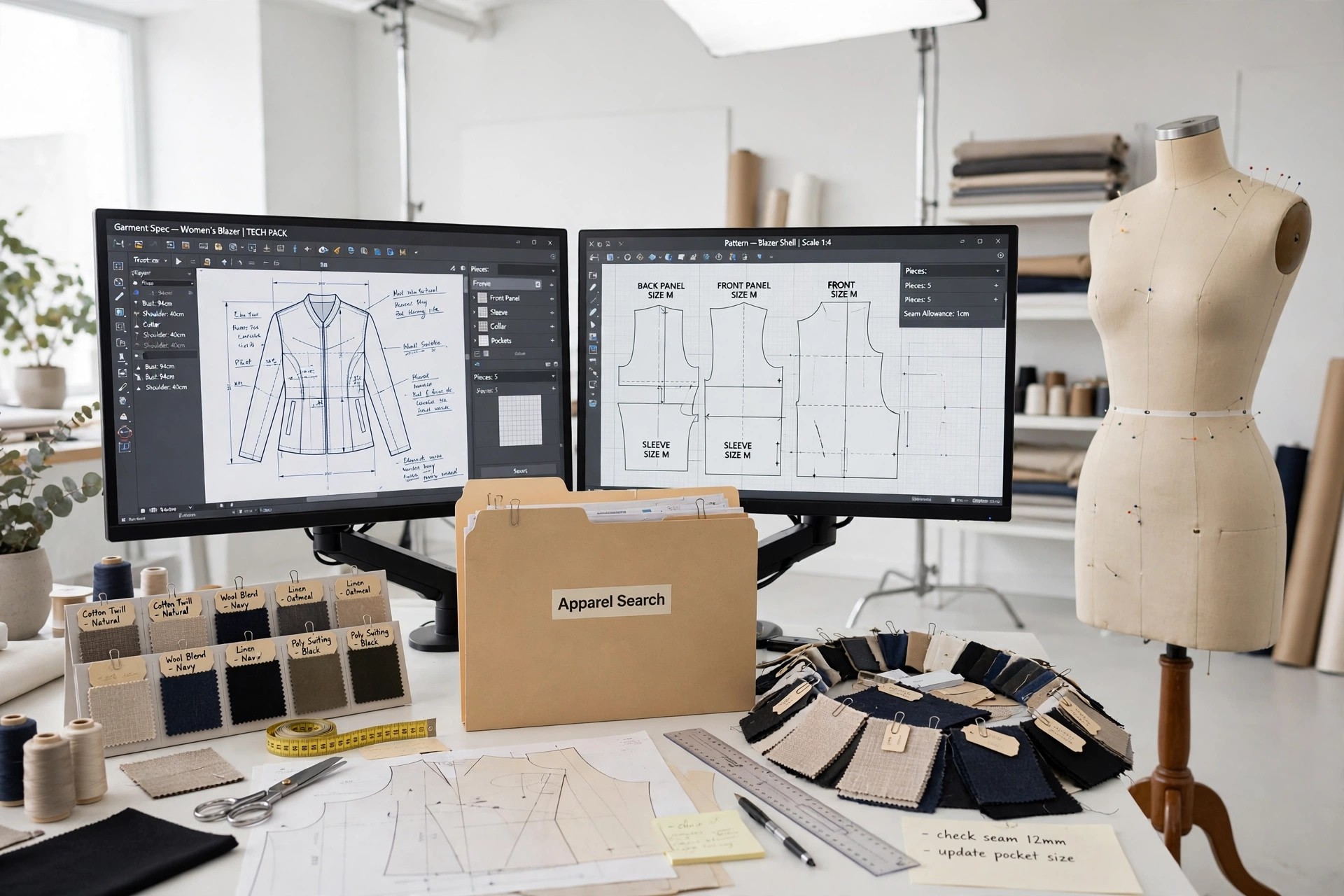
The daily output is the style file. From a designer's sketch, the CAD designer draws the garment as a precise technical flat — front, back and detail views with construction, stitching, fastenings and trims rendered to house standard — then builds its colourways, fabric and print versions, and presents the full style set on digital range boards for selection meetings. Because the flat is drawn once and recoloured endlessly, buyers can judge a style in every proposed fabric before a single sample is cut, and dropped colourways cost minutes rather than garments. Accuracy at this desk quietly saves companies a sampling fortune.
Beyond presentation, the CAD designer's files feed production. Flats and specification details flow into tech packs; measurement and construction callouts are checked against the garment technologist's requirements; and in companies running product-lifecycle management systems, the CAD designer maintains the style's digital record as it changes through development — every revision versioned, so the factory, the office and the range board never work from different drawings. Redrawing bought samples, updating styles after fittings and keeping the line's visual library current fill the rest of the week.
Flats, Systems and the Digital Sample Room
Technical drawing is the craft core. A flat must be true: proportions that match the pattern, seams that land where construction puts them, details — pocket placement, placket width, collar shape, cuff and hem treatments — drawn as made, not as imagined. The CAD designer develops an exact visual language for each product type, maintains libraries of collars, sleeves, pockets and trims the whole team draws from, and keeps style files consistent enough that a season's boards read as one hand. Inconsistency is not a style flaw here; it is misinformation other departments act on.
The systems around the drawing keep widening the role. Product-lifecycle platforms hold the official style record; some companies add 3D garment visualisation, where CAD designers build or dress digital samples for fit and presentation before physical sampling; pattern CAD links the flat to the pattern itself. Not every employer uses every layer, but the direction is constant: the CAD designer is becoming the keeper of the garment's digital twin, and fluency across drawing, data and presentation — not one package alone — is the durable skill.
Skills and Abilities the Role Requires
Employers test for drawing accuracy in CAD software, speed, and garment knowledge in equal measure: a fast operator who does not know how a sleeve is set will draw flats factories cannot use. Garment construction literacy — seams, finishes, fastenings, how fabrics change a silhouette — is therefore a requirement disguised as a drawing job, and CAD designers who have handled real garments, fittings and samples draw markedly better ones. Portfolio and timed practical exercises are standard in hiring for exactly this reason.
Organisation is the second pillar. Hundreds of style files, each with colourways, revisions and deadlines tied to range meetings and factory calendars, demand immaculate file discipline and clear communication with designers whose sketches arrive in every state of finish. The CAD designer translates loose creative intent into exact documents without flattening it — asking the right clarifying questions early, flagging construction impossibilities while they are still cheap to fix, and keeping a calm throughput when the whole range needs redrawing the night before a board meeting, which it regularly does.
Qualifications, Training and Career Path
CAD designers typically hold fashion design, garment technology or fashion CAD-related qualifications, and employers value construction knowledge gained through design or technology study as highly as software certificates. Entry comes through junior CAD, design assistant and garment-technology assistant posts, where house drawing standards and systems are learned on live ranges; freelance CAD work for several brands is a well-established parallel career once speed and accuracy are proven across categories.
Progression leads to senior CAD designer, CAD team leadership, and into the digital-development roles growing around 3D sampling and product data — or sideways into design itself, since CAD designers who draw whole ranges develop formidable garment judgement. Product development and technical design also recruit from this desk. As sampling goes digital, the role's centre of gravity keeps rising: the person who holds the garment's exact digital record holds a piece of every decision made about it.
Common Questions
How is a CAD designer different from a CAD artist?
The CAD designer works on the garment: technical flats, style colourways, range boards and specification files. The CAD artist works on the artwork: prints, repeats, graphics and separations. Both use CAD software at production level, and smaller studios combine them, but the desks answer different questions — how the garment is made versus what is printed on it.
What does a CAD designer produce for a fashion range?
Precise technical flat drawings of every style, all colourway and fabric versions, digital range boards for selection, and the drawing content of tech packs — maintained and versioned through development so factories and office teams always work from the same current file.
Do CAD designers need to know garment construction?
Yes — it is central. Flats must show seams, fastenings and details as they will actually be made, so employers look for construction literacy from design or garment-technology training, and test it with practical drawing exercises alongside software speed.