Clothing Designer Job Description
The general apparel design role — turning ideas into garments a factory can make and a customer wants to wear
A clothing designer is the general apparel design role: the person who originates garments — dresses, tops, trousers, knitwear, tailoring, casual wear — and carries each one from an idea to a production-ready specification. Specialist titles elsewhere in this directory narrow that brief by customer or category; the clothing designer title covers the whole craft. The work mixes drawing, fabric knowledge and factory communication, and it is judged in the end by garments that fit, sell and can be manufactured at a price. This page sets out what clothing designers actually do across a season, the skills the role requires, and how designers progress.
More Design Job Descriptions by Letter:
What a Clothing Designer Does
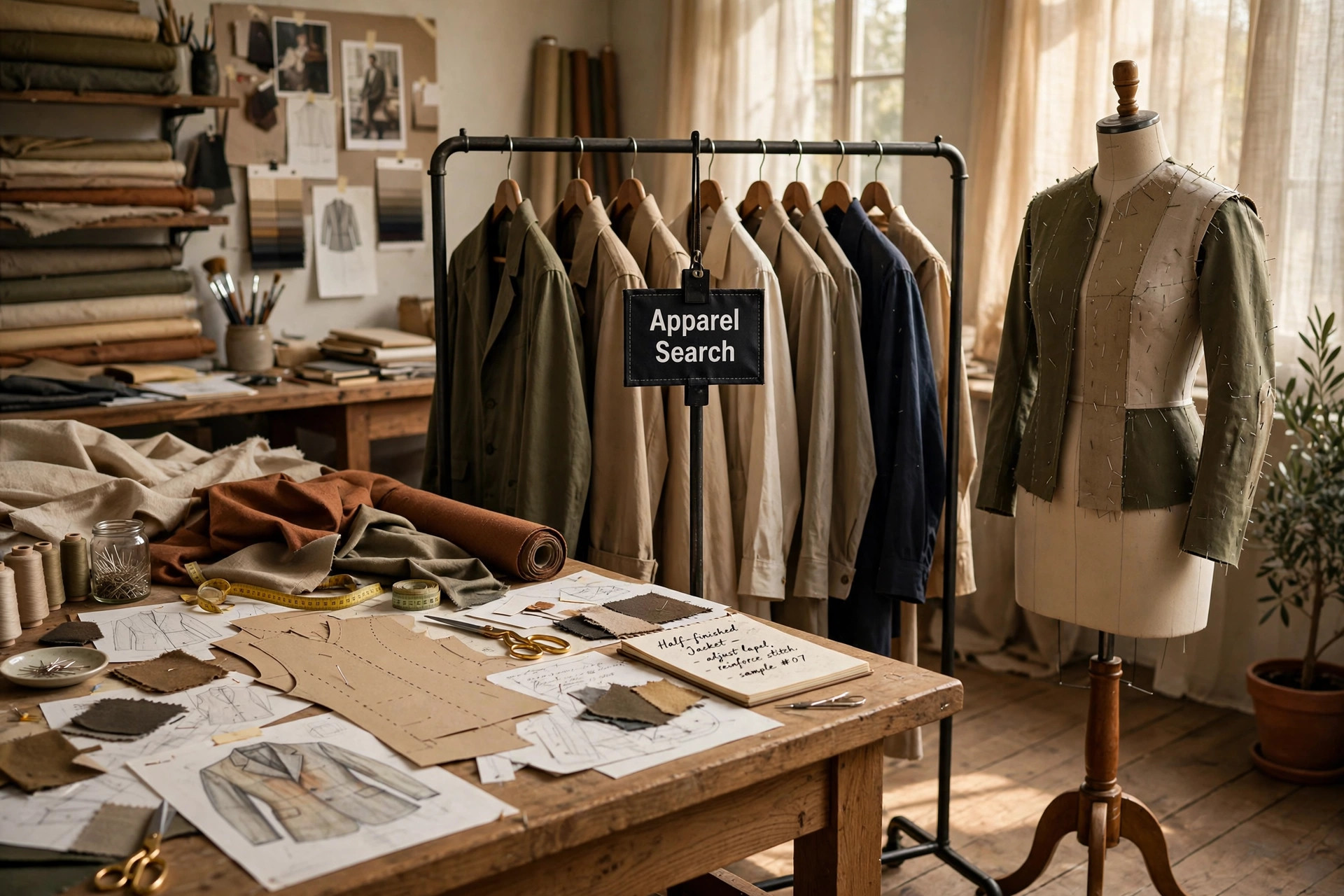
Each season starts with research and direction. The designer studies trend forecasts, competitor ranges, street and cultural signals and the brand's own sales history, then builds mood boards and colour and fabric stories that give the new range a point of view. From that direction come sketches — first exploratory, then precise — for each garment the range plan calls for. Selected designs are developed into specification sheets, or tech packs, recording measurements, materials, trims, construction and finishing in enough detail for a sample room or factory to make the garment without further interpretation.
Sampling and fitting occupy the middle of the season. First samples are fitted on models or fit forms, assessed for proportion, ease and movement, and corrected — a neckline lowered, a sleeve re-pitched, a fabric changed because it drapes differently from the sketch's assumption. The designer reviews strike-offs and lab dips for print and colour, approves trims, and re-samples until the garment matches the intention at the agreed cost. Through production, the designer answers factory queries and checks pre-production samples, because small unapproved substitutions quietly change the garment customers receive.
Fabric, Fit and Making Knowledge
Garments fail on fabric more often than on drawing. A design sketched for a fluid crepe cannot be cut in a crisp poplin and remain the same dress, so the clothing designer's fabric knowledge — fibre, weight, drape, stretch, finish and care behaviour — is applied at sketch stage, not after sampling disappoints. Designers handle fabric constantly, visit mills and fabric fairs, maintain swatch libraries, and learn how each cloth behaves in cutting, sewing and wearing. That material sense, more than drawing style, is what experienced designers are hired for.
Fit and construction knowledge completes the craft. The designer must understand pattern logic well enough to know what a sketch asks of a pattern cutter, where seams and darts create shape, how grading will change the garment across sizes, and which construction methods a given factory can execute to standard. Designers who have made garments — sewing, pattern cutting, draping on the stand — design things that can actually be built, estimate costs accurately, and earn the confidence of the technicians and factories whose work decides the final quality.
Skills and Abilities the Role Requires
Drawing communicates everything in this job: hand sketching for speed in fittings and meetings, and CAD tools for polished range boards, colourways, print repeats and specifications. Equally important is three-dimensional judgement — picturing how a flat sketch becomes a garment on a moving body — and a disciplined eye for proportion and detail. Commercial awareness separates employable designers from talented ones: ranges are designed to price points, delivery dates and a known customer, and the designer presents that logic at range reviews and revises designs in response to sales evidence without losing the range's identity.
Organisation under deadline pressure is the quiet requirement. A designer may carry dozens of styles per season, each with fabrics, trims, samples and corrections at different stages, across time zones and factory calendars. Clear specification writing, sample tracking and prompt decisions keep that system moving. Collaboration is constant — with buyers and merchandisers on range balance, garment technologists on fit and quality, and factories on what is achievable — so the designer needs the communication skill to defend an idea and the flexibility to improve it.
Qualifications, Training and Career Path
Most clothing designers hold a degree or diploma in fashion design, evidenced by a portfolio that shows a personal design handwriting and, crucially, garments carried through to finished, wearable product. Employers read portfolios for both: creativity that belongs to the candidate, and evidence of fabric, fit and specification competence. Entry comes through assistant and junior designer posts, internships and sample-room or product-development roles, where the production realities of the industry are learned quickly and a designer's reliability is established.
Progression runs from junior designer to designer owning a category or range, then senior designer, and on to design management or creative direction for those who combine design leadership with commercial results. Some designers specialise — knitwear, tailoring, denim, prints — while others move between categories and brands, or eventually launch their own labels. Because the title is the industry's general design role, its skills transfer everywhere clothing is made: the designer's combination of taste, material knowledge and manufacturing fluency is the core asset of the whole apparel business.
Common Questions
What is the difference between a clothing designer and a fashion designer?
In practice the titles overlap heavily and many employers use them interchangeably. Clothing designer is the general job title for originating garments and specifying them for production; fashion designer is the broader professional label for the same craft. Specialist titles — childrenswear, couture, contemporary — narrow the clothing designer's brief by customer or market level.
What does a clothing designer produce each season?
A developed range: research and mood boards, sketches, fabric and trim selections, detailed tech packs, and fitted, corrected samples approved for production — followed by factory support and pre-production checks so the garments delivered match the approved samples.
How do you become a clothing designer?
Typically through fashion design training and a portfolio showing both a personal design handwriting and finished, makeable garments, then assistant or junior designer posts. Sewing, pattern and fabric knowledge learned early pays off throughout the career, because designs are judged on whether factories can build them well.