Design Associate Job Description
Between assistant and designer — owning styles and small ranges inside the design team
A design associate — often titled associate designer — is the working designer between assistant and full designer: experienced enough to own styles and small categories outright, still developing the range-level judgement that defines the senior roles. Where the design assistant supports other people's designs, the associate originates and develops their own, under a designer's direction and within the season's agreed story. It is the role where a design career is truly decided, because it is the first level at which the work carries a name. This page explains what design associates own, how the role differs from the assistant post below it and the designer post above it, and how associates earn promotion.
More Design Job Descriptions by Letter:
What a Design Associate Does
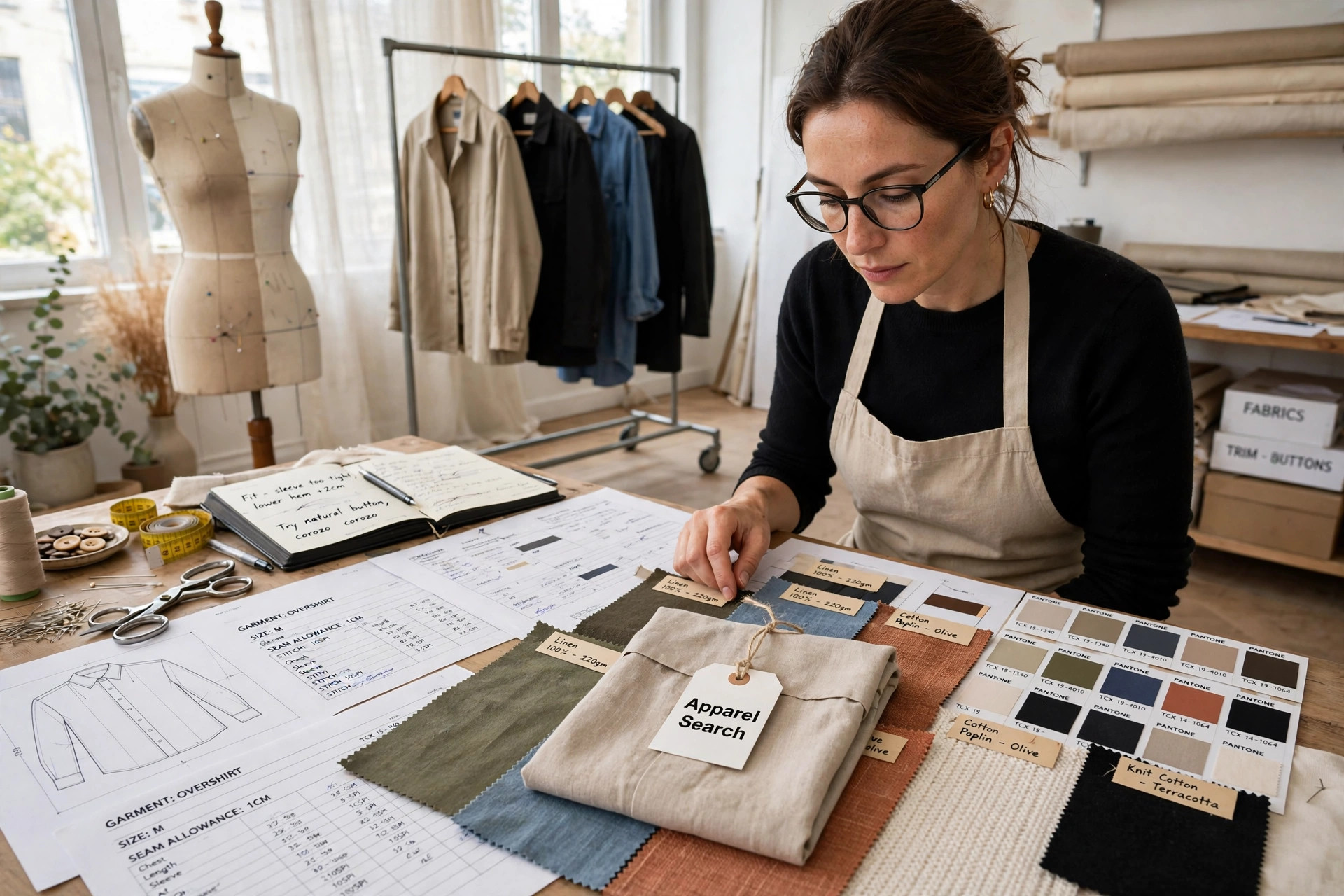
The associate's core work is style ownership. Assigned categories or groups of styles — a knitwear story, a group of dresses, a capsule within the range — are researched, sketched and presented by the associate, then developed through sampling exactly as a designer would: fabrics and trims selected, tech packs written, samples fitted and corrected, costs watched against target. The difference from the designer role is scope and sign-off, not kind: the associate's proposals sit inside a direction set by the designer or design manager, and major decisions are reviewed before they become commitments.
Associates also carry a share of the team's development workload beyond their own styles: helping fit and correct colleagues' samples at peak periods, preparing range boards and line reviews, liaising directly with factories and suppliers on their styles' progress, and presenting their work at internal reviews. In smaller brands the associate may be the second design employee entirely, taking everything from market research trips to e-commerce sample coordination; in large companies the role is more specialised, but the ownership of real, selling product is the same.
Owning Styles: From Sketch to Approved Sample
Style ownership teaches the lessons assistance cannot. The associate learns how a sketch survives costing — which fabric ambitions the target price survives, which trims price a garment out of its category — and how factories interpret specifications, because queries and mistakes come back addressed to the person who wrote them. Fitting becomes a design tool rather than an observation: the associate decides corrections, judges when a sample is close enough and when it must be remade, and defends those judgements in reviews with evidence from the garment itself.
The associate also starts reading commercial results as their own. Sell-through on last season's styles, returns comments, and buyers' feedback at range reviews all attach to specific decisions the associate made, and the designers who progress are the ones who metabolise that evidence — repeating what customers rewarded, adjusting what they ignored — rather than treating each season as a fresh creative start. That feedback loop, experienced personally over several seasons, is what converts technical competence into design judgement.
Skills and Abilities the Role Requires
By this level, drawing and CAD must be fluent and fast, fabric knowledge broad enough to source alternatives when first choices fail on price or lead time, and specification writing exact. The associate needs pattern and construction understanding sufficient to direct corrections credibly, and the organisational capacity to run many styles through sampling simultaneously across factories and time zones. Presentation skill grows in importance: the associate defends proposals at reviews, explains decisions to buyers and merchandisers, and writes the clear, unhesitating supplier communication that keeps development moving.
Judgement under direction is the role's subtle skill. The associate works inside someone else's creative direction while developing a recognisable handwriting of their own, and must know which disagreements to argue and which to absorb as instruction. Employers watch for that balance, plus pace: associate is the level at which a designer's output volume becomes commercially significant, and slow perfectionism costs as much as carelessness. The associates who thrive combine both — fast, accurate development and a steadily sharpening point of view.
Qualifications, Training and Career Path
Design associates are almost always promoted design assistants or junior designers, typically with two to four years of studio experience and a portfolio — increasingly, a record of styles actually produced and sold — behind them. External appointments at this level are common, because the produced-work evidence travels: a brand hiring an associate can judge real garments, real sell-through and real factory experience rather than student promise. Fashion design qualifications underpin the earlier steps; at associate level, the work itself is the qualification.
Promotion runs to designer, with ownership of full categories and a voice in range direction, and from there to senior designer and design management. Associates also move sideways productively — into product development leadership or specialist category design — but the main road is upward through demonstrated style success. The associate years are remembered by most designers as the steepest learning curve of their careers: the first seasons where the product on the rail is, in a real sense, theirs.
Common Questions
What is the difference between a design associate and a design assistant?
Ownership. An assistant supports the team's designs — samples, boards, specs and logistics. An associate originates and develops assigned styles and small categories themselves, from sketch through fitted, costed samples, working under a designer's direction and sign-off.
What experience do you need to become a design associate?
Typically two to four years as a design assistant or junior designer, with styles carried through production to point to. Employers judge produced work — garments made, sold and reviewed — more than portfolio promise at this level.
What comes after design associate?
Promotion to designer, owning full categories and contributing to range direction, then senior designer and design management. Some associates move into product development leadership instead; the common thread is that associate-level style success is the evidence promotion is based on.