Fashion Graphic Designer Job Description
Prints, placement graphics and logos for garments — the artwork that goes on clothing, not on paper
A fashion graphic designer creates the artwork that appears on clothing itself: the chest print on a t-shirt, the all-over pattern on a dress, the embroidered logo on a cap, the typography across a hoodie. The work looks like graphic design but obeys different rules — artwork must survive being printed, embroidered or woven onto fabric that stretches, shrinks, fades and is worn on a moving body, often at production scale in factories on the other side of the world. Fashion graphic designers sit inside design teams alongside garment designers, translating each season's themes into graphics that fit the range, the brand and the printing techniques available. This page covers what they produce, how artwork reaches a factory, and the route into the specialism.
More Design Job Descriptions by Letter:
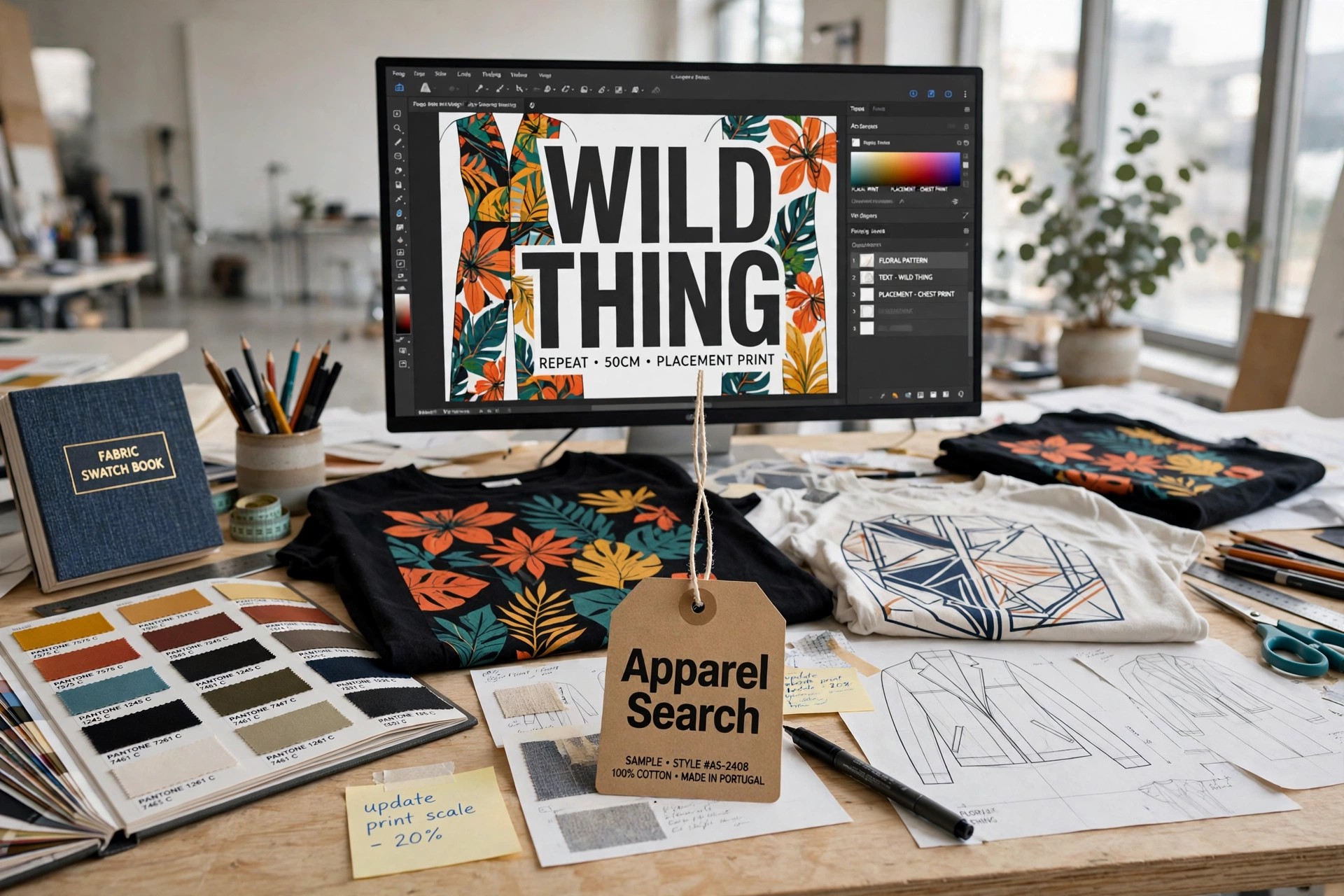
What a Fashion Graphic Designer Does
Each season the graphic designer takes the collection's themes — from the same mood boards and trend research the garment designers use — and develops artwork families to match: placement prints sized for chests, backs and sleeves; all-over prints built as seamless repeats; logos, badges, labels and typography treatments; and embroidery and appliqué designs. Artwork is presented at range reviews pinned to garment sketches or mocked onto photographs, colourways are matched to the season's palette, and the approved graphics are assigned to specific styles so a print story runs coherently across the range rather than appearing at random.
The production half of the job is specification. Every approved graphic becomes a factory-ready artwork package: vector files at exact size, colour separations or spot-colour callouts matched to recognised colour standards, repeat tiles engineered so the pattern joins invisibly, and placement instructions measured from garment landmarks — so many centimetres below the neckline, centred, at a stated width. The designer checks strike-offs and print samples against the original, correcting colour, scale and registration, because a logo two centimetres too low or a red two shades too orange is a production fault, not a matter of opinion.
Print Techniques and Their Limits
Technique knowledge defines what can be drawn. Screen printing lays down flat spot colour cheaply and boldly but limits the palette per screen; digital textile printing handles photographic colour and short runs but behaves differently by fabric; discharge, puff, foil and flock effects each add a texture and a constraint. Embroidery is built from stitches, not pixels — fine detail and small lettering simply disappear — while jacquard and intarsia graphics are knitted or woven into the cloth itself. A fashion graphic designer designs inside these limits from the first sketch, choosing the technique that serves the artwork and the garment's price point.
Fabric is the other variable. The same artwork prints differently on jersey, fleece, denim and silk, stretches across a chest when worn, and must be positioned to work on a size range — a placement print that sits correctly on a medium rides too high on an extra-large unless the spec grades it. Designers learn to ask how a graphic will be worn, washed and seen at distance, and to simplify boldly: graphics that read across a shop floor are built from strong shapes and controlled colour, with fine detail reserved for the close-up pieces where it can survive.
Skills and Abilities the Role Requires
The core toolkit is vector and raster design software at production fluency — building clean vector artwork, engineering seamless repeats, separating colours and preparing print-ready files — combined with strong typography, since so much fashion graphics work is lettering: brand names, slogans, numbers and crests that must look native to the garment. Hand drawing still matters for developing motifs and characters before they are digitised, and a feel for what different customer groups will actually wear — streetwear graphics, childrenswear characters and luxury monograms are three different visual languages.
Accuracy under repetition is the unglamorous differentiator. Artwork packages go to factories that will reproduce exactly what the file says, so version control, file naming, colour callouts and placement measurements must be meticulous across dozens of graphics a season. Designers also need the range-review skills of any design-team member: presenting artwork convincingly, taking direction when a graphic is too costly or off-brand, and reworking quickly to a deadline while ranges are still fluid.
Qualifications, Training and Career Path
Routes in combine graphic design training with fashion awareness: degrees in graphic design, illustration, textile design or fashion design with a graphics focus all feed the role, and hiring is portfolio-led — employers want to see garment graphics, repeats and typography presented on clothing, plus evidence the candidate understands print processes. Juniors often start by reworking and colouring existing artwork, preparing packages and managing strike-offs, which is exactly where production knowledge is built.
Progression runs to senior graphic designer owning a department's whole graphic output, and in larger brands to graphics management across categories. Some move into textile print design, brand identity work, or freelance artwork studios supplying many labels. Because graphics are among the most visible and most copied elements of fashion, experienced designers also develop a working grasp of trademark and copyright — knowing what can be drawn, licensed or must be avoided is part of protecting the ranges they create.
Common Questions
How is fashion graphic design different from ordinary graphic design?
The canvas is clothing. Artwork must be engineered for print, embroidery or knit techniques, sized and placed on garments across a size range, specced in factory-ready files with colour separations and repeats, and checked against printed strike-offs — not just approved on screen.
What software do fashion graphic designers use?
Vector and raster design packages are the daily tools — for building artwork, seamless repeats, colourways and print-ready files — alongside CAD garment templates for mocking graphics onto styles. Fluency matters more than any single package name; studios expect production-standard files.
Do fashion graphic designers need to draw by hand?
It helps a great deal for originating motifs, characters and lettering, and portfolios usually show it. The finished artwork is almost always digital, but designers who can sketch ideas fast in a meeting develop stronger, less generic graphics.