Fashion Illustrator Job Description
Drawing fashion for the house — presentation artwork, lookbooks and range visuals made inside fashion brands
A fashion illustrator draws clothing for a living — but where the fashion artist (described elsewhere in this directory) is often an independent producing artwork for many clients and media, the fashion illustrator in this page's sense works to a fashion house's brief: producing the presentation artwork a brand uses to sell its own collections. Lookbook illustrations, range presentation boards, show invitations, packaging and campaign imagery, and the expressive croquis that show buyers and press how a collection is meant to look and move — this is illustration with a commercial job inside one brand's world. This page explains that house-side role, how its work is commissioned and used, and how illustrators build the career.
More Design Job Descriptions by Letter:
What a Fashion Illustrator Does
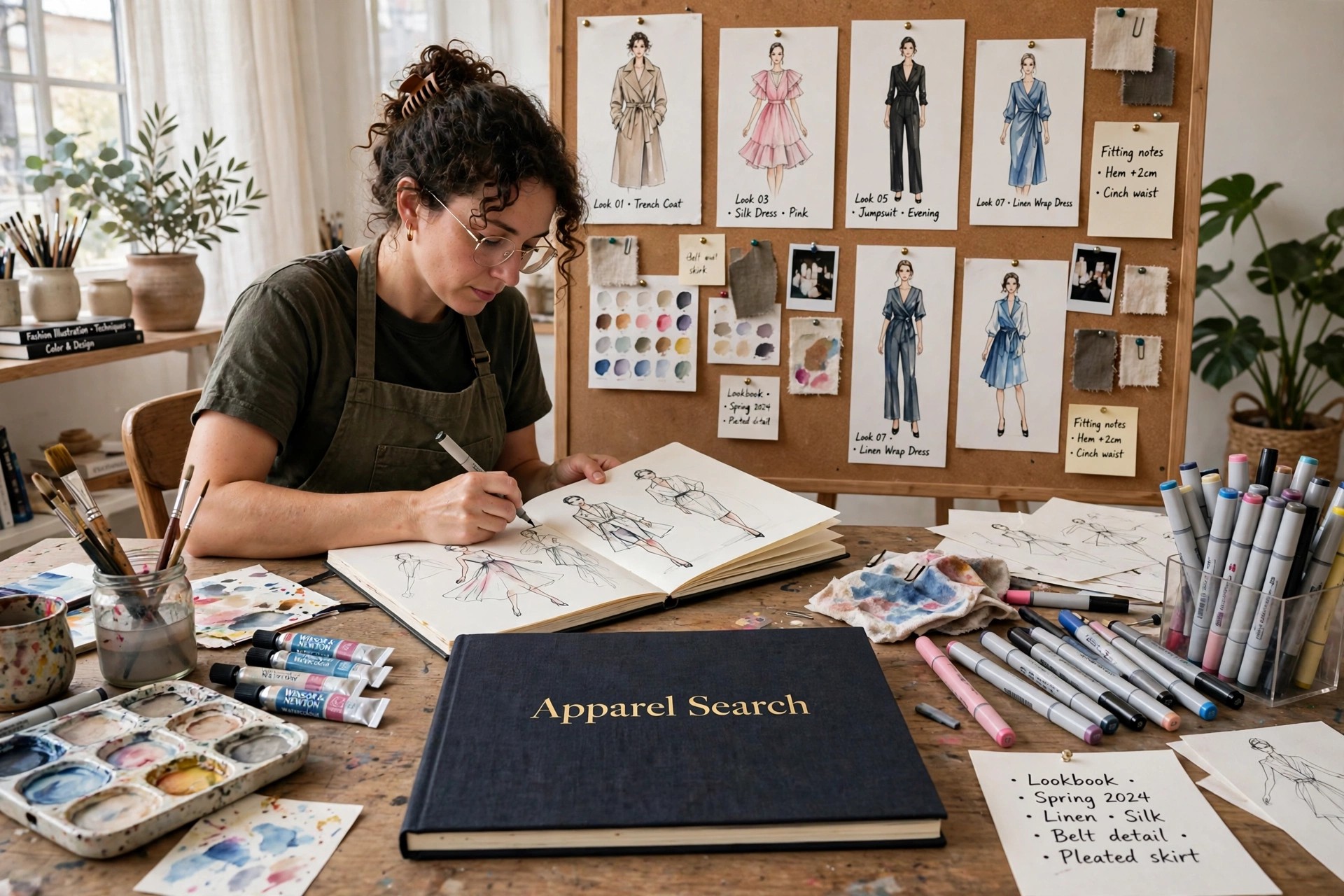
The illustrator's season follows the collection. During selling periods they produce the artwork buyers and licensees actually order from: illustrated range guides that show every style in colour with its fabric and details, presentation boards for showroom appointments, and lookbook imagery that presents key outfits at their most persuasive. Because samples are scarce and photography expensive, illustration fills the gaps — a colourway that was never sampled, a style photographed badly, a whole capsule range that must be sold from drawings before production begins. Accuracy matters as much as flair: a buyer orders from the drawing, so seams, fastenings and proportions must be truthful.
Beyond selling, houses commission illustration wherever a drawn image suits the brand better than a photograph: show and event invitations, press materials, store graphics, packaging, loyalty and gift materials, and social content with a distinctive hand. The illustrator interprets briefs from design, marketing and retail teams, proposes treatments, develops approved sketches to finished artwork against immovable dates — the show, the selling week, the store opening — and supplies files prepared for print or screen at the sizes and resolutions each use demands.
Style, Brand Handwriting and Accuracy
Houses hire an illustrator for a handwriting: a recognisable way of drawing the figure and rendering cloth that flatters the brand's clothes and customer. Working inside that handwriting season after season, the illustrator learns to draw the house's signature garments convincingly — its tailoring, its prints at readable scale, its characteristic colours — and to keep figures, poses and mood consistent across a whole lookbook or campaign so the set reads as one voice. Guest illustrators are sometimes commissioned precisely to refresh that voice for a special project, with the staff illustrator managing consistency around them.
Fabric rendering is the technical heart. Satin must shine differently from matt crepe, a knit must slump where a tailored wool holds its line, prints must sit on the drawn garment at true scale and follow its folds. Illustrators work in combinations of hand media — line, marker, watercolour, gouache — scanned and finished digitally, recolouring outfits instantly when a buyer asks to see the dress in the other colourway. The discipline is to stay expressive without becoming vague: the drawing sells a real garment, and every stakeholder from designer to retail buyer reads it as a promise.
Skills and Abilities the Role Requires
Superb figure drawing is the foundation — fashion anatomy, movement and attitude, drawn at speed — with fabric rendering and colour control close behind. Digital fluency is now assumed: cleaning and colouring hand work, building print-ready files, and producing screen versions for e-commerce and social use. Just as important is brief literacy: understanding whether a commission is a selling document, a piece of brand theatre or a working range guide, because each demands a different balance of accuracy, speed and glamour, and misreading the brief wastes the deadline.
Illustrators inside houses also need collaborative stamina. Their drawings pass through design, sales and marketing hands, are annotated, corrected and sometimes redirected entirely, and the illustrator who can absorb 'make her younger, the skirt longer, the print smaller' without losing the drawing's life keeps being commissioned. Organising versions and archives matters more than outsiders guess — last season's artwork is constantly reused for licensee presentations and retrospectives, and it must be findable.
Qualifications, Training and Career Path
Training is typically in fashion illustration, fashion design or illustration generally, but the portfolio decides everything: employers and commissioning editors look for a distinctive, consistent hand, convincing fabric rendering and evidence of working to briefs and deadlines. Many illustrators build toward house roles through freelance commissions — editorial, advertising and smaller brand projects — assisting established illustrators, and live-drawing at fashion events, which has become a visible showcase for the specialism.
Staff illustrators progress to senior illustrator roles owning a house's presentation artwork, while freelancers build a roster of house and media clients; the two often combine, with a staff role providing continuity and outside commissions providing variety. Illustration also branches into teaching, publishing fashion drawing books, and print and product licensing of personal artwork. It remains a small, reputation-driven field where the work itself is the advertisement: every lookbook and invitation carries the illustrator's hand into the next client's hands.
Common Questions
How is a fashion illustrator different from a fashion artist?
The titles overlap, but the illustrator's work is typically commissioned presentation artwork for a fashion house's own collections — lookbooks, range guides and selling materials where accuracy to real garments is essential. The artist's page in this directory covers the broader independent illustration practice across media and clients.
What is a croquis in fashion illustration?
A croquis is the quick, elongated fashion figure drawing used to present garment ideas with movement and attitude. Illustrators develop croquis templates in their own handwriting, then dress them with each style — the standard visual language of range presentations and design development.
Can fashion illustration be a full-time staff job?
Yes, in larger houses and groups that produce constant lookbooks, selling materials and campaigns, though much illustration is freelance. Staff roles reward consistency with a brand's handwriting; freelance careers reward a distinctive hand and a wide client roster.