Fashion Website Designer Job Description
Designing the digital storefront — fashion e-commerce pages, look and usability in one craft
A fashion website designer designs the shop window most customers now see first: the fashion brand's website and online store. The craft is a genuine hybrid — the visual language must carry the brand's glamour as surely as any campaign, while every page is also a working tool that has to display sizes, prices, availability and delivery terms clearly enough that a visitor becomes a buyer. Fashion website designers work with brand and design teams on look and feel, and with developers, merchandisers and marketers on journeys, content and trading. This page explains what they design, the constraints of selling clothes on a screen, and the skills the specialism requires.
More Design Job Descriptions by Letter:
What a Fashion Website Designer Does
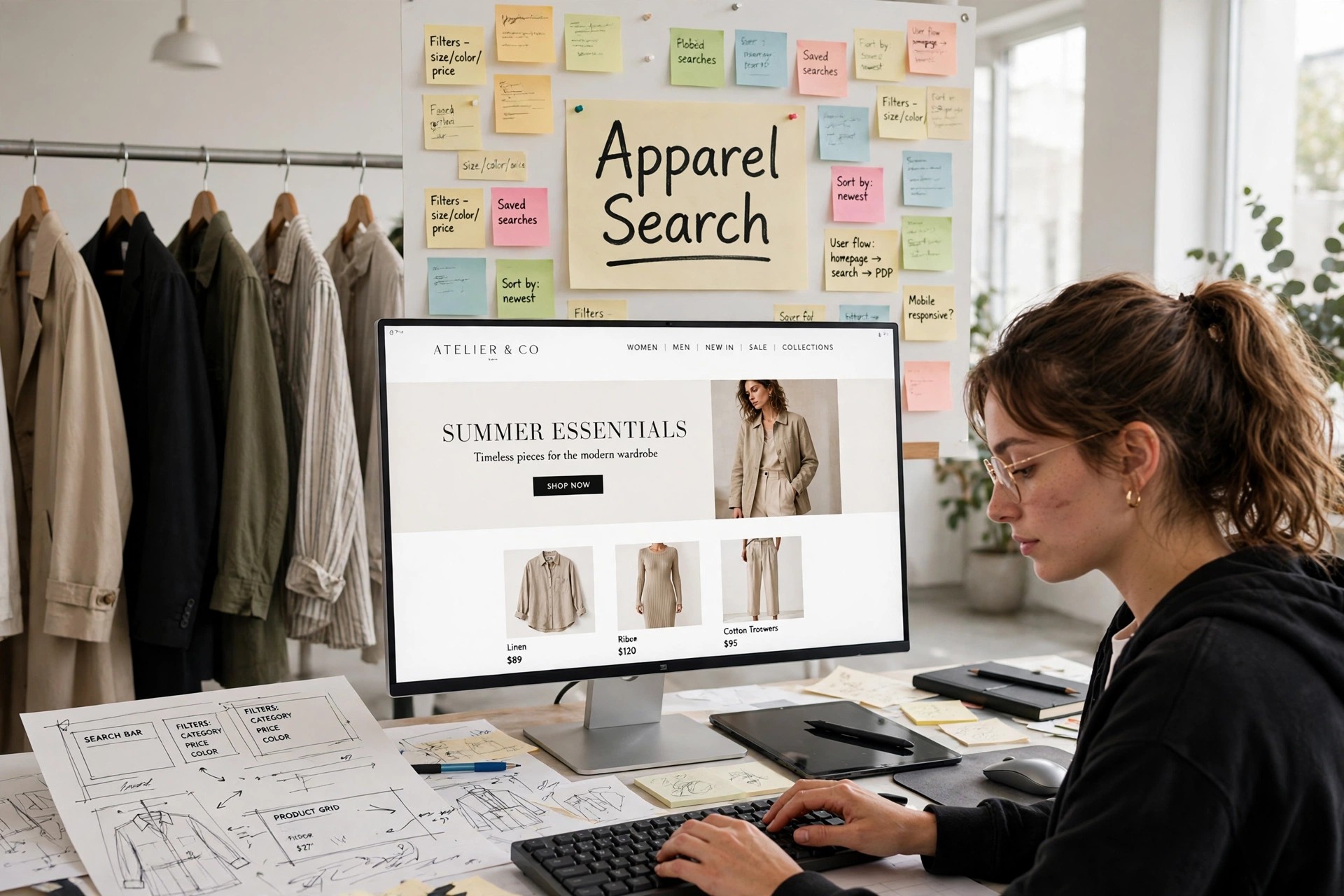
The core output is page and journey design: homepages that present the season's story and route visitors onward, category and listing pages that make hundreds of garments browsable and filterable, product pages that must show fit, fabric and detail well enough to sell without touch, and checkout and account flows where clarity decides whether the sale completes. The designer produces wireframes and visual designs, maintains the site's design system — typography, buttons, banners, image treatments — and briefs or art-directs the photography and graphics the pages consume, from campaign banners to size-guide diagrams.
Trading rhythm drives the calendar. New collection launches, seasonal campaigns, promotions and sale events all require designed page takeovers, landing pages and email and social assets that match the site, delivered to immovable commercial dates. The designer tests designs with real users and real data — click and conversion evidence, search behaviour, device usage — and iterates: moving a size selector, enlarging imagery, simplifying a filter. Fashion sites are never finished, and the designer's craft is knowing which change is worth making next.
Selling Clothes on a Screen
Fashion e-commerce has problems generic web design does not. Garments must be judged for colour, drape and fit from photographs and words, so imagery standards — model, flat, detail and video views — and honest colour presentation are design decisions with returns rates attached. Size and fit information is a design surface in its own right: size guides, fit notes and model measurements presented at the moment of doubt. Filters must speak the customer's language — by occasion, fabric, fit and price as well as by category — and search must forgive the way shoppers actually describe clothes.
The designer must also hold two opposing truths: the brand wants atmosphere and story; the shopper wants speed and certainty, increasingly on a phone, often on a weak connection. Page weight, loading order and mobile layout are therefore design work, not developer afterthoughts, and accessibility — readable type, sufficient contrast, navigable structure — is part of professional competence. The fashion website designer's particular skill is refusing the false choice: building pages that feel like the brand and still convert like a well-run shop.
Skills and Abilities the Role Requires
Visual design excellence in a fashion register comes first: typography, layout, image judgement and the ability to extend a brand's identity into interface elements without diluting it. Alongside it sits user-experience craft — information architecture, journey design, prototyping and usability testing — and production fluency in the standard interface design tools, with a working knowledge of HTML and CSS possibilities and limits so designs are buildable. Evidence literacy completes the toolkit: reading analytics, forming test hypotheses and accepting when data outvotes taste.
Collaboration defines the working day. The website designer negotiates with brand teams guarding image, merchandisers guarding conversion, developers guarding feasibility and marketers guarding campaign dates — frequently in the same meeting — and must present design reasoning in commercial language. Fashion fluency is the edge over generalist web designers: understanding seasons, drops, garment categories and how fashion customers shop lets the designer make a thousand small decisions correctly without asking.
Qualifications, Training and Career Path
Backgrounds combine design training — graphic, digital or interaction design degrees are common — with fashion awareness gained in fashion businesses, and portfolios must show finished, live digital work: real pages and journeys, ideally with the reasoning and results behind them. Many designers enter through junior digital design roles in fashion retailers or agencies with fashion clients, learning e-commerce conventions — listing pages, product pages, checkout patterns — alongside brand craft.
Progression runs to senior website designer and digital design lead roles owning a brand's whole online presentation, with branches into user-experience specialism, e-commerce trading design, and agency work across multiple fashion clients. Because the storefront is now the flagship, experienced fashion website designers sit close to commercial strategy, and the strongest combine brand taste, journey craft and trading evidence into a single practice.
Common Questions
How is fashion website design different from general web design?
It must sell garments that shoppers cannot touch: imagery, colour honesty, size and fit information and fashion-language search and filters are design surfaces, and the brand's seasonal story has to coexist with fast, phone-first shopping journeys.
Do fashion website designers need to code?
They need a working understanding of HTML and CSS — what is possible, what is expensive, how pages behave on phones — and they design in interface tools developers build from. Most are not production coders, but designs that ignore build reality do not survive.
What should a fashion website design portfolio show?
Live or realistically mocked pages and journeys — homepage, listing, product and checkout — with the brand thinking, the user's problem and the outcome evidence explained. Fashion sensitivity in typography and imagery matters as much as interface mechanics.