Formalwear Designer Job Description
Evening and occasion clothing — structure, embellishment and fit for the most demanding garments in fashion
A formalwear designer creates clothing for occasions when clothing matters most: evening gowns, occasion dresses, formal suits and tuxedos, mother-of-the-bride outfits and the red-carpet end of every range. The specialism is defined by its materials and its stakes — silk, lace, beading and structured tailoring that cost more per garment than anything else in a typical collection, worn at events where the wearer will be photographed and the fit judged in public. Formalwear designers combine a couture-influenced understanding of structure with commercial range discipline, because even luxury occasionwear must be sampled, costed, fitted and sold like any other product. This page explains the work in detail.
More Design Job Descriptions by Letter:
What a Formalwear Designer Does
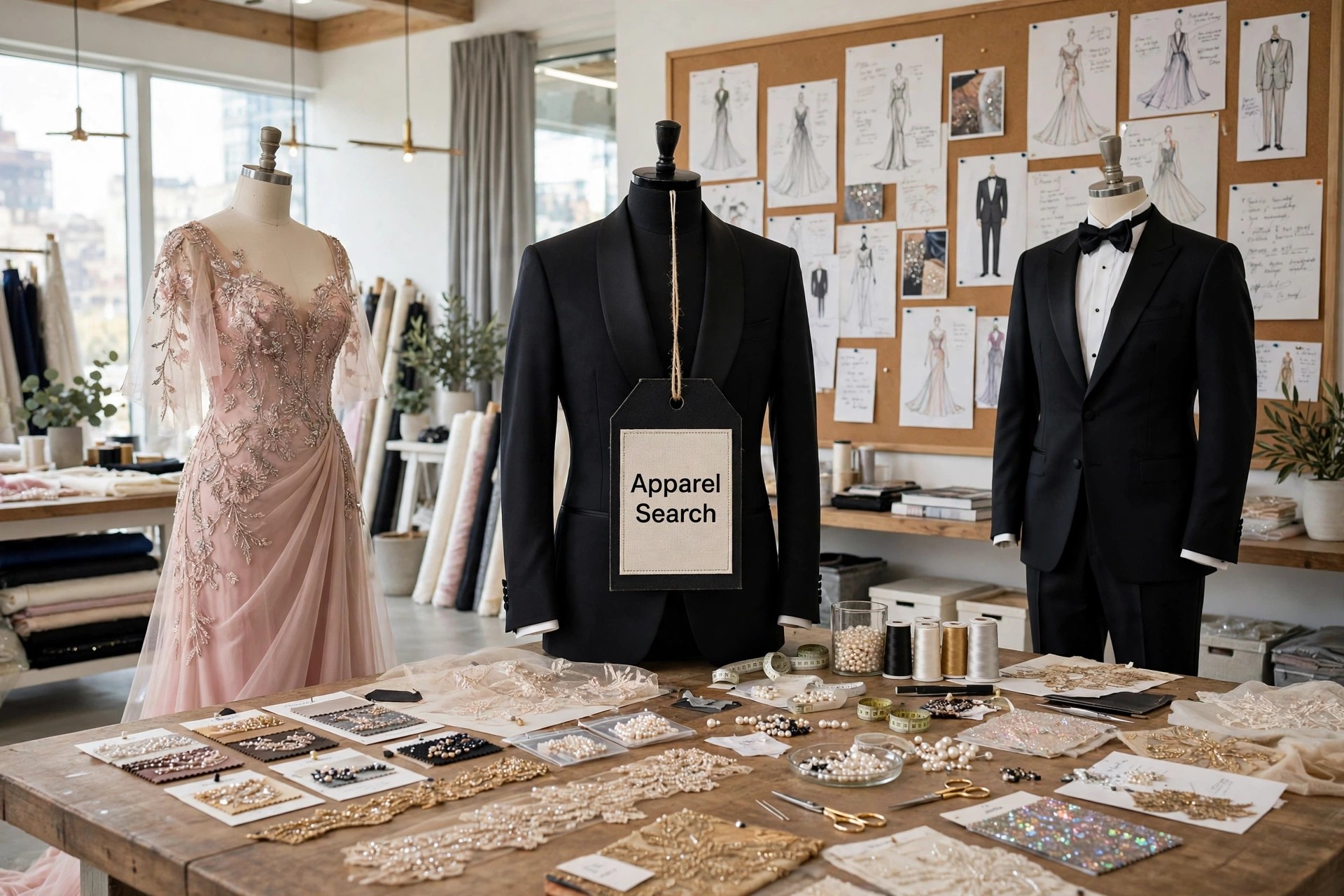
Design begins with the occasion calendar: party seasons, wedding seasons, race meetings, festivals and awards events dictate when formalwear sells, and ranges are built backwards from those dates. The designer researches silhouettes and fabrics — crepe, satin, chiffon, tulle, lace and fine wool tailoring cloths — and develops styles from sketch through toile to finished sample, specifying the internal architecture formal garments depend on: boning, corsetry, interlinings, shoulder structure and linings that let a dress hold its shape and its wearer comfortably through a long evening.
Fittings are unusually demanding in formalwear. A gown is judged in movement and in photographs, on posture and under event lighting, and the designer works with pattern cutters and fitters through more correction rounds than daywear usually needs — adjusting a neckline's security, a train's behaviour, the exact point a waist seam must sit. Embellishment is developed in parallel: beading, sequin and embroidery layouts drawn at full scale, sampled on the real fabric, and costed stitch by stitch, because hand-finished decoration can cost more than the cloth beneath it and must be planned like it.
Structure, Embellishment and Luxury Materials
Structure is formalwear's hidden half. Strapless bodices that stay in place, skirts that move without collapsing, jackets that keep a sculpted shoulder — all are engineered with interlinings, boning, tape and padding chosen by the designer and built by skilled makers. The designer's sketches therefore specify insides as faithfully as outsides, and their material knowledge runs from silk organza used as a structural fabric to the horsehair braid that makes a hem flare. Designers who cannot think structurally produce beautiful drawings that fitters cannot realise.
Embellishment and luxury fabric handling bring their own disciplines. Beaded and embroidered fabrics arrive with pattern repeats that must be placed, not just cut; lace is appliquéd and engineered around motifs; delicate silks mark, fray and show every handling error, so construction methods, seam finishes and pressing are specified to couture-influenced standards even in ready-to-wear. Costing is ever-present: a formalwear designer learns to spend the garment's budget where the eye and camera go — bodice, neckline, surface — and simplify where they do not, keeping drama affordable.
Skills and Abilities the Role Requires
Advanced garment knowledge is the entry ticket: draping on the stand, pattern and construction literacy, and an educated hand for luxury fabrics and trims. Drawing must communicate surface as well as silhouette — rendering sheen, transparency, beading density and lace scale so buyers and makers share the same picture. An eye for occasion dressing itself matters too: what photographs well, what flatters across ages and figures — formalwear customers span far wider demographics than fashion daywear — and what an event's dress expectations demand.
Commercial and interpersonal skills run alongside. Formalwear ranges are smaller, pricier and more return-prone than daywear, so the designer works closely with buyers and merchandisers on depth, sizing and price, and presents ranges where one style can represent a significant investment. Patience in fittings, precision in specification and calm under event-date deadlines — a collection that misses its occasion has missed its year — complete the profile.
Qualifications, Training and Career Path
Formalwear designers usually come through fashion design degrees with strong construction and draping content, often with experience in bridal, occasionwear or couture-influenced ateliers where the structure and embellishment skills are taught by practice. Assistant roles in occasionwear houses, bridal designers and eveningwear departments are the typical entry, and portfolios should show formal garments as made pieces — structure, finish and fit photographed — not only as glamorous sketches.
Progression runs to senior designer and design leadership within occasionwear and bridal brands, with sideways routes into couture and bespoke work, costume for stage and screen — where occasion dressing and structure are equally central — and celebrity and private-client dressing. The specialism's skills are rare and durable: fewer designers can engineer a gown than can sketch one, and that scarcity underwrites the career.
Common Questions
What makes formalwear design different from other fashion design?
The garments are structured and embellished — boning, corsetry and interlinings engineer the silhouette, beading and lace are placed and costed at full scale, and delicate luxury fabrics demand couture-influenced making. Fit is judged in movement and photographs, at events with fixed dates.
Is formalwear the same as bridal design?
They overlap in skills and often in employers, but formalwear covers all occasion dressing — evening gowns, occasion dresses, formal tailoring and event outfits — while bridal concentrates on wedding dresses and parties. Many designers work across both.
What skills should a formalwear design portfolio show?
Made garments, not only sketches: structured bodices, embellished surfaces and luxury fabrics handled well, photographed to show fit and finish. Evidence of draping, pattern understanding and embellishment layouts at full scale carries particular weight.