Handbag Designer Job Description
Designing bags as engineered objects — structure, hardware, materials and the patterns that hold a shape
A handbag designer designs bags: totes, satchels, shoulder bags, clutches, backpacks and the small leather goods that accompany them. Of all the design roles in this directory, this one sits closest to industrial design — a handbag is a structured object that must hold its shape empty, carry weight daily, open and close thousands of times, and still be judged first as a fashion item. Leather and fabric selection, hardware engineering and pattern construction are the designer's daily materials. This page explains how handbag design works, from sketch to production sample.
More Design Job Descriptions by Letter:
What a Handbag Designer Does
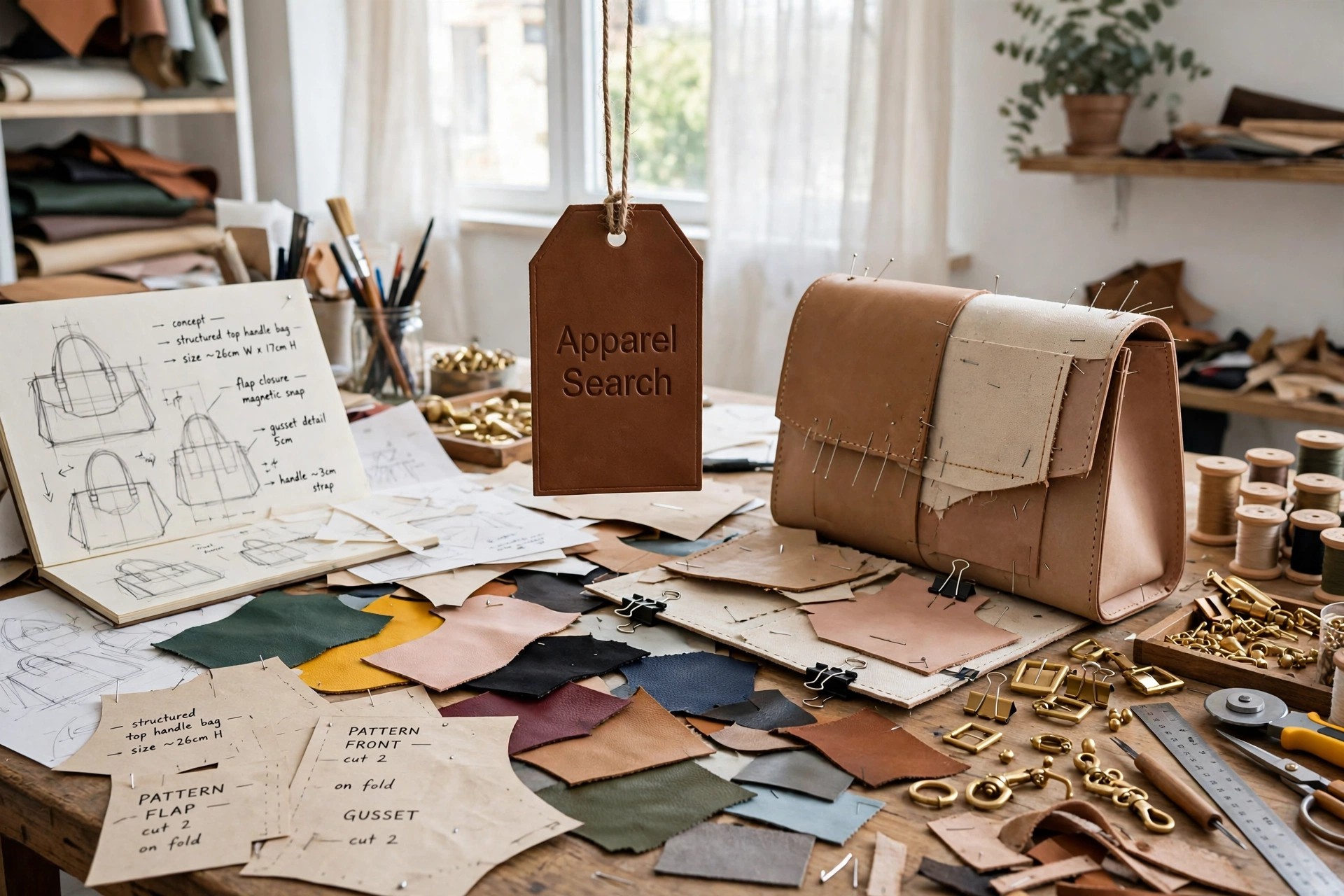
The season begins with the range architecture: which bag families the brand will offer, at which prices, in which materials and colours, planned with merchandisers against last season's sellers. The designer researches shapes and references, sketches new silhouettes and updates proven ones, and develops each style through technical drawings that specify dimensions, construction, lining, pockets and hardware in the detail a sample room needs. Unlike a garment sketch, a bag drawing is close to an engineering document — millimetres decide whether a phone fits, a zip runs smoothly or a strap attachment holds.
Samples drive the middle of the season. First prototypes arrive in substitute material to prove shape and proportion; the designer reviews them on the table and in the hand — a bag is assessed carried, opened and loaded, not hanging still — corrects the pattern and specification, and repeats until the shape is right. Salesman samples follow in the real leather or fabric with final hardware, and the designer's corrections continue through pre-production: stitch quality, edge finishing, handle drop, lining fit, hardware function, each checked against the approved standard before bulk cutting begins.
Structure, Hardware and Materials
Structure is the handbag designer's specialist knowledge. Bags hold shape through a hidden architecture of boards, foams, interfacing and reinforcement, and the designer specifies how stiff or soft each style should be — the slouch of a hobo and the architecture of a framed satchel are both deliberate constructions. Pattern pieces must account for material thickness at every seam, and construction order matters: a lining inserted wrongly, a pocket placed before a reinforcement, and the bag cannot be assembled at all. Designers who have watched bags being made design bags that can be made well.
Hardware and materials carry the visible quality. Zips, frames, clasps, feet, rings and chain are sourced or developed to the style, tested for weight, finish durability and function — a beautiful clasp that fails in use destroys a style's reviews. Leather selection weighs grain, thickness, temper and finish against the shape it must hold and the price the bag must hit, with synthetic and textile alternatives engineered to their own standards. Every material choice is also a costing choice, made with the target retail price open on the desk.
Skills and Abilities the Role Requires
Three-dimensional thinking is the distinguishing skill: the ability to imagine a flat pattern as a finished volume, to judge proportion in the hand, and to draw specifications a pattern maker can build from without guesswork. Drawing and CAD skills present the work, but employers test construction understanding — how bags are assembled, where they fail, what materials do — because that knowledge is what separates a handbag designer from a stylist of bag pictures.
The supporting skills mirror senior accessories practice: costing discipline across materials and hardware, supplier and sample-room communication (often with overseas makers, across language and time-zone gaps), and range judgement — knowing which shapes carry a season, which colours a leather should be bought in, and when a development sample should be killed rather than corrected a fourth time. An eye for detail at millimetre scale, and the patience to pursue it through sample rounds, are the temperament the role rewards.
Qualifications, Training and Career Path
Handbag designers commonly train in fashion design, accessories design or product design, and many courses now offer accessories pathways covering bag pattern-making and construction. Entry runs through assistant designer and sample-room-adjacent posts in accessories companies, leather-goods houses and handbag brands, and portfolios should show construction awareness — technical drawings, material specifications and made samples — alongside sketches. Time spent where bags are physically made is valued out of proportion to its length.
Progression leads to senior handbag designer with ownership of a bag category, then to accessories design leadership across bags, small leather goods and related lines. The skills also open the leather-goods industry beyond fashion brands — luggage, premium goods and private-label accessories manufacture all employ experienced bag designers — and freelance design for several brands is a common mid-career pattern once a designer's construction reputation is established.
Common Questions
How is handbag design different from clothing design?
A handbag is a structured, load-bearing object. Alongside shape and fashion judgement, the designer specifies internal structure and reinforcement, hardware function, material thickness and construction order — closer to product engineering than to garment draping — and judges samples carried, opened and loaded.
What materials and hardware knowledge do handbag designers need?
Leather types and tempers, synthetic and textile alternatives, lining and reinforcement materials, and hardware — zips, frames, clasps, rings and chain — including weight, finish durability and function testing. Every choice is weighed against the bag's shape, use and target price.
How do you become a handbag designer?
Train in fashion, accessories or product design, learn bag pattern-making and construction, and enter through assistant roles in accessories or leather-goods companies. Portfolios that show technical drawings, specifications and made samples — not sketches alone — are what employers look for.