Plus Size Designer Job Description
Designing fashion in extended sizes as its own discipline — fit, grading and styling for plus size ranges
A plus size designer designs clothing for plus size ranges — women's fashion developed for extended sizes as a specialism in its own right, not as an enlargement of another department's work. The distinction is the job: fit, proportion and styling behave differently at larger sizes, patterns must be re-engineered rather than simply scaled, and customers in this market judge a brand on whether its fashion was genuinely designed for them. This page describes the plus size designer's work: the fit discipline, the styling judgement and the career route.
More Design Job Descriptions by Letter:
What a Plus Size Designer Does
The designer builds ranges for the plus size customer across the categories she buys — dresses, separates, outerwear, occasionwear, essentials — working from the same seasonal fashion direction as the wider brand but interpreting it for this customer's fit and styling needs. Each style is developed on plus size fit standards from the first sketch: proportions drawn for the sizes it will be sold in, necklines, sleeve and length decisions made for those sizes, and fabrics chosen for how they drape and behave at the scale of the garment rather than how a smaller sample behaved.
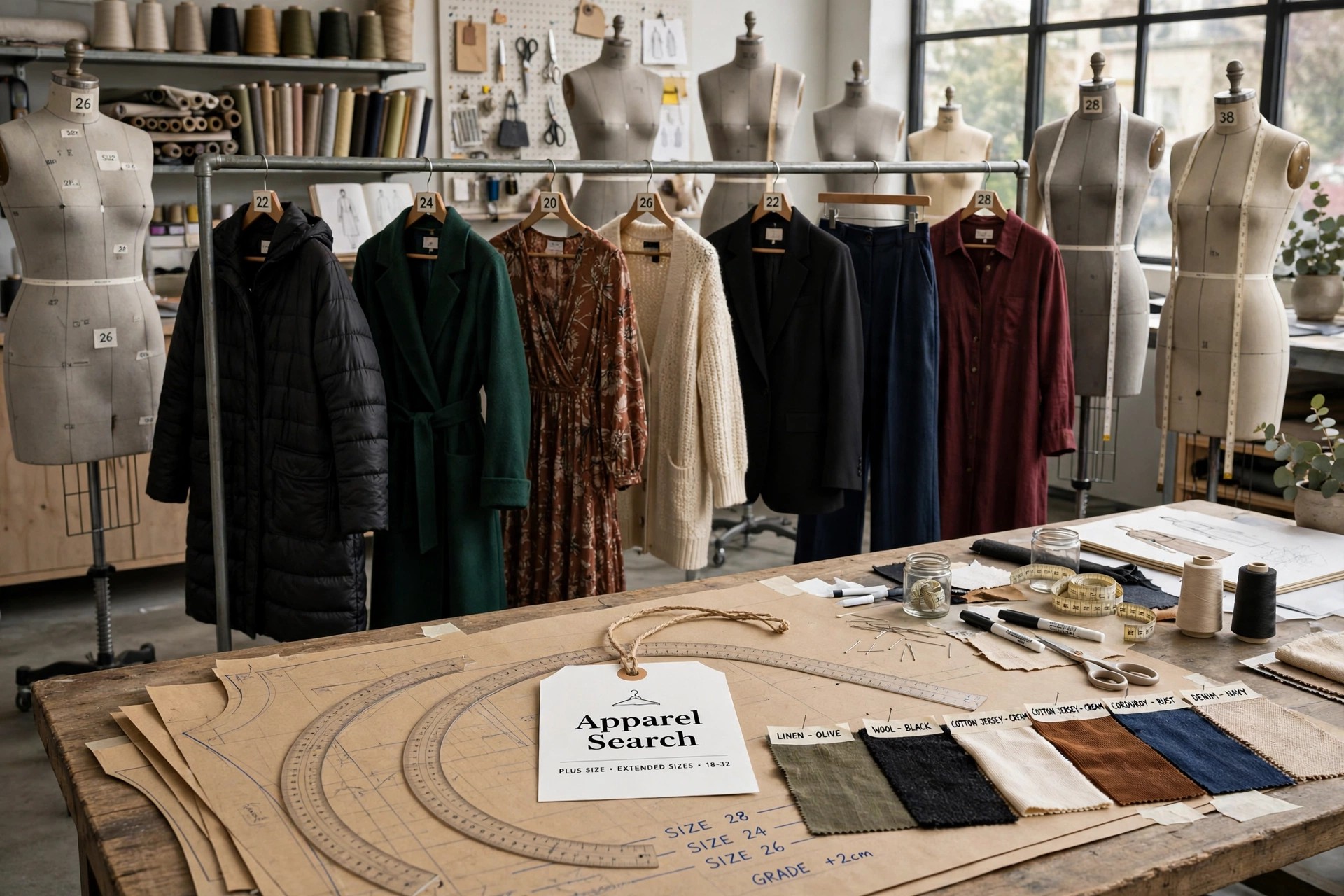
Fit development is the centre of the calendar. Styles are fitted on plus size fit models and forms across the range's sizes — not only at its smallest — with the designer and garment technologists checking balance, ease distribution, armhole and rise comfort, and movement. Grading is treated as design work: each size is re-proportioned where bodies actually change, because adding the same increment everywhere produces garments that fit nobody well. Pre-production samples are approved size by size against the specification before bulk production.
Fit, Grading and Styling for Extended Sizes
The specialist knowledge begins with a simple technical truth: bodies do not scale uniformly, so patterns cannot either. The plus size designer learns where fit changes with size — bust, waist and hip relationships, shoulder and arm proportions, torso length — and works with pattern cutters who grade and re-balance blocks for the range instead of extending a standard block and hoping. Construction supports the fit: seam placement that works with the body's lines, waist and support structures where the garment needs them, closures positioned for reach and comfort, and ease placed where movement demands it rather than spread evenly everywhere.
Styling judgement is the second discipline. The outdated rule that plus size fashion should hide the wearer produces ranges customers reject; the designer's skill is applying the season's real fashion — its colours, prints, silhouettes and details — with proportion intelligence: print scale matched to garment scale, silhouette choices that offer the customer options rather than a uniform, and fabric weights and finishes that feel as good as the standard range's. Customers compare a brand's plus range against its main range for fashion parity, and the designer is the person responsible for that parity being real.
Skills and Abilities the Role Requires
Fit and pattern literacy at an advanced level heads the requirements — the ability to diagnose a fit fault on a body, communicate the correction in measurements and pattern terms, and judge grading across a whole size range. Employers test this practically, because it is the skill the market has historically undersupplied and the one customers feel in every garment.
Alongside it sit the full design craft — sketching and CAD, fabric knowledge, specification and costing — and a research habit centred on this customer: fit feedback, returns evidence analysed by size, reviews and community conversation read as design data. Range skills matter commercially too: plus ranges are often bought in different depth and category mixes than standard ranges, and the designer who understands which categories and price points this customer rewards builds ranges that grow the brand's most loyal audience.
Qualifications, Training and Career Path
Plus size designers usually train in fashion design and build their specialism through assistant and designer posts in plus size brands, extended-size departments of general retailers, or catalogue and online specialists where this customer is the core business. Portfolios should show ranges designed at size — fittings, specifications and grading thinking — and candidates with pattern-cutting or garment-technology grounding carry a real advantage, for the reasons this page describes.
Progression runs to senior designer and design leadership within plus size and extended-range fashion, a field whose commercial importance keeps growing as brands serve the full size spectrum properly. The fit expertise also transfers into technical design and size-range consultancy, where retailers building or repairing extended ranges need exactly this knowledge. It is a specialism where craft depth and customer respect are the same thing — and where good designers are recognised quickly by the people who wear their work.
Common Questions
Why is plus size design a separate specialism?
Because bodies do not scale uniformly. Fit, proportion and grading must be re-engineered for extended sizes rather than enlarged from a standard block, and styling and fabric choices behave differently at larger garment scales — expertise a dedicated designer builds and a general department often lacks.
What is the difference between grading and simply sizing up?
Sizing up adds a uniform increment everywhere. Proper grading re-proportions each size where bodies actually change — bust, waist, hip, shoulder, arm and length relationships — so every size in the range fits as it was designed to, checked in fittings across the range.
How do you become a plus size designer?
Train in fashion design, build portfolio work designed at size with fittings and specifications, and enter through assistant and designer posts in plus size brands or extended-size departments. Pattern-cutting and garment-technology knowledge is a strong advantage in this field.