Product Development Developer Job Description
Carrying a garment from concept to approved sample — coordinating design, materials, costing and factories through every development round
A product development developer — often titled product developer — is the person who carries a garment from an idea to an approved, costed, production-ready sample. Designers sketch it and buyers want it, but between the sketch and the factory stands a chain of practical questions: which fabric, which trim, what construction, at what cost, sampled by whom, corrected how many times, and ready by when? The developer owns that chain. Working in brands, retailers and manufacturers, developers coordinate design, technical, sourcing and factory teams through every sample round until a style is signed off. This page explains the coordination desk at the centre of how clothing actually gets made.
More Design Job Descriptions by Letter:
What a Product Development Developer Does
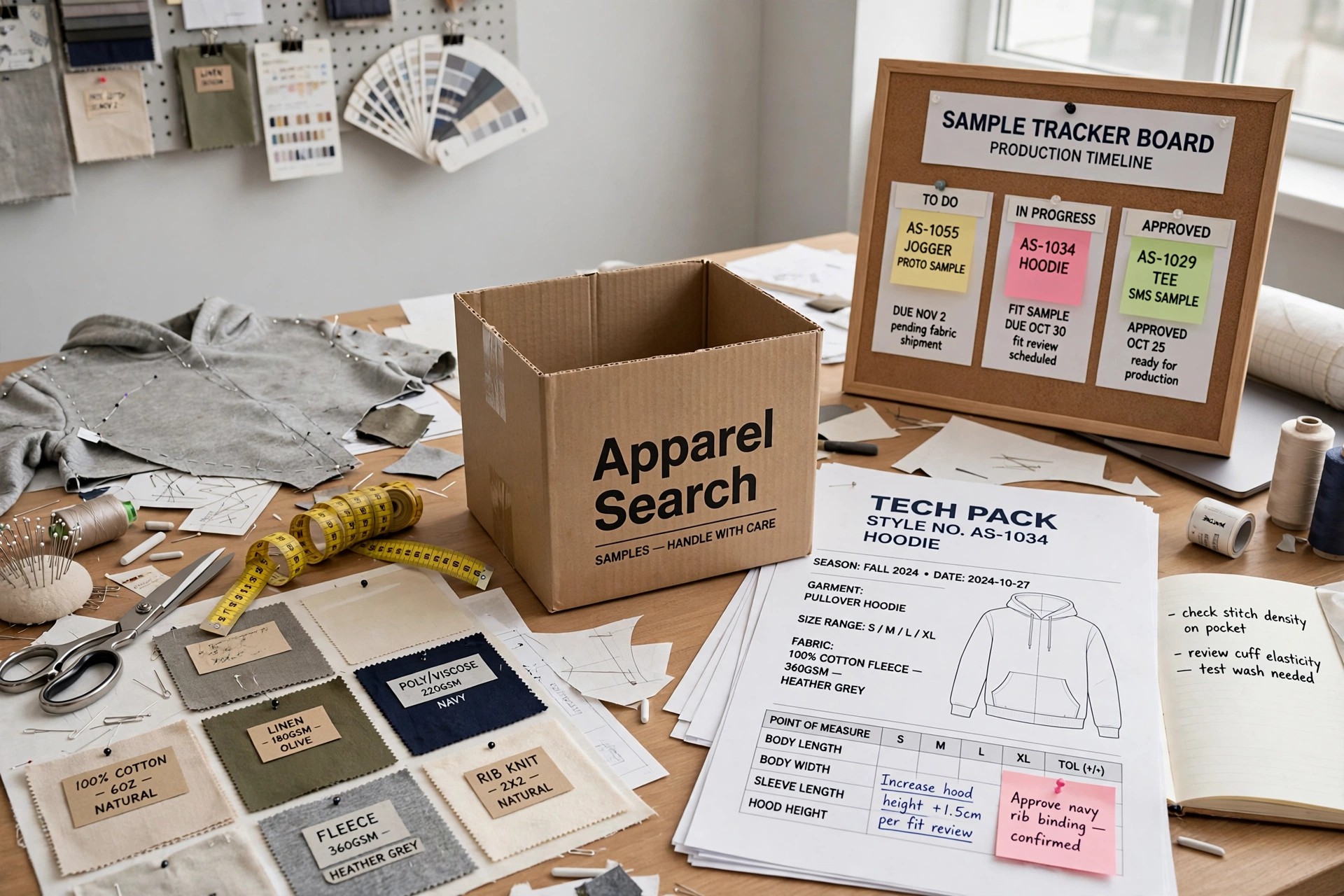
The developer's season begins when designs are adopted for development. Each style is set up with its development record — sketch, target cost, intended fabric and trims, factory allocation and the dates its samples are due — and the developer issues the first tech pack or development sheet that tells a sample room or factory what to make. Proto samples arrive and are reviewed with the designer and technical team; comments, corrections and revised specifications go back out; fit and pre-production samples follow the same loop until the style meets its design intent, its fit standard and its cost target at the same time, which is the developer's definition of done.
Materials coordination fills much of the week. The developer sources or allocates fabrics and trims for sampling, chases lab dips and strike-offs for colour and print approval, tracks sample yardage so a late fabric does not stall three styles at once, and keeps substitutions honest — a cheaper button or a different interlining is never swapped silently, because the approved sample is a promise about the production garment. Costing runs in parallel: the developer gathers factory costings, compares them against target, and works with design on the adjustments — a fabric change, a simplified seam — that close a gap without gutting the style.
Calendars, Sample Rooms and Factory Communication
Development is a calendar business, and the developer is its keeper. Critical paths list every milestone from first sketch to bulk production, and the developer chases them daily: this proto is due Thursday, that lab dip is a week late, this factory needs the corrected tech pack before its sample room closes for a holiday. Sample tracking systems and boards — which styles are at which stage, with which factory, awaiting whose approval — are the developer's working instruments, and keeping them truthful is a professional duty, because buyers and production teams plan on what those trackers say.
The work environment mixes office, sample room and screen. A developer may start the day in a fit session pinning corrections on a sample, spend midday on video calls and messages with factories in several time zones, and end it updating costings and the critical path. Travel to factories and sample rooms is common in senior development roles. It is not a desk for someone who wants to design in quiet isolation: it is the connective tissue of the product team, and its satisfactions are collective — a range that arrives complete, correct and on time has the developer's fingerprints on every style in it.
Skills and Abilities the Role Requires
Garment literacy is the foundation: construction methods, fabric behaviour, pattern and fit basics, and the vocabulary of tech packs, points of measurement and tolerances, so that comments written to a factory are precise enough to act on first time. A developer who has handled garments — in a sample room, a factory or a technical team — develops judgement about what is a sampling error, what is a specification error and what is a design that simply will not manufacture at its target cost, and that diagnostic skill is the role's core value.
On top sits formidable organisation: dozens of styles, several factories and hundreds of dates held simultaneously without dropping any of them, plus the communication skill to chase firmly without burning relationships the company needs next season. Numeracy for costing, fluency with spreadsheets and product lifecycle management (PLM) systems, and clear written English for factory communication — often with partners for whom English is a second language — complete the profile. The best developers are calm under deadline pressure and slightly relentless: every unanswered question on their tracker has a name and a date attached to it.
Qualifications, Training and Career Path
Developers typically come from fashion product development, garment technology or fashion business courses, and many enter through development assistant or sample coordinator posts, learning the paperwork, the systems and the factory relationships style by style. Others cross from technical design, buying support or production — the role sits at the junction of those functions and recruits from all of them. Employers look for evidence of managing many moving parts accurately: sample coordination, critical-path work or factory communication in any previous post weighs more than a purely creative portfolio.
Careers progress to senior developer, development management and head of product development roles overseeing a category or a whole range, with side routes into sourcing, production management and supply-chain roles. Freelance and interim developers are also in demand at peak seasons. Because the developer sees the entire journey of a garment — design intent, material reality, factory capability and cost — the role is one of the finest general educations in the clothing business, and many of its alumni run product operations far beyond the sample stage where they started.
Common Questions
What does a product development developer do in fashion?
They carry styles from adopted design to approved, costed, production-ready sample: issuing tech packs, coordinating fabrics and trims, managing sample rounds and corrections with factories, tracking the critical path, and closing costing gaps with the design team.
How is a product developer different from a designer?
The designer creates the style's look and intent. The developer makes that intent manufacturable and real — materials, specification, samples, costing and calendar — coordinating the teams and factories whose work turns a sketch into an approved garment.
How do you become a product development developer?
Study product development, garment technology or fashion business, or cross from technical design, buying support or production. Development assistant and sample coordinator posts are the usual entry, building tech-pack, costing and factory-communication skills.