Store Designer Job Description
Designing fashion retail interiors — the spatial design of stores, from concept and layout to fixtures, lighting and opening day
A store designer designs the inside of fashion shops. This is spatial design within fashion retail, not garment design: the store designer's product is a selling environment — its layout, fixtures, lighting, materials and signage — that must express a brand, move customers comfortably past the right merchandise, and survive the daily punishment of retail trading. Retailers employ store designers in their property and store development teams; design agencies employ them to serve many retail clients. From a new flagship to the hundredth branch of a chain, every store a customer walks into was drawn, specified and argued over by someone in this role. This page explains it.
More Design Job Descriptions by Letter:
What a Store Designer Does
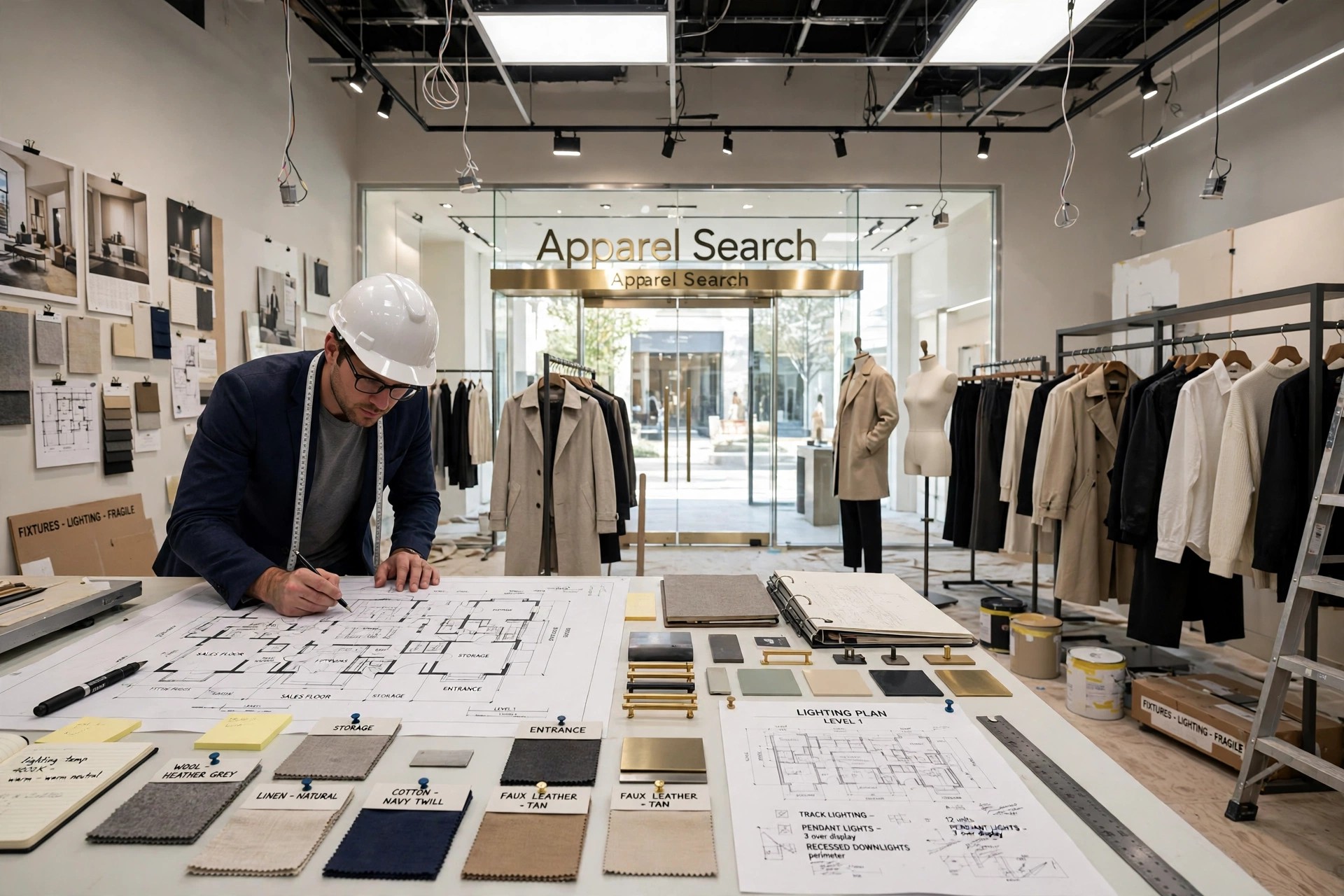
A store project begins with a brief and a site. The designer surveys the unit — its dimensions, columns, ceiling heights, services and restrictions — and develops a concept that applies the brand's store design language to that particular space: where the entrance draws customers, how the departments are zoned, where fitting rooms, tills and service points sit, and how the customer's circuit through the store passes the merchandise in the order the retailer wants it seen. Concept layouts become detailed design packages: floor plans, fixture designs, lighting layouts, signage and graphics placements, and material specifications from flooring to the finish on a display table.
The design then has to be built, and the store designer stays with it through fit-out. Drawings are coordinated with architects, engineers, shopfitters and the retailer's own project managers; fixtures are prototyped and costed — a chain may need a display system in hundreds of stores, so a fixture's price and durability matter as much as its looks; and the designer attends site during installation to resolve the inevitable collisions between drawing and building. Snagging and handover end the cycle: the store that opens must be the store that was designed, safe, compliant and ready to trade, with its design manual updated so the next branch starts from what was learned.
Selling Space, Brand Environment and Retail Detail
Store design is commercial design, and its measures are retail measures. The designer plans selling space against non-selling space, protects sightlines from the door to the department a customer came for, designs fixture capacities around how much stock a rail or table must hold at peak, and places light where it sells — accent lighting on product, softer light where customers decide, honest light in fitting rooms where returns are born. Seasonal flexibility is designed in from the start: a fashion store is re-merchandised constantly and rebuilt partially every few years, so fixtures that move, graphics that swap and power and data where future displays may need them are marks of a thinking designer.
The work environment alternates between studio and site. Studio weeks run on CAD, visualisation and materials boards, presenting concepts to retail boards who think in brand and budget simultaneously. Site weeks are hard-hat weeks: measuring, photographing, meeting contractors and solving problems in unfinished shops, sometimes through the night before an opening. Travel is constant for chains — a store designer's patch may be a country or a continent — and the calendar is driven by lease and opening dates that do not move for a designer's convenience. The reward is unusually tangible: this designer can walk into their finished work, watch real customers use it, and read in the sales figures whether the environment is doing its job.
Skills and Abilities the Role Requires
Spatial design skill is the foundation: interior layout, circulation and ergonomics, fixture and furniture design, lighting design literacy, and materials knowledge judged for retail durability as much as appearance. Technical drawing and CAD visualisation must reach professional standard, because the design package is a construction document as well as a sales pitch — contractors price and build from it, and ambiguity on paper becomes cost on site. Building regulations, accessibility requirements and fire and safety rules for public premises are working knowledge, not fine print.
Commercial and collaborative skills complete the role. The store designer argues a design in the language of the retail board — cost per square foot, sales density, payback on the fit-out budget — and negotiates with landlords, project managers and shopfitters whose priorities differ from design purity. A genuine feel for fashion retail helps enormously: understanding how clothing is displayed, tried and bought, and how quickly a store's look dates, keeps designs sellable rather than merely photogenic. Portfolios for these roles show built work photographed in trading stores, with the drawings that produced it, rather than unbuilt concepts alone.
Qualifications, Training and Career Path
Store designers typically qualify in interior design, interior architecture, exhibition or retail design, or architecture, and enter through junior posts in retailer design teams or retail design agencies, learning a brand's design manual and a contractor's realities on live projects. Some arrive from visual merchandising with strong technical retraining, bringing display craft into the spatial role. Professional development follows building and retail practice: regulations, lighting and sustainable fit-out methods all move, and the designer's knowledge must move with them.
Careers progress to senior store designer and design management — heading a retailer's store design team or an agency's retail studio — with specialisms in flagships, concessions and shop-in-shop systems, travel retail, or sustainable store design. Freelance store designers with a chain rollout track record are well established. It is a distinctive fashion career: the clothes change every season, but the room this designer built is the stage every one of those seasons plays on, and a well-designed store can serve a brand for a decade.
Common Questions
Is a store designer the same as a visual merchandiser?
No. The store designer designs the permanent environment — layout, fixtures, lighting, materials and signage — as a construction project. The visual merchandiser works within that environment, dressing displays and windows and arranging merchandise as ranges change. The two collaborate closely.
What does a store designer actually produce?
A complete design package for building a store: surveyed plans, concept and detailed layouts, fixture designs, lighting and signage schemes, material specifications and design manuals, followed through fit-out, snagging and opening.
How do you become a store designer for fashion retail?
Qualify in interior design, interior architecture or retail design, and enter a retailer design team or retail design agency as a junior, building a portfolio of built, trading stores and the drawing packages behind them.
More to Explore
- Fashion Employment Agencies
- Employment Search Engines
- Fashion Job Description Directory
- Fashion Industry News
- Fashion Directory
- Fashion Schools and Education
- Fashion Careers
- Retail Clothing Stores
- Designer Search
- Fashion Artists Guide
- Store Window Displays
- Window Dresser Job Description
- Clothing Industry Portal