Womenswear Designer Job Description
Designing clothing for the women's market — the largest, fastest-moving design desk in fashion
A womenswear designer designs clothing for the women's market — dresses, tops, skirts, trousers, tailoring, knitwear, coats and the many categories a woman's wardrobe contains. It is the largest design desk in fashion and usually the fastest-moving: more categories, more seasons and drops, more size and fit variation, and customers who buy newness more often than any other market offers it. Womenswear designers work in brands, retailers' own-brand teams and manufacturers, designing for a defined customer — her age, her budget, her life — rather than for women in general. This page explains the role across its categories.
More Design Job Descriptions by Letter:
What a Womenswear Designer Does
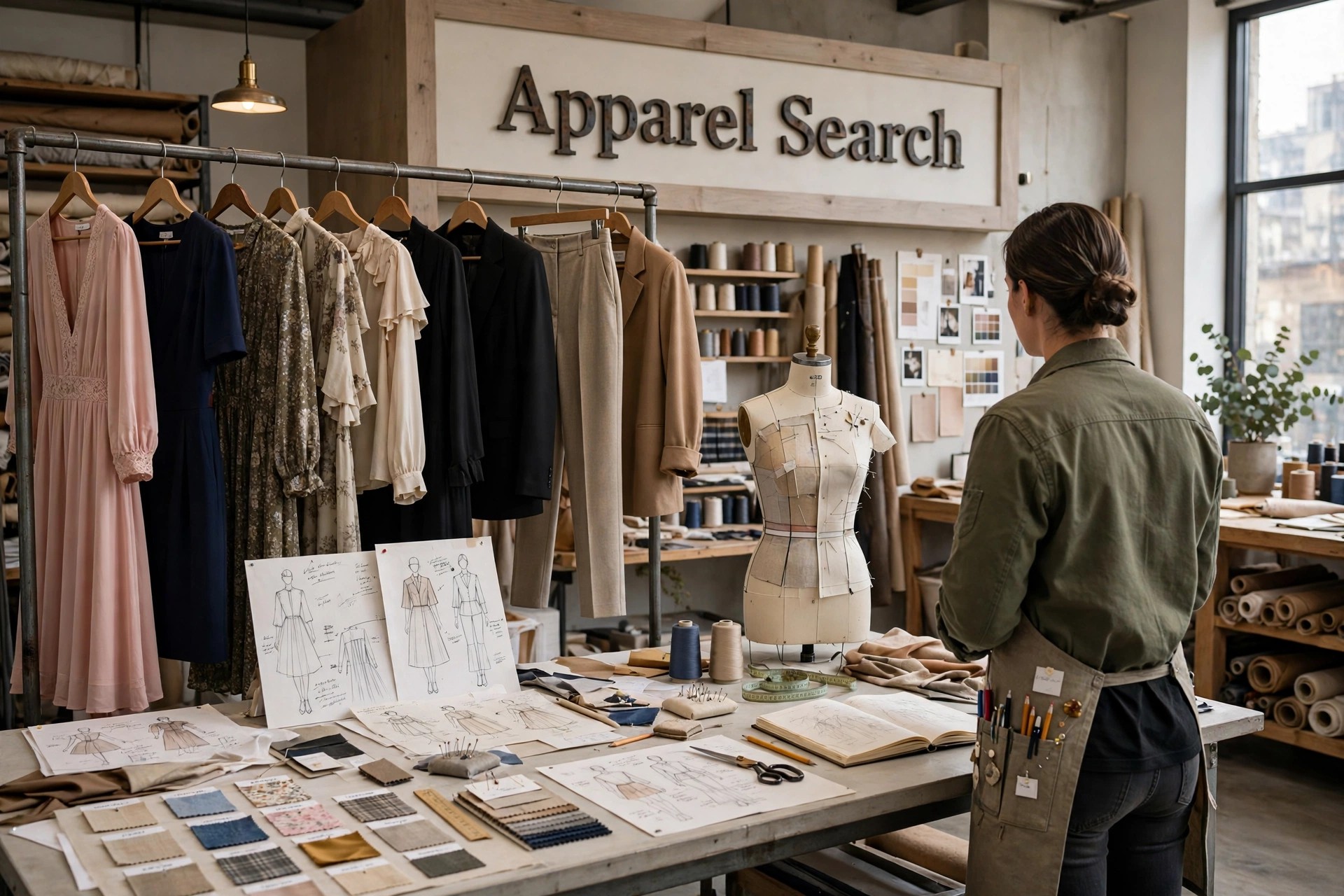
The season starts with research: trend forecasting, catwalk and street analysis, vintage and archive references, fabric fairs and the sales evidence of previous seasons. From that research the designer builds the range story — colour palette, key fabrics, silhouettes and the balance of categories the range plan requires — and sketches each style against it. A womenswear range must work as a wardrobe, not a pile of garments: dresses that carry the season's print, separates that coordinate across colours, knitwear that layers over both, and outerwear that finishes the look, all landing in stores in phased drops across the season.
Development turns sketches into garments. The designer writes tech packs, selects fabrics and trims, and works with pattern cutters and sample rooms through proto, fit and pre-production samples, fitting on live models and fit forms and correcting drape, proportion and construction at each round. Womenswear fitting is exacting work: a dress is judged on how fabric moves on a body, a trouser on its rise and leg line across sizes. The designer approves colours and prints, checks production samples against the sealed standard, and reviews the finished range as customers will meet it — on rails, on screens and on bodies.
Categories, Customers and the Shape of the Market
Womenswear is really several markets sharing a name. Contemporary and designer labels sell fashion authority; high-street and value retailers sell speed and price; occasionwear, workwear, maternity, plus-size and petite ranges each serve needs the general range cannot. A womenswear designer is always designing inside one of those positions, and the same dress is a different garment — different fabric, construction, detail and price — in each of them. Knowing precisely which customer the range serves, and refusing to drift toward a vaguer one, is the commercial discipline underneath the creative work.
The work environment is a studio inside a business: range reviews with buyers and merchandisers, fabric appointments with mills and agents, fit sessions, comp-shopping and research trips, and a calendar that stacks several seasons at once — selling one, producing the next, designing a third. Deadlines are commercial, set by store drops and photography dates, and the designer's week moves between drawing board, screen, fitting room and meeting room. It suits designers who like variety and pace, because no other desk changes its product so completely so often.
Skills and Abilities the Role Requires
Drawing, draping sense and CAD come first, backed by genuine garment knowledge: how a woven differs from a jersey in a designer's hands, how a pattern creates the silhouette a sketch promises, and what construction a price point can carry. Colour and print judgement matters enormously in womenswear, where a palette can make a season. Equally important is fit literacy — the ability to look at a sample on a body and name precisely what is wrong and how the pattern should change — because most of a womenswear designer's development time is spent fitting, not sketching.
Commercial skills complete the profile. The designer reads sales by style, colour and size as design evidence, designs core sellers as carefully as statement pieces, costs styles against target margins with buyers, and presents ranges persuasively at sign-off. Range discipline — keeping the wardrobe balanced, the stories coherent and the style count honest — is what separates a collection of nice garments from a range a business can sell. Collaboration runs throughout: pattern cutters, garment technologists, buyers, merchandisers and factories all hold part of every garment's success.
Qualifications, Training and Career Path
Womenswear designers usually hold fashion design degrees or diplomas, and hiring is portfolio-led: employers look for a defined handwriting aimed at a recognisable customer, ranges that hang together, and made garments that prove construction understanding. Entry is typically as a design assistant or junior designer, learning tech packs, fitting and range administration on live product, with specialisation by category — dresses, tailoring, knitwear, denim — developing as designers find where their handwriting sells best.
Progression runs to senior designer and design management of a category or a whole womenswear division, and the market's size means senior womenswear designers are among fashion's most employable specialists. Skills transfer into own-brand design for retailers, product development, and design direction across markets. Because the desk touches every category and customer type in the trade, it is also the broadest education in fashion design: a designer who can build a women's range that sells has learned most of what the industry knows about clothing.
Common Questions
How is womenswear design different from other design desks?
Scale and speed. Womenswear has more categories, more drops per year and a wider spread of customers and price positions than menswear or childrenswear, and its customers buy newness more often — so the designer rebuilds the range more completely, more frequently, than any other desk.
What categories does a womenswear designer cover?
Typically dresses, tops, skirts, trousers, tailoring, knitwear, denim, coats and occasionwear within one brand's range plan — though many designers specialise in one or two categories as they become senior.
How do you become a womenswear designer?
Study fashion design, build a portfolio of coherent ranges aimed at a defined customer with made garments to prove construction skill, and enter as a design assistant or junior designer in a brand, retailer or manufacturer.