Woven Fabric Designer Job Description
Designing woven cloth itself — yarn, weave structure and finish, from loom-state idea to finished fabric ranges
A woven fabric designer designs cloth, not garments: the woven textiles that garment designers later cut into shirts, dresses, suits and coats. Working for mills, converters and fabric houses, the designer creates the fabric ranges those customers choose from — plain weaves and twills, checks and stripes woven from coloured yarns, jacquards whose pattern is built into the structure itself. Every decision is physical: fibre and yarn, weave structure, sett and density, colour order and finish together decide how the cloth looks, drapes, feels and costs. This page explains the textile designer's desk inside the weaving trade.
More Design Job Descriptions by Letter:
What a Woven Fabric Designer Does
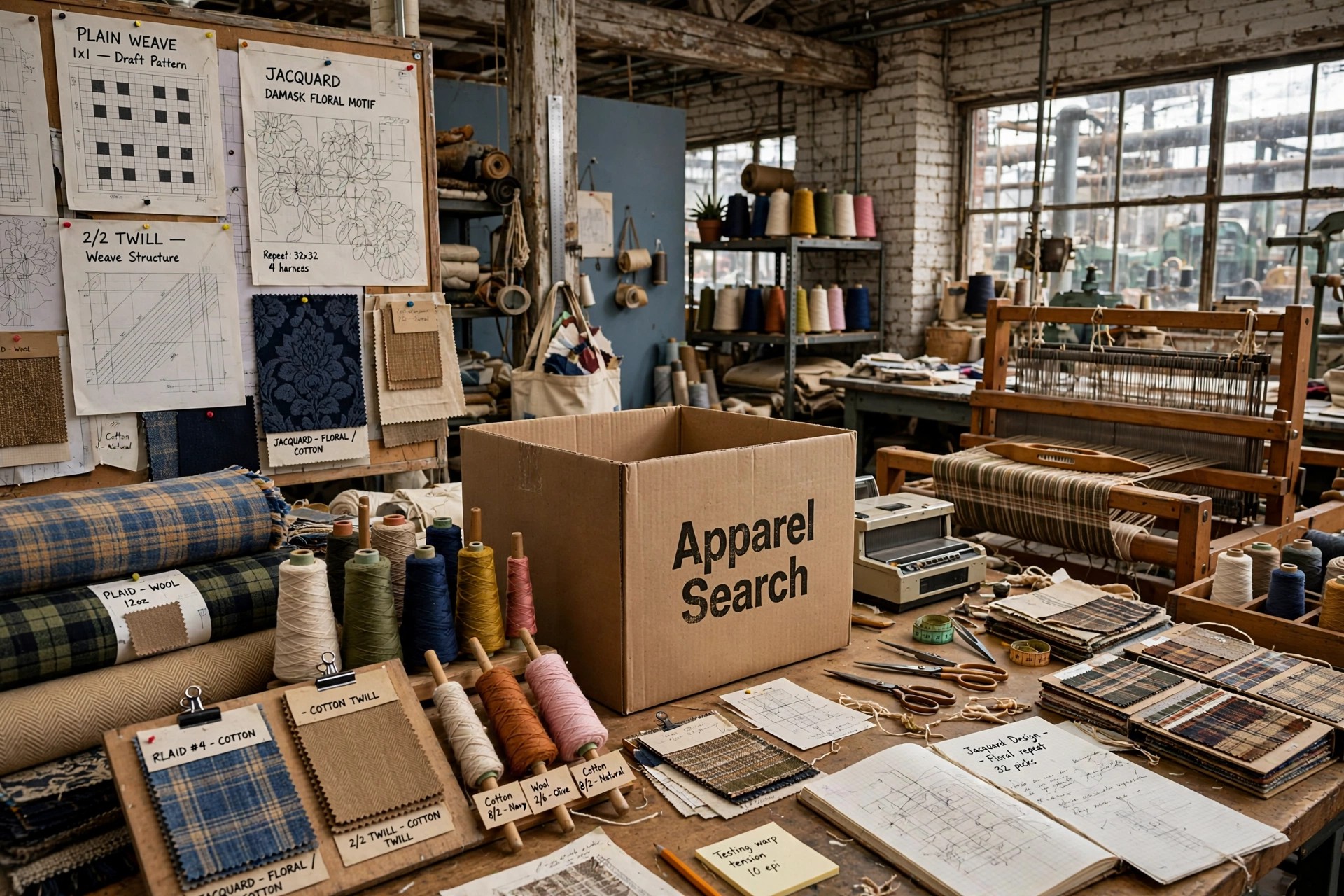
The design process starts with yarn and structure rather than with a sketch of a finished pattern. The designer plans the warp — the lengthwise yarns, their colours in sequence — and the weft that crosses it, choosing weave structures (plain, twill, satin, dobby and jacquard among them) that turn that colour plan into checks, stripes, herringbones, textured grounds or figured designs. Colour-and-weave effects are the woven designer's special magic: the same yarns in a different structure or order produce an entirely different cloth, and much of the craft is predicting those interactions before a loom is threaded.
Designs are developed on CAD weave systems that simulate the cloth and generate the loom instructions, then proven as woven samples — blankets of variations woven on sample looms so colourways and structures can be handled, not just viewed. The designer refines yarn counts, densities and finishes from those samples, costs each quality, and assembles the seasonal range: coordinated qualities across weights and price points that garment and interior customers can build collections from. Production specifications follow the approved samples exactly, because a mill must reproduce the designer's cloth identically at bulk scale.
Mills, Yarns and the Making of Cloth
Woven fabric design happens inside manufacturing reality. A design is only as good as the looms that must weave it: shuttle and projectile, rapier and air-jet looms each suit different yarns, widths and structures, and a jacquard design is limited by the harness capacity of the machines that will produce it. The designer works with weaving technicians and yarn suppliers, visits spinning and dyeing suppliers to understand what yarns can do, and learns the economics of the mill — set-up costs that punish short runs, minimum quantities per colourway, and lead times measured in months, which is why fabric ranges are designed far ahead of the garments made from them.
The work environment divides between design studio, sample loom room and weaving shed, with trade fairs where fabric ranges are sold to garment makers seasons ahead of the shops. Finishing knowledge completes the picture: the same loom-state cloth can emerge soft or crisp, matte or lustred, washable or structured depending on the finishes applied after weaving, and the designer specifies those finishes as part of the design. It is a role for someone who thinks in materials — who wants to design the substance other designers design with.
Skills and Abilities the Role Requires
Weave literacy is the core skill: the structures, draft and peg-plan notation (or its CAD equivalent), yarn count systems, and how fibre, spin and dye method change a cloth's behaviour. Colour skill in woven design is structural, not applied — the designer composes with coloured yarns and predicts pattern emerging from interlacement, a discipline closer to music than to painting. CAD weave software fluency is now standard, alongside the older virtue of being able to read a fabric: to analyse a competitor's cloth under a pick glass and reconstruct its yarns, structure and sett.
Commercial and technical judgement support the craft. The designer balances novelty against weavability and cost, designs qualities a mill can sell in viable quantities, and keeps the range coherent across a season. Communication with technicians, sales teams and garment customers — who need honest guidance on what a cloth will do in cutting, sewing and wear — is daily work. Precision matters throughout: a specification error in yarn or sett is woven into thousands of metres before anyone sees it.
Qualifications, Training and Career Path
Woven fabric designers typically study textile design with a woven specialism, learning loom work, weave structures and CAD systems on woven coursework rather than print or knit pathways. Portfolios and folios are woven: sample blankets, quality developments and ranges with the yarn and structure specifications shown. Entry is usually into a mill's or converter's design studio as a junior designer or design technician, where production constraints and customer ranges are learned on live qualities.
Progression leads to senior woven designer and fabric design management — responsibility for a mill's whole seasonal range — with movement between mills, fabric houses and the fabric departments of large garment brands. Experienced woven designers also move into fabric sourcing and development roles for apparel companies, carrying their structural knowledge to the buying side of the desk. In a trade where most design happens on the garment's surface, the woven designer designs its substance, and that scarcity keeps the skill valued.
Common Questions
How is a woven fabric designer different from a print designer?
A print designer applies pattern to a finished cloth's surface. A woven fabric designer builds pattern and texture into the cloth itself, through coloured yarns and weave structures — checks, twills and jacquards that are the fabric, not an image on it.
What is colour-and-weave?
The pattern effects produced when the colour order of warp and weft yarns interacts with the weave structure: the same yarns woven differently give different checks, stripes and textures. Predicting and composing those effects is central to woven design.
How do you become a woven fabric designer?
Study textile design with a woven specialism — loom work, weave structures and CAD weave systems — and present a folio of actually woven samples with their specifications when applying to mills and fabric houses.
More to Explore
- Woven Fabric Search
- Fabric Directory
- Fabric Mills
- Fabric Retailers
- Woven Fabric Definition
- Fabric Definitions
- Graphic Designers Guide
- Merchandising Clothing
- Fashion Artists Guide
- Computer Assisted Design
- CAD Services
- Fashion Schools and Education
- Fashion Careers
- Fashion Employment Agencies
- Employment Search Engines