Woven Garment Designer Job Description
Designing garments cut from woven cloth — tailoring, shirting, dresses and the structured side of the wardrobe
A woven garment designer designs clothing made from woven fabrics — the structured half of the wardrobe: tailored jackets and trousers, shirts and blouses, dresses, skirts, coats and woven casualwear. The specialism is defined by the cloth. Woven fabrics do not stretch the way knits do, so fit, ease and movement must be built into the pattern and construction rather than borrowed from the fabric: darts, seams, pleats, vents and closures do the work that Lycra does in a jersey garment. Designers who love structure, precision and cloth with character gravitate to this desk. This page explains how woven garments are designed.
More Design Job Descriptions by Letter:
What a Woven Garment Designer Does
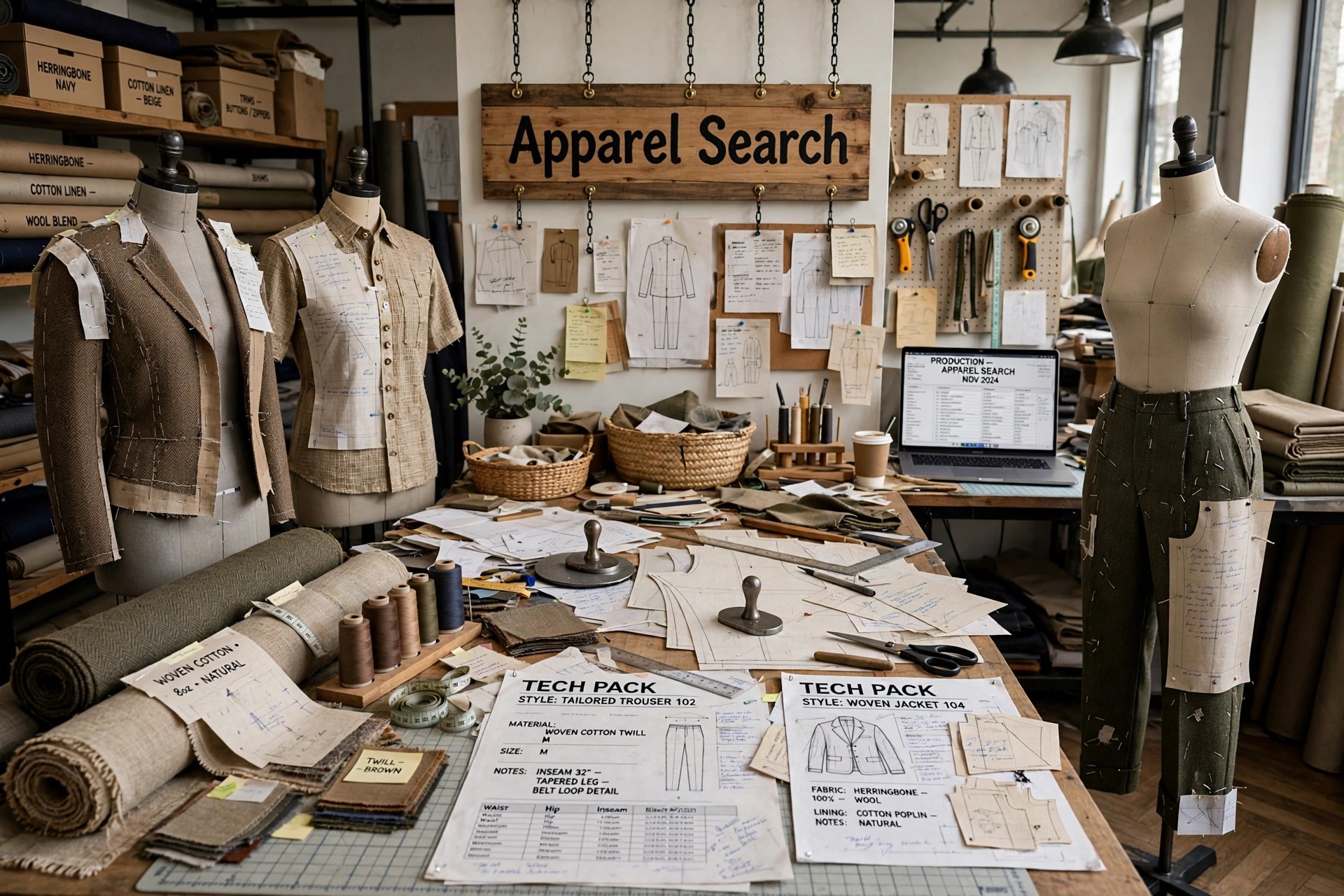
The designer builds ranges in woven categories, starting — as all woven design starts — from the cloth. Suitings, shirtings, poplins, twills, denims, linens, silks and jacquards each carry a weight, a drape and a handle that suggest the garments they want to become, and fabric selection is a design act in itself. Sketches are developed with the cloth's behaviour in mind: a fluid silk takes a bias cut and soft gathers, a crisp cotton takes structure and pressing, a heavy coating takes sculpted seams. Styles are specified in tech packs that give woven construction its full detail — seam types, interlinings, linings, button and closure specification, and pressing standards.
Sampling and fitting test the design against the body in motion. Because the cloth will not forgive, woven fit is engineered: wearing ease calculated by category, movement ease added where the body bends, darts and seams positioned to shape without strain. The designer fits samples on models, checks that a jacket closes without pulling, a shirt reaches without riding, a trouser sits and walks correctly, and corrects the pattern with cutters until it does. Grain is a constant discipline — a woven garment cut off-grain twists and hangs wrong forever — and checking grain, plaid and stripe matching at seams is part of the woven designer's approval routine.
Structure, Cloth and Construction Knowledge
The categories of this desk reward construction depth. Tailoring is its summit: canvassed or fused fronts, shoulder structure, lapel roll and sleeve pitch specified and fitted as architecture. Shirting turns on collar engineering and cloth character; woven dresses on the interplay of darting, bias and fabric weight; denim and woven casualwear on wash behaviour and robust construction. Across all of them the designer must know what a factory can sew well — which seams suit which cloth weights, where topstitching strengthens and where it puckers, which interlinings a fabric needs to hold its designed shape through wear and cleaning.
The work environment is the standard design studio with a pattern-room emphasis: woven designers typically work closely with pattern cutters, often toile in fabric early because paper promises woven cloth will not keep, and spend more of their development time on fit and construction resolution than knit designers do. The pace follows the same seasonal calendar, but the product lasts longer — a well-designed woven garment is bought to be kept — and designers in this specialism often speak of their work in terms of permanence rather than novelty.
Skills and Abilities the Role Requires
Pattern literacy leads: the woven designer must understand how flat pattern becomes three-dimensional fit on a non-stretch cloth — ease, darting, grain and balance — whether or not they cut patterns personally. Fabric knowledge is equally specific: the weights, drapes, shrinkage and pressing behaviour of the woven families, and how each interacts with lining and interlining. Drawing and CAD present the work, but this desk is hired for judgement about cloth and construction that a sketch alone cannot show.
Precision and patience are the temperament of the specialism. Woven development has more correction rounds, and each round is slower, because the problems are structural. The designer who thrives here enjoys that forensic fitting process, communicates exactly with cutters and factories about millimetre-level corrections, and holds a quality standard through production sampling — checking that bulk garments match the approved fit and finish, since woven quality failures (twisted seams, mismatched checks, bubbling fusing) are visible to any customer who looks.
Qualifications, Training and Career Path
Woven garment designers come through fashion design training, usually showing strength in tailoring, shirting or woven categories in their portfolios — made garments carry particular weight here, because woven skill is proven in cloth. Entry routes include assistant designer posts in tailoring houses, shirt makers, woven-focused brands and retailers' structured categories, where fit and construction practice is learned from senior cutters and designers.
Progression runs to senior designer in woven categories and to design leadership of tailoring or woven divisions; the expertise is also the natural foundation for technical design and pattern-room leadership. Designers cross between woven and knit desks, but deep woven specialists remain in demand precisely because the skills are slower to build: anyone can sketch a jacket, and far fewer can make one fit, hang and last the way this desk's customers expect.
Common Questions
How is woven garment design different from designing knitwear or jersey?
Woven cloth does not stretch, so fit and movement are engineered into the pattern — ease, darts, seams, pleats and vents — instead of coming from the fabric. That makes pattern, grain and construction knowledge far more central to the woven designer's work.
Why does grain matter so much in woven garments?
Woven fabric has lengthwise and crosswise grain with different behaviour. A garment cut off-grain will twist, hang unevenly and distort in wear and washing, so checking grain — and matching checks and stripes at seams — is a core approval task.
How do you become a woven garment designer?
Train in fashion design with strong woven and tailoring work in your portfolio — made garments matter — and build fit and construction experience as an assistant in tailoring, shirting or woven categories.
More to Explore
- Woven Fabric Search
- Fabric Directory
- Fabric Mills
- Fabric Retailers
- Woven Fabric Definition
- Fabric Definitions
- Graphic Designers Guide
- Merchandising Clothing
- Fashion Artists Guide
- Computer Assisted Design
- CAD Services
- Fashion Job Description Directory
- Fashion Schools and Education
- Fashion Careers
- Fashion Employment Agencies
- Employment Search Engines