Textile Engineer Job Description
Engineering fibres, yarns and fabrics — the science that turns raw material into cloth a garment can rely on
A textile engineer applies engineering science to the materials clothing is made from. The work begins before any garment exists: with fibres, natural and manufactured, spun into yarns, woven or knitted into fabrics, then dyed, printed and finished to behave the way a designer, a buyer and ultimately a wearer need them to behave. Textile engineers develop those materials, design and improve the mill processes that make them, and test the results rigorously — strength, shrinkage, colourfastness, abrasion, hand and performance — so that a fabric ordered in bulk performs exactly as the small sample promised.
More Miscellaneous Job Descriptions by Letter:
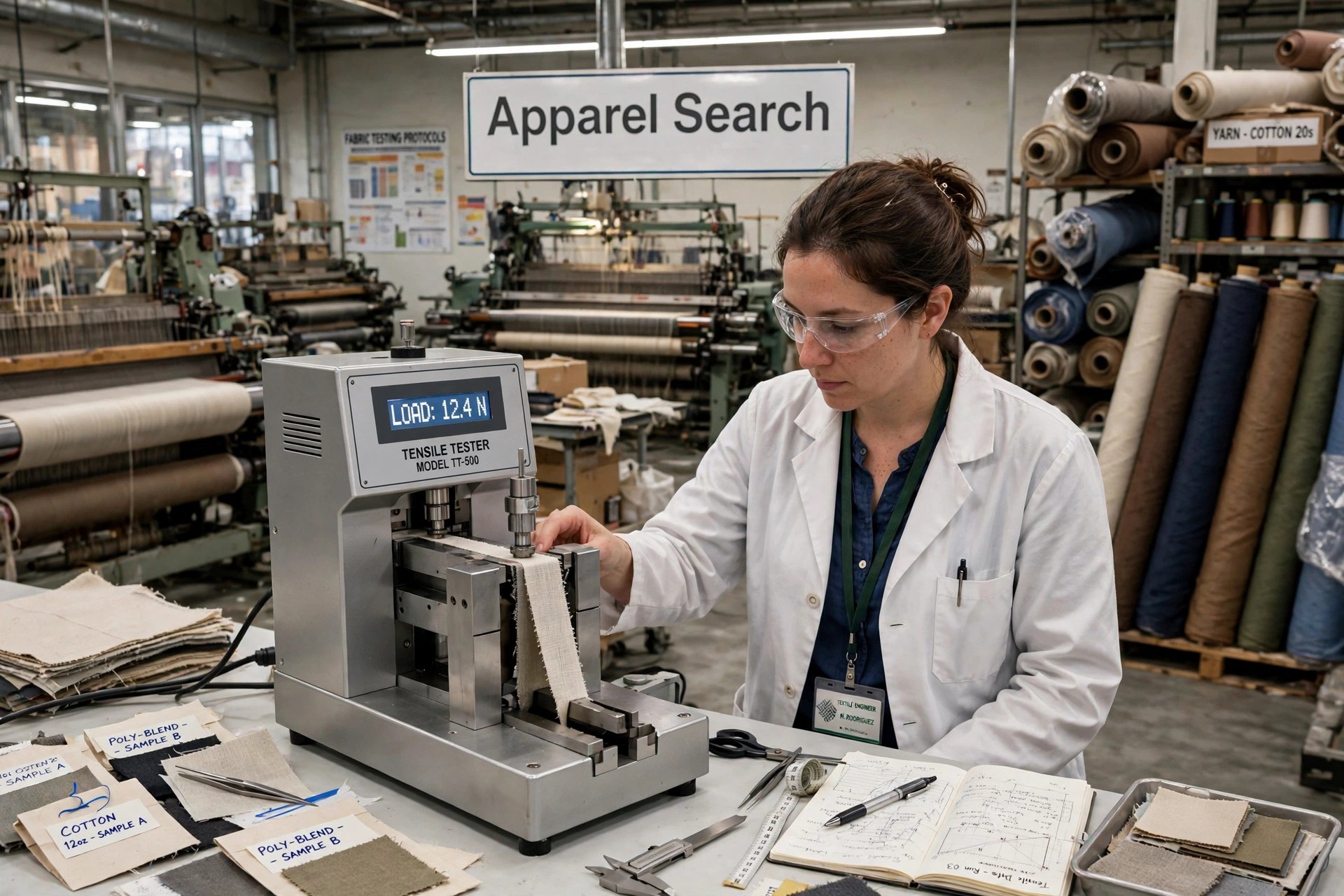
What a Textile Engineer Does
Development work is one half of the role. A textile engineer takes a performance brief — a fabric that must stretch and recover, resist water, wick moisture, survive industrial washing or meet a strict cost — and works out how to build it: which fibres to blend, what yarn counts and constructions to use, which weave or knit structure gives the needed properties, and which finishes complete the job. Prototypes are made, tested, adjusted and remade, and the engineer's judgement about why a fabric failed a test is what moves a development forward instead of around in circles.
Process engineering is the other half. Inside a mill, the engineer studies spinning, weaving, knitting, dyeing and finishing lines, measures where quality drifts or output is lost, and changes machine settings, sequences and controls to fix it. New machinery is specified and commissioned with the engineer's input, production problems that repeat are traced to root causes rather than patched, and the cost of making each fabric — fibre, energy, labour, waste and rework — is part of every recommendation the engineer makes.
Testing, Quality and Problem Solving
Testing gives textile engineering its authority. Engineers run and interpret laboratory evaluations of fibres, yarns and finished cloth: tensile and tear strength, dimensional stability, pilling and abrasion resistance, colourfastness to light, washing and rubbing, and specialist performance measures for protective, medical or sportswear fabrics. Test results are reported against the standards a customer or a regulation specifies, and a fabric that fails is not passed quietly — the engineer documents the failure, identifies whether the cause sits in the fibre, the construction or the finish, and directs the correction.
That discipline extends onto the production floor and into customer relationships. When a garment maker reports seam slippage, shade variation between dye lots or a fabric that shrinks beyond tolerance, the textile engineer investigates with data — retained samples, process records and fresh testing — and answers with a cause and a remedy. Quality systems, inspection standards and claims handling all draw on the engineer's records, which is why accuracy in measurement and reporting matters as much in this role as inventiveness in development.
Skills and Abilities the Role Requires
The technical foundation combines materials science, chemistry and mechanical understanding: how fibres are structured and behave, how dyes and finishes interact with them, and how spinning, weaving and knitting machinery actually forms cloth. Mathematics and statistics run through the daily work — sampling plans, process capability, experimental design — because an engineer who cannot separate real variation from noise will chase problems that do not exist and miss the ones that do.
Practical skills complete the profile. Textile engineers read a fabric by hand and eye as well as by instrument, communicate findings plainly to dyers, machine operators, designers and buyers who each need a different version of the truth, and manage development projects against the fashion calendar, where a fabric approved a month late misses its season entirely. Curiosity about new fibres and sustainable processes is increasingly part of the job, as recycled, bio-based and low-impact materials must be engineered to perform, not merely announced.
Qualifications, Training and Career Path
Textile engineers usually hold a degree in textile engineering, textile technology, materials science or a closely related engineering discipline, with study covering fibre science, yarn and fabric manufacture, dyeing and finishing, and textile testing. Some enter through applied routes — mill-based technical training and progressive laboratory or production roles — and build engineering standing through experience and professional development, particularly in regions with a strong working mill tradition.
Careers progress from development or quality engineering posts to senior engineer, technical manager and mill or technical-director roles, and outward into adjacent specialisms: technical textiles for automotive, medical and industrial markets, sourcing and fabric technology roles with brands and retailers, and consultancy. Experienced textile engineers are also the people garment companies send to supplier mills, because they can judge a partner's capability in the language the mill itself speaks. The role suits methodical problem solvers who want their engineering to end in something people wear.
Common Questions
What does a textile engineer do?
A textile engineer develops and tests fibres, yarns and fabrics, and improves the mill processes — spinning, weaving, knitting, dyeing and finishing — that produce them, so cloth meets its strength, appearance, care and performance specifications at production scale.
Is textile engineering the same as fashion design?
No. Designers decide what a garment should look and feel like; textile engineers work out how the fabric itself can be made to deliver that look, feel and performance reliably, and prove it with testing.
What qualifications do textile engineers need?
Usually a degree in textile engineering, textile technology or materials science, covering fibre science, fabric manufacture, dyeing and finishing and testing. Mill-based technical experience is a respected complement and, on some routes, an alternative entry.