Fashion Intern Job Description
Structured work experience in a fashion company — learning the industry from inside, under supervision
A fashion intern is a student or recent graduate placed inside a fashion company for a defined period to learn how the industry works by doing real work under supervision. Internships — also called work experience placements or work placements — sit in design studios, buying offices, public relations and editorial teams, showrooms, retail head offices and production departments. They are the industry's most common bridge between education and employment: structured learning for the intern, useful help for the host, and for both sides a long, honest interview for the entry-level jobs that follow.
More Miscellaneous Job Descriptions by Letter:
How a Fashion Internship Is Structured
A genuine internship has a shape: a start and end date, a named supervisor, a host department, and an understanding of what the intern will be exposed to and learn. Placements run from a few weeks during vacations to a full placement year inside a degree course, and may be paid, stipended or — where lawful and genuinely educational — unpaid for academic credit, a distinction reputable hosts state plainly before the placement begins. The host owes the intern supervision and variety; the intern owes the host reliability, confidentiality and effort on unglamorous days as well as exciting ones.
College and school internship programmes formalise that exchange: the institution approves the host, learning objectives are agreed, and the placement is assessed or reflected on as part of the course. Independent internships arranged directly with a company follow the same logic less formally. Either way, the structure is what separates an internship from casual helping-out — an intern should be able to say, at the end, which skills they practised, which meetings and processes they observed, and which working professionals can speak for their performance.
What Interns Actually Do
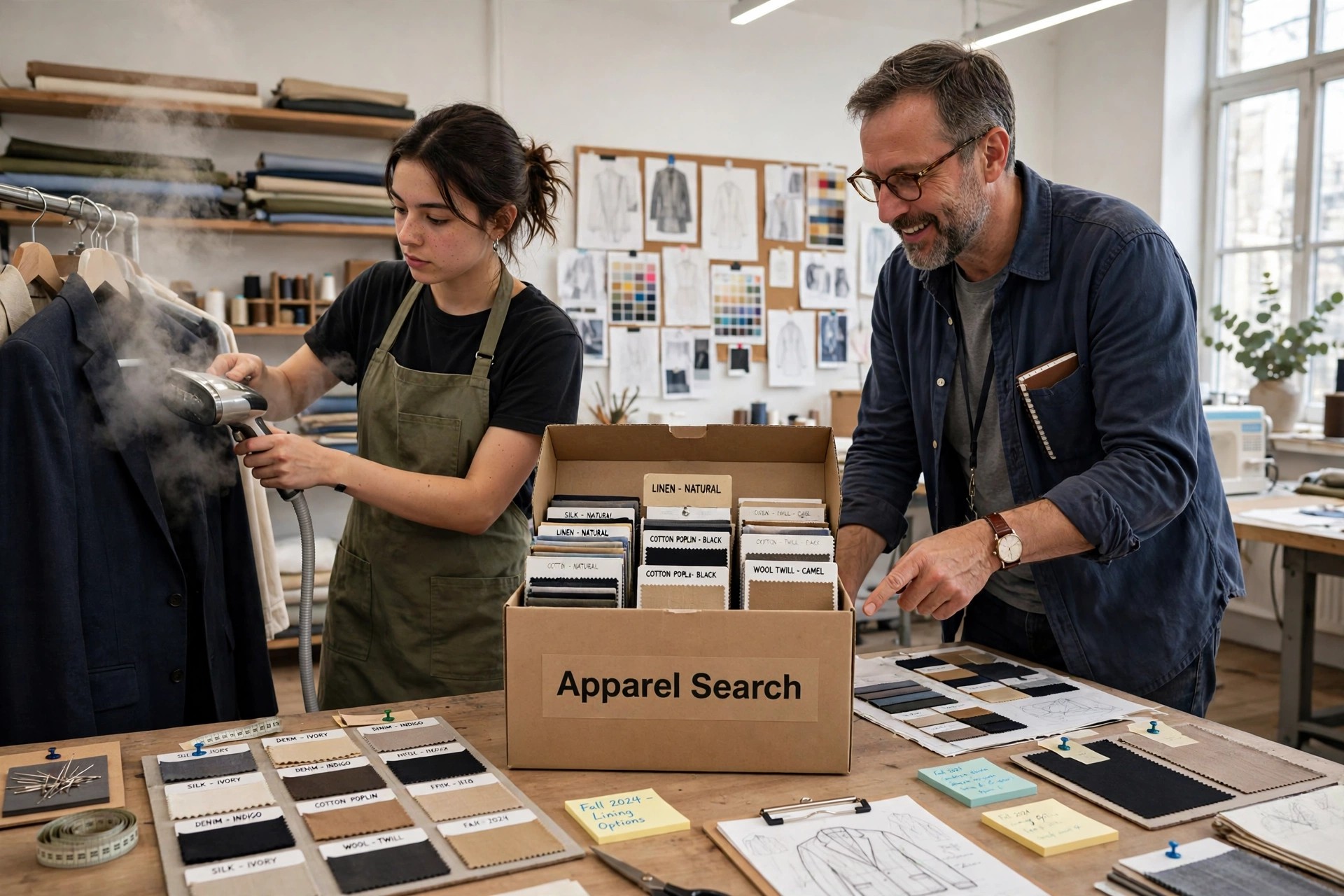
The daily work mixes the humble with the instructive, and the humble tasks are how the instructive ones are earned. Interns track and prepare samples, steam and organise garments, run deliveries and collections between offices, studios and stylists, update spreadsheets, line lists and press coverage logs, research competitors, fabrics or contacts for their team, help set up showrooms, shoots and events, and shadow appointments, fittings and meetings when the team's work allows. A placement that is only errands teaches little; a good host rotates the intern through tasks of increasing trust as competence shows.
Supervision is the mechanism that turns tasks into learning. Supervisors brief work properly, check it early enough to correct, explain why the team does things its way, and give the intern feedback more candid than a polite farewell. Interns are also expected to learn actively: keeping notes, asking questions at the right moments, learning the company's systems and calendar, and building the professional habits — punctuality, discretion about unreleased collections, tidy written communication — that the industry's entry-level hiring actually tests for.
Skills and Abilities the Role Requires
Interns are not expected to arrive skilled; they are expected to arrive ready. The abilities hosts screen for are enthusiasm with stamina, basic organisation, competence with everyday office software and communication tools, and enough fashion literacy — the company's products, competitors and calendar — to understand what the team around them is doing. Accuracy on simple tasks is the first test passed or failed: the sample logged wrongly or the spreadsheet updated carelessly tells a supervisor more than any interview answer.
Conduct carries equal weight because interns are guests inside commercially sensitive rooms. Unreleased collections, prices, casting and campaign plans are confidential; phones stay away from sample rails unless photography is the assigned task; and social media restraint is absolute. Interns who absorb those norms, volunteer before being asked and finish what they start are the ones supervisors remember by name — which is the entire strategic point of the placement for the intern's own career.
From Internship to Entry-Level Job
The conversion from intern to employee happens through reputation and timing. Hosts hire former interns into assistant roles — fashion assistant, buying assistant, PR assistant, showroom and studio assistant posts — because the internship has already proved the person's reliability on real work, and former interns apply elsewhere carrying references, portfolio material they are permitted to show, and a truthful account of industry work on their résumé. Students should treat every placement as building that record, and keep contact with supervisors professionally after it ends.
Preparation decides who gets the placements worth converting. Applications go to companies whose work the applicant genuinely knows, tailored to a department rather than blasted to the whole industry, timed to the fashion calendar and to school internship programme deadlines. Academic routes help — fashion degrees and courses with established placement years carry employer relationships — but self-arranged placements are common and respected when they are structured and supervised. The internship is not the job; it is the audition the industry trusts most, and it rewards those who perform it as one.
Common Questions
What does a fashion intern do?
Real supervised work inside a fashion team: sample tracking and preparation, garment organisation, deliveries, research, spreadsheets and coverage logs, help at shoots, shows and showroom setups, and shadowing meetings and fittings — structured to teach how the department works.
Are fashion internships paid?
It varies by host, placement type and local law. Longer placements and placement years are increasingly paid or stipended; short academic placements may be unpaid where lawful and genuinely educational. Reputable hosts state the terms plainly before the placement starts.
How does an internship lead to a fashion job?
Through proof and reputation: hosts hire proven interns into assistant roles, supervisors provide references, and the placement gives real industry experience to carry into other applications. Reliability and discretion during the placement are what get remembered.